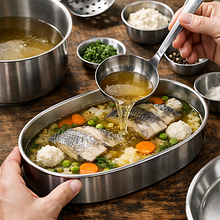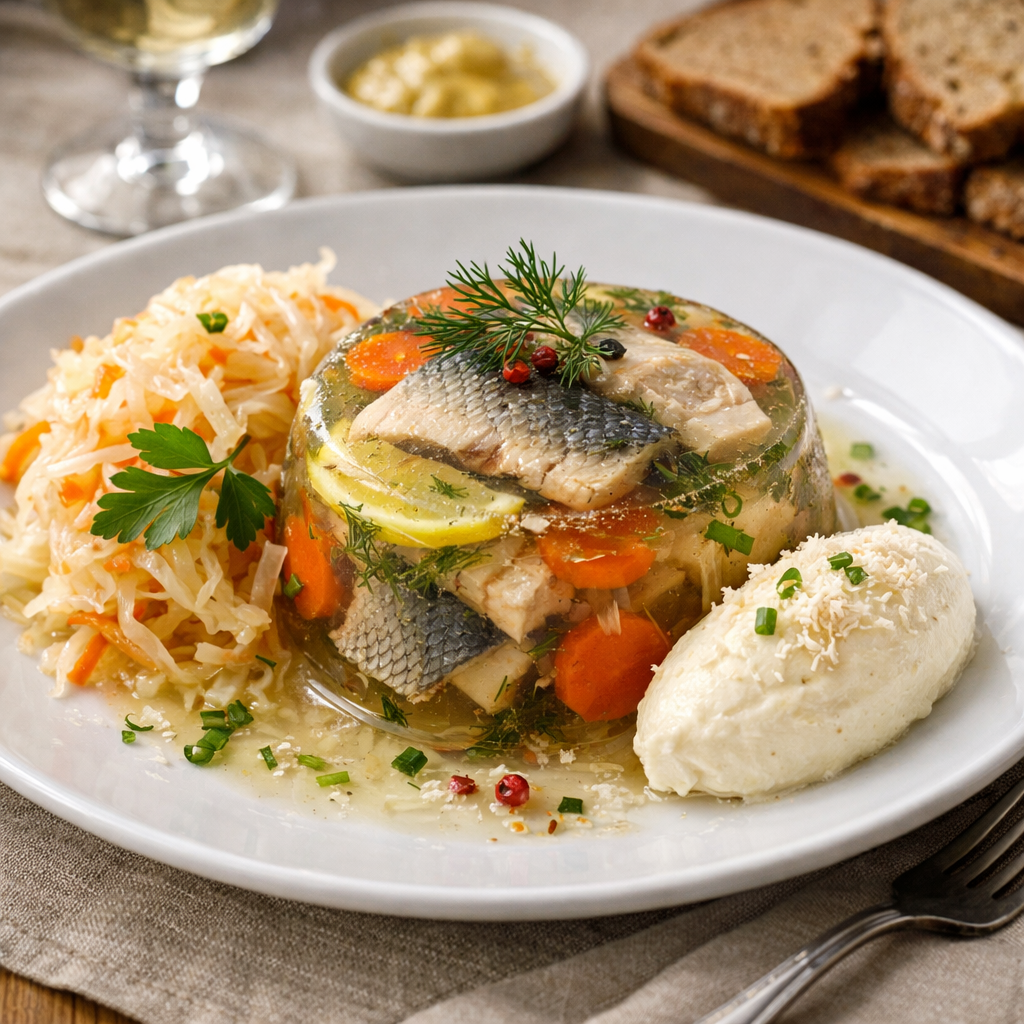
A traditional winter recipe combining delicate carp meat in clarified, spiced jelly with sweet and sour, braised sauerkraut and a creamy horseradish mousse. A dish perfect for the holiday table or other special winter occasions — it brings together textures: soft fish fillet, firm cabbage, and a slightly spicy horseradish mousse that warms and refreshes. The jelly has mild vegetable and spice aromas; the cabbage adds acidity and depth of flavor, while the horseradish mousse highlights the fish with a sharp, creamy accent. Serve chilled as an appetizer or main dish with dark bread and lemon slices. It looks aesthetically pleasing on a large flat platter — pieces of fish submerged in transparent jelly, alongside a portion of cabbage and a dollop of horseradish mousse.
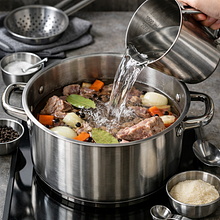
Prepare the broth for the jelly. In a large pot with a capacity of at least 3 liters, place 1500 ml of cold water. Add half an onion (cut in half) and the carrot, parsley, and celery cut into large pieces. Add the bay leaf, allspice, black pepper, and 6 g of salt (half of the salt intended).
Ingredients:
Water, Onion, Carrot, Parsley root, Celery root, Bay leaf, Black pepper, Salt
Use a pot with a thick bottom (3–4 l). It's best to use a slotted spoon for the broth to collect the foam later. Do not salt the broth too much right away, as the jelly should have a balanced flavor.
2
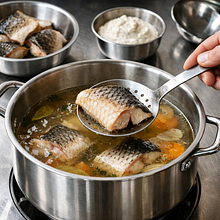
Bring the broth to a gentle boil over medium heat. When the first bubbles appear, reduce the heat to low and simmer gently for 20–25 minutes, skimming off any foam that forms on the surface. The broth should not boil vigorously — a gentle simmer allows the flavors to develop without clouding.
Use a slotted spoon or a sieve to collect the foam. Do not allow it to boil vigorously, as this will result in a cloudy jelly.
Carp
3
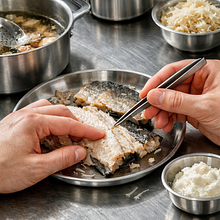
Prepare the carp: if you are using a fillet, check for small bones with your fingers and remove them with tweezers. Pat the fillet dry with a paper towel and cut it into portions of about 6–8 pieces (around 150–170 g each). Season both sides with a little salt (the remaining 6 g) and freshly ground pepper.
Ingredients:
Carp, Salt, Black pepper
Use tweezers to remove bones and a sharp knife for even portioning. Drying the meat with paper prevents splattering when placing it into the hot broth.
4
When the vegetables in the broth are soft (after 20–25 min), remove them with a strainer and set aside to cool — keep the broth in the pot. Strain the broth through a fine sieve or cheesecloth to make it clear. Bring it back to a temperature of 75–85°C (small bubbles on the surface, not boiling).
Ingredients:
Water
Use a fine mesh strainer or double layer of cheesecloth. A temperature of 75–85°C is ideal for gently cooking fish — use a kitchen thermometer if you can.
5
Gently place the portions of carp into the hot (not boiling) broth. Lay the pieces meat side up and cook for 8–10 minutes from the moment they are added — the fish should become opaque and easily flake with a fork. After cooking, remove the pieces with a slotted spoon onto a plate and let cool to room temperature.
Ingredients:
Carp, Water
It's best to use a wide slotted spoon or a flat fish spatula to avoid breaking the pieces. Don't cook for too long — overcooked fish will be dry and unappetizing.
Jelly
6
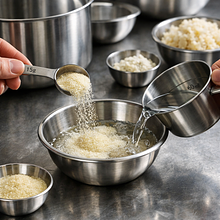
Prepare the gelatin: sprinkle 15 g of gelatin into a small bowl and pour in 60–80 ml of cold water. Let it sit for 5–7 minutes until it swells. Then, heat 200–250 ml of strained hot broth (do not bring to a boil) and dissolve the swollen gelatin in it, stirring with a wooden spoon until smooth. Once dissolved, combine the melted gelatin with the rest of the strained broth and check the taste — if necessary, season with a pinch of salt.
Ingredients:
Gelatin, Water
Use a bowl with a wide edge for even swelling of the gelatin. The broth with dissolved gelatin should be hot, but not boiling; if it is too hot, cool it down to about 50°C before pouring it over the fish.
Sauerkraut
7
Prepare the cabbage: if the cabbage is very sour, rinse it briefly in cold water and squeeze to remove excess liquid. Chop the cabbage into smaller pieces. Peel and finely chop the remaining onion.
Ingredients:
Sauerkraut, Onion
To squeeze the cabbage, use a clean cloth or gloves — well-squeezed cabbage stews faster and won't dilute the jelly with moisture.
8
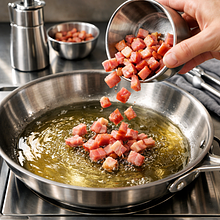
In a medium skillet, heat 30 g of rapeseed oil (2 tablespoons). If you are using bacon (optional), cut it into small cubes and fry it in the skillet first until the fat renders and the pieces are golden. Add the chopped onion and sauté for 3–4 minutes until the onion becomes translucent and soft. Add the grated or diced apple and fry for another 2 minutes.
Ingredients:
Rapeseed oil, Smoked bacon, Onion, Apple
Use a pan with a diameter of 24–28 cm with a thick bottom. If you don't have bacon, start by heating the oil and sautéing the onion.
9
Add the drained cabbage to the pan, mix, and simmer on low heat covered for 25–30 minutes, stirring every few minutes to prevent the cabbage from sticking. After 15 minutes, check the acidity and season with 10 g of sugar and 2 g of marjoram. If the cabbage is still too sour, you can add a few tablespoons of water and simmer longer.
Ingredients:
Sauerkraut, Sugar, Marjoram, Apple
Use a lid to retain moisture. Simmering on low heat allows the ingredients to harmonize without burning.
Horseradish mousse
10
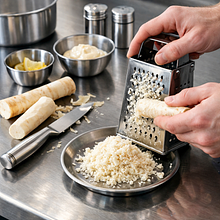
Prepare the horseradish mousse: peel the horseradish root and grate it on a fine grater just before preparation. In a bowl, place the grated horseradish (120 g), add 200 g of 18% cream and the juice of 1 lemon (about 50 g). Add 2–3 g of sugar and a pinch of salt, and mix thoroughly until you achieve a smooth consistency. Taste and adjust with lemon juice or sugar if you need to soften the spiciness.
Ingredients:
horseradish, 18% cream, Lemon, Sugar, Salt
Use gloves if your skin is sensitive — fresh horseradish can irritate your hands. Grated horseradish quickly loses its aroma; prepare the sauce just before serving or at most 2–3 hours in advance and store it in the refrigerator.
Assembly and cooling
11
Prepare the dish: use a wide, flat container (e.g., a terrine dish or a large baking dish). Lay a layer of sauerkraut along one side of the container (about 1–1.5 cm), leaving part of the container free for placing the fish. Arrange the portions of carp on the surface (with the flesh side up), leaving small gaps between the pieces. If you like, you can also add a thin layer of sauerkraut between the pieces of fish for decoration.
Ingredients:
Sauerkraut, Carp
Use a square mold; if you plan to have nice slices of jelly, decide whether you want to use a single large dish or smaller bowls for portioning. Arrange the fish aesthetically, as it will be visible once set.
12
Carefully pour the slightly cooled broth with dissolved gelatin into the mold, evenly covering the fish and cabbage to about 5–10 mm above their surface. If foam appears, gently remove it with a spoon. Let it cool to room temperature, then place it in the refrigerator for at least 6 hours (preferably overnight) to allow the jelly to set properly.
Ingredients:
Gelatin, Water, Carp
Before pouring, check the temperature of the broth: it should be around 35–45°C — too hot jelly can dissolve the fish fat and reduce clarity. Use a strainer while pouring to catch any vegetable pieces.
Serving
13
Once set, remove the mold from the refrigerator. If you are using a glass mold, dip the bottom in hot water for a few seconds (note: do not pour water over the top) and gently turn it onto a plate to make slicing easier. Cut the jelly into portions with a knife dipped in hot water and dried. Serve each portion with a serving of stewed sauerkraut and a tablespoon of horseradish sauce on the side. Garnish with fresh dill (optional).
Ingredients:
Sauerkraut, Dill
For slicing, use a long knife dipped in hot water every few cuts — this will give you clean slices. Serve cold, as the jelly looks and tastes best when chilled.
Final tips
14
Before serving, taste and adjust the horseradish mousse with additional lemon or a pinch of salt if needed. If the jelly is too soft, next time increase the amount of gelatin by 2–3 g or allow the broth to reduce longer before dissolving the gelatin.
Ingredients:
Gelatin, Lemon, horseradish
Note the proportions and cooling time — different molds and refrigerator temperatures affect the concentration of the jelly. Freezing too quickly (e.g., in the freezer) will ruin the texture — use the refrigerator.
Fun Fact
💡
Carp in jelly is a classic of Polish holiday tables; jelly was once a way to preserve fish and cold cuts before the era of refrigeration — the winter cold favored the setting of the jelly and longer storage of dishes.
Serve well chilled (4–8°C). Pair with dark, crusty bread, slices of lemon, and a small bowl of horseradish sauce on the side. If you enjoy contrasts, add thinly sliced pickles for an extra fresh acidity.
🥡Storage
Store in the refrigerator in a sealed container for up to 3 days. The jelly can absorb odors — keep it covered. Do not freeze the prepared jelly (the consistency will change). Store the horseradish separately in an airtight container for up to 3 days.
Dishes for special occasions are culinary masterpieces for birthdays, anniversaries, and holidays. Grilled beef steak with herb butter - restaurant quality at home. Beef Wellington - beef in puff pastry with duxelles. Roast duck with apples - a holiday tradition in a new edition. Pink salmon with...
Comments (0)
Be the first to comment on this recipe!
Add a comment