Recipe for: Buckwheat Noodles with Sage Butter and Young Asparagus

Main dishes Regional Cuisine of Poland 60 min Medium 4 wyświetleń ~12.04 PLN * - (0)
Rate:
(0)
Start Cooking

Description

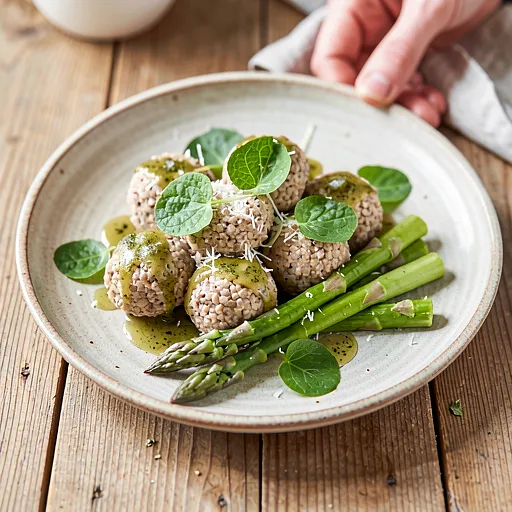
Buckwheat dumplings are a rustic, hearty dish inspired by Masurian cuisine, where buckwheat has always had its place on the table. In this spring version, cooked and mashed buckwheat is combined with flour and egg, creating delicate dumplings with a distinct nutty aroma. They are served with clear sage butter, young, crunchy asparagus, and optional sorrel or grated yellow cheese. The dish combines contrasting textures: soft dumplings, slightly crunchy asparagus, and velvety butter; flavor-wise, it brings together earthy notes of buckwheat, herbal sage, and the freshness of spring vegetables. Great as a main course for a spring lunch, served with a simple salad of young leaves or buttermilk.

Ingredients Used

Ingredients (12)

Servings:
4
  • Buckwheat groats 300 g
  • Water 600 ml
  • Wheat flour 200 g
  • Chicken egg 2 szt. (~120 g)
  • Butter 80 g
  • Sage 30 g
  • Green asparagus 400 g
  • Onion 1 szt. (~150 g)
  • 🌿 Przyprawy
  • Salt 6 g
  • Black pepper 4 szczypty (~2 g)
  • ✨ Opcjonalne
  • Cheese 80 g
  • Sorrel 30 g
💰 Szacowany koszt dania: ~12.04 PLN (3.01 PLN/porcję)
* Brak cen dla niektórych składników

💡 Kliknij na składnik aby oznaczyć jako użyty

Preparation steps

Preparing the groats

1

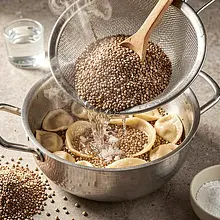
Rinse the dry buckwheat under cold running water in a colander until the water runs clear. Transfer the buckwheat to a medium pot, add 600 ml of water and 2 g of salt (from the salt pool). Place over medium heat, bring to a boil uncovered, then reduce the heat to low so that the water barely simmers. Cover and cook for 12-15 minutes, until the water is absorbed. After cooking, remove the lid and let it sit for 5 minutes, then fluff the buckwheat with a fork - the grains should be loose and separated.

Ingredients: Buckwheat groats, Water, Salt
Use a pot with a thick bottom with a capacity of ~2–3 l. Do not stir the groats vigorously while cooking - this will disrupt the water absorption process. The cooked groats should be fluffy, not mushy.
Preparing the dough

2

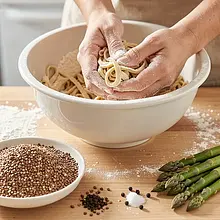
Transfer the slightly cooled groats (it should be warm, not hot) to a large bowl. Add wheat flour (200 g) and beaten egg (120 g). Add the remaining salt for the dough (about 4 g if the rest was used for cooking) and 1 pinch of pepper. Start mixing with a spoon, and when the mixture begins to come together, transfer it to a lightly floured work surface and knead briefly by hand (about 1-2 minutes) until the dough is cohesive, soft, and not sticking too much to your hands. If the mixture is too sticky, add a maximum of 30 g of flour, one spoon at a time. The dough should not be hard, but rather pliable and slightly moist.

Ingredients: Buckwheat groats, Wheat flour, Salt, Black pepper
Use a wooden spoon for the initial mixing and your hands for finishing. If you don't want to knead by hand, use a mixer with a dough hook for 1 minute on low speed. Don't knead too long - 1–2 minutes is enough.

Resting the dough

3

Cover the dough with a clean cloth and set aside for 15 minutes in a warm place. The resting time will allow the gluten to relax and make it easier to shape the dumplings.

Ingredients: Wheat flour, Buckwheat groats
Use a large bowl or cover with plastic wrap if there is a draft in the kitchen. Do not put in the fridge - the dough should be at room temperature.

Shaping the dumplings

4

Divide the dough into 4 equal parts. On a floured countertop, shape each part into a roll about 2 cm thick. Use a dough knife or a pointed wooden spatula to cut the rolls into pieces 2 cm long — you will get dumplings. If you like, gently flatten each piece with a fork or the end of a spoon, creating a light pattern. Place the finished dumplings on a floured tray to prevent them from sticking together.

Ingredients: Wheat flour, Buckwheat groats
It's best to shape the dumplings in batches, not leaving raw pieces exposed to the air for too long. Use a floured table and a dough cutter or a sharp kitchen knife.

Cooking dumplings

5

In a large pot, bring at least 2 liters of water to a boil with 4 g of salt. Add the dumplings in batches to the boiling water — do not add too many at once, as it will lower the temperature. The dumplings will initially sink, then rise to the surface; from the moment they float, cook for 3-4 minutes. Check one dumpling: cut it in half - the center should be uniform, without raw flour, and the texture should be elastic. Remove with a slotted spoon and set aside on a plate.

Ingredients: Water, Salt
Use a large pot and a slotted spoon. Cook the dumplings in batches so they don't stick together and don't lower the water temperature. Cooking time may be extended for thick dumplings.

Asparagus sauce

6

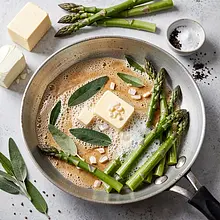
Melt 60 g of butter in a large skillet over medium heat. Add finely chopped onion (150 g) and sauté for 4-5 minutes until it becomes translucent and slightly golden (the onion should be semi-transparent, not burnt). Add torn sage leaves (from a bunch, about 20 g) and sauté for 20-30 seconds to release their aroma. Add cut asparagus (4 cm long) and sauté for 4-6 minutes — they should be tender-crisp and intensely green. Season to taste with salt and pepper. Finally, add the remaining 20 g of butter and stir to create a light, glossy sauce.

Ingredients: Butter, Onion, sage, green asparagus, Salt, Black pepper
The best is a wide pan with a diameter of 24–28 cm. Fry over medium heat so that the sage does not burn (burnt sage becomes bitter). Thin asparagus will cook faster – check their tenderness with a fork.

Finishing the dumplings

7

Transfer the cooked dumplings directly to the pan with sage butter and asparagus. Sauté together for 1-2 minutes, gently stirring, so that the dumplings absorb the flavors of the butter and sage. The dumplings should be slightly browned on the surface but remain soft on the inside.

Ingredients: Butter, green asparagus, sage, Wheat flour, Buckwheat groats
Use a wooden spoon or spatula for gentle mixing. If the pan is too small, combine the ingredients in a large bowl and gently mix with the butter there.

Serving

8

On warmed plates, place a portion of dumplings with sage butter and asparagus. Optionally, sprinkle with grated yellow cheese (80 g divided among portions) and garnish with a few leaves of fresh sorrel (30 g bunch used as garnish) for a tangy contrast. Serve immediately — the dish tastes best warm, with velvety butter and crisp asparagus.

Ingredients: Cheese, sorrel, green asparagus, Butter
Use flat plates with a diameter of 24–28 cm to nicely arrange the dumplings and asparagus. Additionally, you can serve a slice of lemon on the side for guests to squeeze for freshness.

Cleaning and final tips

9

After preparing, wash the used dishes: soak the pot from the groats and the large pot from cooking the dumplings, wipe the pan immediately after it cools down to prevent the leftover butter from burning. If there is some sage butter left, you can pour it into a jar and store it in the fridge for up to 3 days.

Ingredients: Butter
For washing, use warm water with detergent and a soft sponge. Do not leave burnt residues on the pan - soak immediately.

Fun Fact

💡

In the Masurian regions, buckwheat was a staple of the diet and often used not only as a side dish but also as a base for dumplings or pancakes. Sage appeared in the kitchen as an aromatic herb that adds a lot of flavor in small amounts.

Best for

Tips

🍽️ Serving

Serve the dish immediately after preparation, preferably on warm plates. For a flavor contrast, add a slice of lemon or a portion of sour cream/buttermilk on the side. You can sprinkle with parsley or finely chopped sorrel.

🥡 Storage

Store the leftover dumplings in an airtight container in the refrigerator for up to 2 days. To reheat, use a skillet over low heat with a bit of butter or in the oven at 160°C for 8-10 minutes. Do not freeze the dumplings – they become rubbery after thawing.

📸 Ugotowane przez społeczność

Zaloguj się, aby dodać zdjęcie
Dodaj zdjęcie gotowej potrawy

Po zatwierdzeniu przez moderatora otrzymasz 10 punktów doświadczenia.

🍲

Nikt jeszcze nie dodał zdjęcia. Bądź pierwszy!

Comments (0)

Be the first to comment on this recipe!

Add a comment

You might also like

Recipe Categories

Main courses are the heart of every meal - hearty, nutritious, and full of flavor. In this category, we present a rich selection of recipes for lunches and dinners that will satisfy even the most discerning palates. From classic Polish pork chops to aromatic chicken dishes, to exquisite steaks an...

See all recipes in this category

Traditional recipes from various regions of Poland that showcase the richness of local flavors and ingredients.

See all recipes in this category
Reklama