Peel the potatoes, rinse them under cold water, and cut them into even pieces (about 2–3 cm). Place them in a large pot and cover with cold water so that the water covers the potatoes by about 2 cm. Add half of the salt (4 g). Bring to a boil over high heat, then reduce the heat and cook over medium heat for 18–25 minutes, until the potatoes are soft — you can check this with a fork: the fork should easily go into the potato, and a piece should break apart.
Description
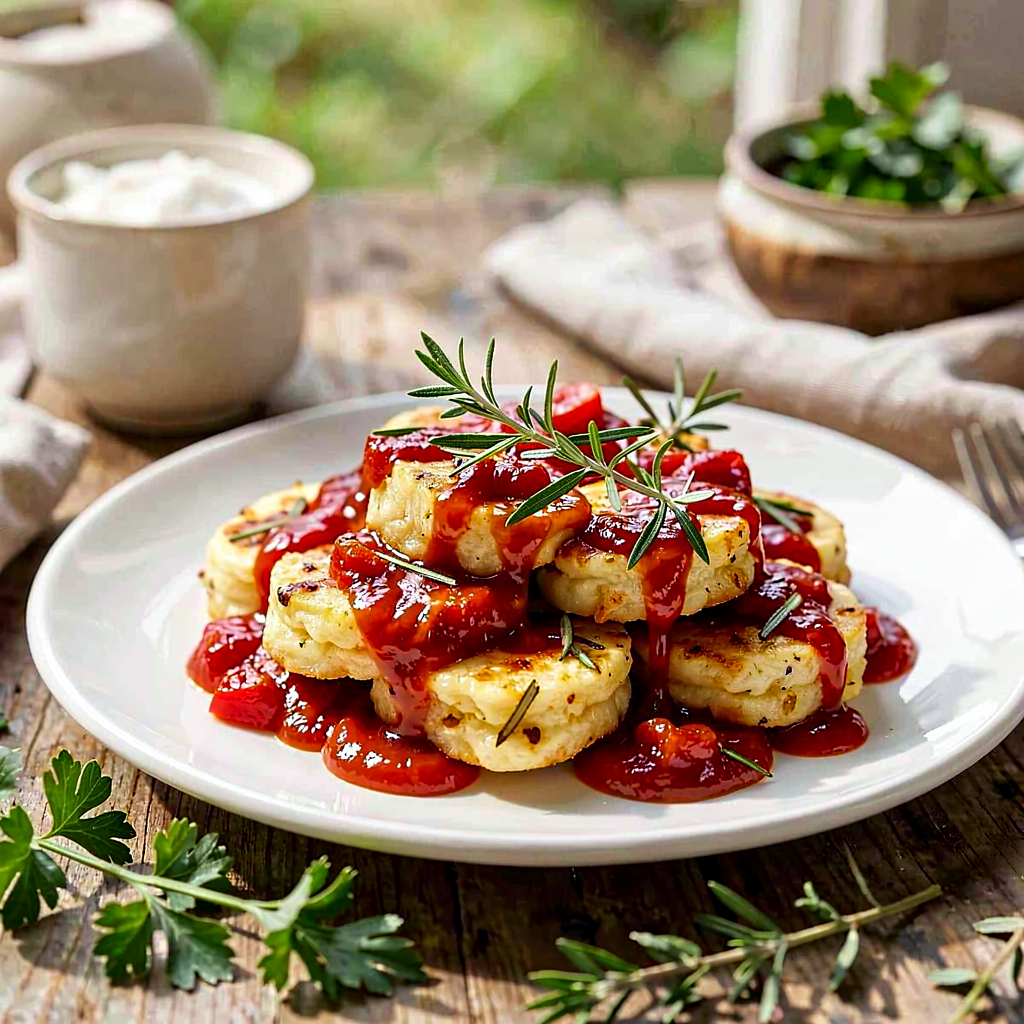
Silesian dumplings with roasted tomato sauce and fresh thyme are a summer variation on the traditional dish from Greater Poland. Soft, slightly chewy dumplings are made from mashed potatoes and potato flour; they are served with an aromatic sauce made from roasted summer tomatoes, caramelized onions, and garlic, seasoned with fresh thyme. The dish combines the gentle texture of the dumplings with the juicy, slightly sweet-and-sour notes of the sauce; it looks impressive thanks to the red tomatoes and green thyme leaves. It works well as a main dish for summer family gatherings or as a warm element of a barbecue feast. It is recommended to serve with a simple cucumber and dill salad or with grilled peppers.
Ingredients Used
Ingredients (14)
- Potatoes 6.7 pcs (~1000 g)
- Chicken egg 2 pcs (~120 g)
- Potato flour 120 g
- Butter 30 g
- Tomato 6.7 pcs (~800 g)
- Onion 1 pcs (~150 g)
- Garlic 3 clove (~15 g)
- Rapeseed oil 30 g
- Sugar 10 g
- 🌿 Spices
- Salt 8 g
- Black pepper 4 pinch (~2 g)
- Thyme 30 g
- ✨ Optional
- Sour cream 100 g
- Parsley 1 bunch (~30 g)
💡 Click an ingredient to mark it as used
Preparation steps
Noodles
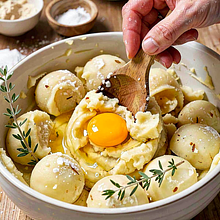
Drain the potatoes in a colander. Put them back into the empty pot placed over low heat for 1–2 minutes to evaporate the excess moisture; shake the pot occasionally. Then transfer the potatoes to a large bowl and mash them with a potato masher or press them through a ricer — the goal is to achieve a smooth, lump-free consistency.
To the cooled, warm potatoes, add the whole egg and the remaining salt (4 g). Start mixing with a wooden spoon, and when the ingredients combine, gradually add the potato starch. It's best to add 3/4 of the amount, mix, and then add by the spoonful until the mixture stops being very sticky. The dough should be smooth and slightly elastic, not hard. If it is too sticky, add a small amount of potato starch; if it is too dry and cracks, you can add a bit of beaten egg or a tablespoon of cold water.
Divide the dough into 12–16 equal parts (for 4 servings of 3–4 dumplings each). Take a portion by hand, shape it into a ball the size of a walnut, then gently flatten it and make an indentation in the center with your finger about 1 cm in diameter — this is the characteristic 'eye' of the Silesian dumpling that will hold the sauce. If the dumplings stick to your hands while shaping, wet your hands with cold water or sprinkle a little potato flour.
In a large pot, bring salted water to a boil (the rest of the salt has already been added earlier). Place the dumplings in batches into the boiling, but not very vigorous, water. When the dumplings float to the surface, cook them for another 2–3 minutes (counting from the moment they float). Remove with a slotted spoon and place on a plate; you can immediately drizzle with a piece of butter to prevent them from sticking together.
Sauce
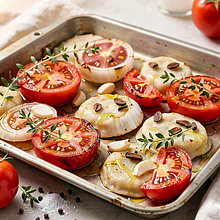
Preheat the oven to 200°C (top-bottom) or 180°C with convection. Cut the tomatoes in half or quarters if large. Peel the onion and cut it into thick wedges. Peel the garlic and leave it whole or lightly crush it with a knife. Line a baking tray with parchment paper, place the tomatoes cut side down (if using cherry tomatoes — whole), add the onion and garlic. Drizzle everything with rapeseed oil (30 g), sprinkle with sugar (10 g), season lightly with salt and pepper. Scatter thyme sprigs (you can press some between the tomatoes). Bake for 25–35 minutes until the tomatoes are shriveled, browned at the edges, and soft in the center.
After baking, transfer the vegetables to a tall container (carefully — hot) and wait 5 minutes for them to cool slightly. Remove the larger thyme sprigs (you can leave the leaves). Blend everything with a blender until smooth puree. If you want a creamier sauce, add cream (100 g) before blending. Strain the sauce through a sieve if you want to get rid of the skins and seeds — this will give you a smooth consistency.
Pour the blended sauce into a medium-sized saucepan and cook over low heat for 5–8 minutes, until it thickens slightly. Add butter (30 g) and stir until it melts — this will give the sauce a shine. Taste and season with salt, pepper, and possibly a bit of sugar if the sauce is too sour. Finally, add fresh thyme leaves (removed from the stems) for a vibrant aroma.
Serving
Heat the dumplings (briefly in a steamer or by placing them back in boiling water for 30–60 seconds), then drain. Place a portion of dumplings on a plate, generously drizzle with roasted tomato sauce. Garnish with fresh thyme leaves and, if using, chopped parsley (30 g). Serve hot.
Additionally, you can add a few tablespoons of natural yogurt to the sauce instead of cream for a lighter version, or sprinkle with grated aged cheese when serving. Serve with a simple cucumber and dill salad or a light coleslaw made from white cabbage.
Fun Fact
Silesian dumplings are one of the culinary icons of Silesia and Greater Poland — their characteristic "eye" was originally designed for better sauce retention. In the summer version with roasted tomatoes, tradition meets the seasonal abundance of fresh vegetables.
Best for
Tips
Serve the dumplings hot, right after preparing the sauce. First, place the dumplings on the plate, then add the sauce — this will help maintain the contrast of textures. For visual effect, add fresh thyme leaves and chopped parsley. Serve with pickles or a light arugula salad.
Noodles: store separately from the sauce in the refrigerator for up to 2 days in an airtight container. Sauce: can be stored in the refrigerator for up to 3 days. Briefly reheat the noodles in hot water (30–60 s) or steam them, and gently heat the sauce over low heat, adding a little water if it thickens.
📸 Cooked by the community
Log in to add a photoAdd a photo of the finished dish
After moderator approval, you will receive 10 experience points.
No one has added a photo yet. Be the first!
Comments (0)
Be the first to comment on this recipe!
Add a comment