Power Ball Barley Soup

Pikantne Soups Regional Cuisine of Poland 90 min Medium 85 wyświetleń ~10.10 PLN * - (0)
Rate:
(0)
Start Cooking

Description

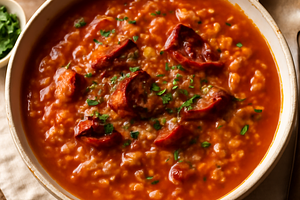
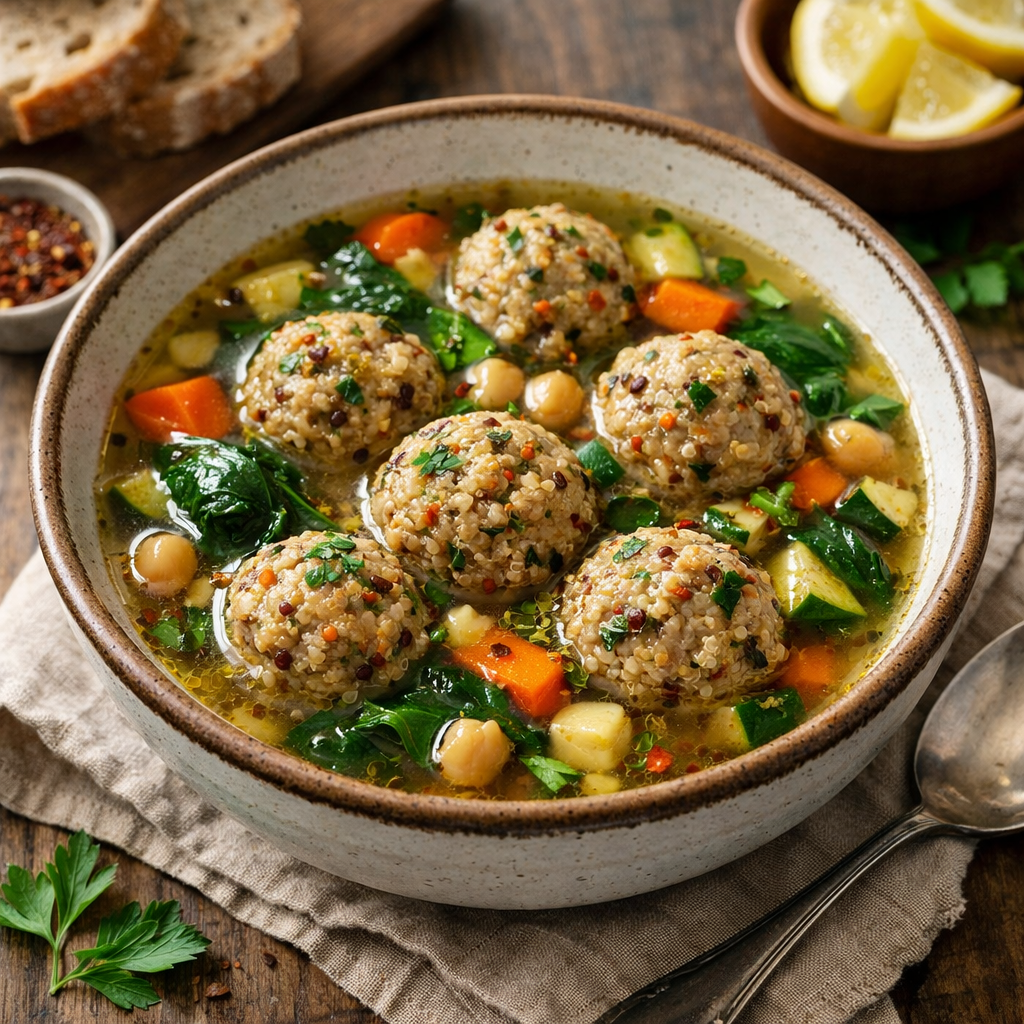
Krupnik with a power ball is a traditional, warming Polish soup, where the base is an aromatic broth made from ribs and barley, and the "power ball" is a combination of ground meat and buckwheat – a juicy, seasoned meatball that adds heartiness and depth of flavor to the soup. The dish combines the classic simplicity of regional cuisine (warming broth, spiced vegetables, marjoram) with a modern twist – baked balls that are first browned and then softened in the soup. Serve krupnik hot, sprinkled with fresh parsley and freshly ground pepper; it pairs well with whole grain bread or pickles. Visually: a golden broth with visible grains of barley, pieces of vegetables, and a few brown balls – appetizing and homely.

Ingredients Used

Ingredients (21)

Servings:
4
  • Pork rib 400 g
  • Ground pork 300 g
  • Barley groats 160 g
  • Buckwheat groats 100 g
  • Carrot 3.8 szt. (~300 g)
  • Celeriac 150 g
  • Leek 150 g
  • Onion 1.5 szt. (~225 g)
  • Garlic 4 ząbki (~20 g)
  • Potatoes 2 szt. (~300 g)
  • Rapeseed oil 30 g
  • Water 2000 ml
  • Chicken egg 1 szt. (~60 g)
  • 🌿 Przyprawy
  • Parsley 120 g
  • Salt 8 g
  • Black pepper 4 szczypty (~2 g)
  • Bay leaf 6.7 szt. (~2 g)
  • Allspice (berries) 3 szt. (~3 g)
  • Marjoram 4 g
  • Parsley 0.5 pęczek (~15 g)
  • ✨ Opcjonalne
  • Breadcrumbs 50 g
💰 Szacowany koszt dania: ~10.10 PLN (2.53 PLN/porcję)
* Brak cen dla niektórych składników

💡 Kliknij na składnik aby oznaczyć jako użyty

Preparation steps

Broth

1

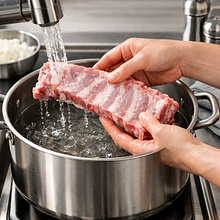
Wash the rib under cold water and place it in a large pot with a capacity of at least 4 l. Cover with 2 liters of cold water (the water should completely cover the meat). Leave the meat in cold water for 5 minutes to rinse out any remaining blood, then drain the water, rinse again, and pour in fresh 2000 ml of water.

Use a large, heavy pot (at least 4 l). Starting with cold water allows you to extract flavor from the bones and meat; do not pour in boiling water right away.
2

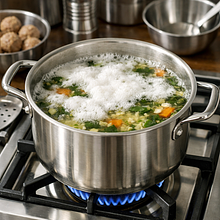
Place a pot over medium heat and slowly bring to a boil. When white foam appears on the surface (the first 8–12 minutes), remove it with a slotted spoon or a long-handled spoon. This is important for a clear broth.

Use a slotted spoon or a sieve. Do not stir vigorously to avoid breaking the foam and clouding the broth.
3

Peel the carrot, parsley, celery, and onion. You can cut the onion in half and lightly char it in a dry pan or directly over the flame (charred onion adds sweetness). Add to the pot: carrot 300 g (whole or halved), parsley 120 g, celery 150 g, leek 150 g (only the white and light green part), season with 2 bay leaves and 3 allspice berries. Add 3/4 of the salt (about 6 g) now, leaving the rest for later.

Peel the vegetables with a sharp peeler; wash the leek thoroughly between the leaves. Roast the onion in a dry pan for 2–3 minutes after cutting, until it browns at the edges.
4

Reduce the heat to low so that the broth simmers gently. Partially cover the pot with a lid (leave a small gap), and cook for 60 minutes. The broth should gently bubble, not boil vigorously. After 30 minutes, proceed to the step with the pearl barley.

Keep the temperature on low heat – the broth clarifies and gains aroma. Boiling vigorously will cause cloudiness and loss of flavor.
5

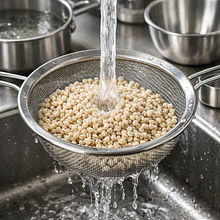
Rinse the pearl barley 160 g under cold water in a sieve to remove any dust. After 30 minutes of boiling the broth, add the barley to the pot. Slightly increase the heat for 2–3 minutes until it starts to gently boil again, then reduce the heat and cook for another 35–40 minutes. The barley should be soft when tasted – it is ready when it is soft inside but not mushy.

Rinsing the pearl barley reduces foaming and removes dust. Test the softness of the barley after 35 minutes – some batches may need a few extra minutes.
6

When the groats have about 15 minutes left to cook, peel and dice the potatoes into 1.5 cm cubes (300 g) and add them to the pot. Cook for the remaining time – the potatoes will be soft after about 12–15 minutes. After cooking, check the taste and add salt if necessary (remaining salt 2 g).

Cutting the potatoes into even cubes ensures even cooking. If you add the potatoes too early, they will become mushy.

Energy ball

7

Cook 100 g of buckwheat: rinse the buckwheat, pour in about 200 ml of water, bring to a boil, reduce the heat and cook for 12–15 minutes covered until the water is absorbed and it is fluffy. After cooking, fluff with a fork and set aside to cool (at least 10 minutes).

Use a small pot with a lid. The buckwheat should be fluffy, not mushy – if it's too wet, drain the excess and wait until it dries slightly.
8

In a pan, heat 15 g of rapeseed oil (1 tablespoon). Finely chop 75 g of onion and sauté over medium heat for 3–4 minutes until it becomes translucent and lightly golden. Add 1 clove of garlic (5 g), finely chopped, and sauté for 30 seconds until fragrant. Transfer to a large bowl and let cool for a few minutes.

Use a pan with a diameter of 24–26 cm; monitor the temperature – the onion should become translucent, not burnt. A wooden spoon makes stirring easier.
9

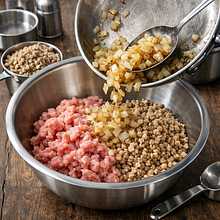
In a large bowl, combine: ground pork 300 g, cooked buckwheat, sautéed onion with garlic, egg 60 g, chopped parsley 10 g, salt (about 1 g), black pepper 1 g, and marjoram 2 g. Mix by hand or with a spoon until the ingredients are combined. If the mixture is too loose, gradually add breadcrumbs (up to 50 g) until a moldable consistency is achieved.

Use a bowl with a capacity of at least 3 l. Mix by hand while wearing a disposable glove or with damp hands – moisture makes shaping easier. Do not add too much breadcrumbs so that the balls are not dry.
10

Form balls from the mixture weighing about 30 g (about 10–12 balls). Gently flatten each ball to have an even shape – it will fry more easily and cook faster in the soup.

Use a kitchen scale or scoop the portion with a spoon. Do not pack the balls too tightly – a mixture that is too dense will result in a hard center.
11

In a large skillet, heat the remaining 15 g of rapeseed oil over medium-high heat. Fry the balls in batches for 2–3 minutes on each side until they turn golden brown (they should be browned, but not fully cooked). Set aside on a plate.

The pan should be well heated; do not overcrowd the pan, as the balls will steam instead of browning. Use a spatula to turn them.
12

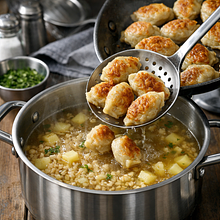
Transfer the browned balls to a pot with broth (when the groats and potatoes are almost soft). Cook in the broth for 10–12 minutes on low heat to finish cooking inside – check one ball: cut it in half; the center should be hot and juicy, with clear juices.

Use a slotted spoon to carefully place the balls in so they don't get damaged. If you are using a thermometer, the internal temperature of the meat should be at least 75°C.

Finishing and serving

13

Remove the larger pieces of ribs from the pot (if you want, you can take the meat off the bones, chop it, and add it back) as well as the larger pieces of vegetables that you want to serve cut – you can slice the carrot and parsley or lightly mash them with a fork to give the soup texture. Add the remaining 2 g of salt and 2 g of marjoram, mix, and cook for another 2 minutes. Add 5 g of chopped parsley and freshly ground pepper to taste.

Remove the bay leaves and allspice before serving. If you don't want pieces of meat from the rib, take them out earlier and separate the meat from the bones.
14

Serve the barley soup hot: for each portion, place 2–3 balls of power (depending on size) and generously pour over the broth with barley and vegetables. You can add a tablespoon of sour cream or serve with pickled cucumber on the side for contrast.

A deep bowl is best. Serve immediately, as the balls will absorb the liquid – if you want the balls to stay firm longer, serve them separately and add them to the soup just before eating.

Fun Fact

💡

Krupnik is one of the oldest Polish soups made with groats; it was traditionally cooked with lard and meat, and the groats were added as a strengthening element – the version with the 'power ball' is a modern twist, combining the soup with a form of a hearty dumpling.

Best for

Tips

🍽️ Serving

Serve hot, with a sprinkle of fresh parsley and freshly ground pepper. For contrast, add a slice of pickled cucumber or a tablespoon of sour cream. If preparing in advance, keep the dumplings separate and add them to the soup just before serving to prevent them from soaking too much.

🥡 Storage

Store the broth and balls separately in the fridge for up to 3 days (in airtight containers). To reheat: warm the broth over low heat until boiling, add the balls, and cook for 6–8 minutes until hot. Do not freeze the balls with the groats for longer than 1 month, as the texture may change.

📸 Ugotowane przez społeczność

Zaloguj się, aby dodać zdjęcie
Dodaj zdjęcie gotowej potrawy

Po zatwierdzeniu przez moderatora otrzymasz 10 punktów doświadczenia.

🍲

Nikt jeszcze nie dodał zdjęcia. Bądź pierwszy!

Comments (0)

Be the first to comment on this recipe!

Add a comment

You might also like

Recipe Categories

Soups
Soups in: New Year's Eve

Soups for New Year's Eve can be both warming and light, perfect to serve before the main course.

See all recipes in this category

Traditional recipes from various regions of Poland that showcase the richness of local flavors and ingredients.

See all recipes in this category
Reklama