If you are using dried chickpeas: pour about 200 g of dried beans into a bowl and cover them completely with cold water (the water should be about 3 cm above the beans). Let them soak for at least 8 hours (preferably overnight). After soaking, drain and cook in fresh water for 60–90 minutes over low heat, until the beans are soft and can be easily mashed between your fingers. If you are using canned chickpeas: drain and rinse them under running water for 30 seconds. After draining, set aside 2–3 tablespoons of chickpeas for decoration, and use the remaining part for the hummus.
Description
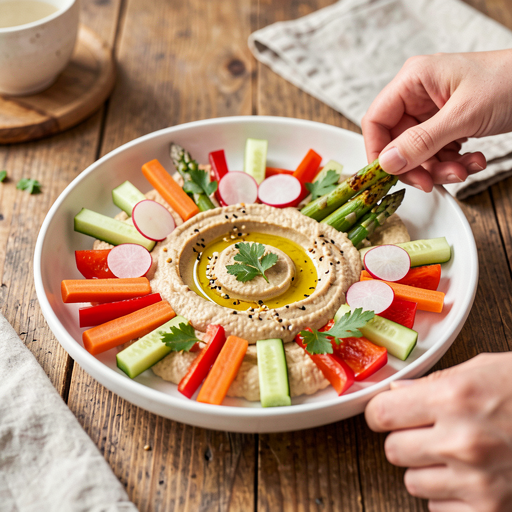
Creamy hummus made from chickpeas and tahini served with colorful spring vegetables (young carrots, radishes, cucumber, red bell pepper, asparagus). The dish combines classic Middle Eastern flavors with a Polish seasonal twist: lightly blanched or grilled asparagus and young carrots add sweetness and crunch, while toasted sesame and fresh parsley bring aroma. It’s the perfect appetizer for May Day — easy to prepare at home or on the grill, visually appealing and filling, yet light. The hummus can be made from canned chickpeas (quick version) or dried chickpeas (more intense flavor) — I describe both methods along with practical tips on how to achieve the perfect smooth consistency.
Ingredients Used
Ingredients (15)
- Chickpeas 400 g
- Sesame paste 60 g
- Olive oil 2 łyżki (~30 g)
- Lemon 1.9 szt. (~150 g)
- Garlic 2 ząbki (~10 g)
- Cumin 5 g
- Water 60 ml
- Young carrot 300 g
- Radish 150 g
- Cucumber 1 szt. (~300 g)
- Red bell pepper 1.1 szt. (~200 g)
- Asparagus 200 g
- 🌿 Przyprawy
- Salt 6 g
- ✨ Opcjonalne
- Parsley 1 pęczek (~30 g)
- Sesame 20 g
💡 Kliknij na składnik aby oznaczyć jako użyty
Preparation steps
Hummus
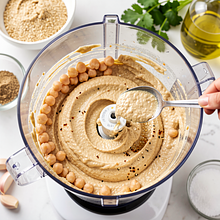
Place the drained chickpeas, tahini, lemon juice (from 1.5 lemons), peeled garlic, cumin, and salt into the blender or food processor. Start blending on low speed to combine the ingredients. While blending, gradually add the olive oil and warm water (one tablespoon at a time) until you achieve a creamy, smooth consistency. Stop the blender and scrape the sides of the bowl with a spatula a few times to ensure everything is blended evenly.
Taste the hummus and adjust the seasonings: add more lemon juice, salt, or garlic to your liking. If you want a very creamy hummus, you can pass the mixture through a sieve and collect the smooth part — this is an optional step for a super silky texture.
Vegetables
Prepare the vegetables: gently peel the young carrots and cut them into long sticks; cut the cucumber lengthwise and scoop out the seeds with a spoon, then cut into sticks; clean the bell pepper from the seed pod and cut into strips; wash and dry the radishes — you can leave the small ones whole or cut them in half.
Asparagus: snap off the woody ends (hold each asparagus with both hands and bend — the tough ends will naturally break off). Option 1: blanch the asparagus in boiling, lightly salted water for 2–3 minutes, then transfer to a bowl of ice-cold water to stop the cooking process and preserve the color. Option 2 (spring twist): briefly grill on a hot grill pan or on the grill with a little oil for 3–5 minutes, until there are slight char marks and the asparagus is tender-crisp.
Serving
In a large, flat bowl or serving board, transfer the hummus, spreading it with a spoon to create a gentle indentation in the center. Pour 1–2 tablespoons of olive oil into the indentation, place a few reserved whole chickpeas on top, and sprinkle with toasted sesame seeds and finely chopped parsley (if using). Arrange the vegetables around the hummus in colorful groups for easy access to different flavors.
Serve the hummus immediately after preparation or chilled. Hummus pairs wonderfully with sourdough bread, crispy millet crackers, or as an addition to sandwiches and salads during the May holiday.
Fun Fact
Hummus originates from Middle Eastern cuisine and has many regional versions. Traditionally, it is served with olive oil and paprika, and in Poland, seasonal vegetables are often added — spring asparagus or young carrots create an interesting local twist.
Best for
Tips
Serve the hummus in a wide, flat dish, with a small indentation for the olive oil and toppings. Arrange the vegetables by color — it will look appealing on the table. For those who prefer spicy flavors, serve sliced chili peppers on the side.
Store hummus in an airtight container in the refrigerator for up to 3 days. If it has been at room temperature for more than 2 hours (e.g., at a picnic in the heat), it is better to throw it away. It is not suitable for reheating — serve chilled or at room temperature. Before serving, stir and optionally add a tablespoon of olive oil if the consistency has thickened.
📸 Ugotowane przez społeczność
Zaloguj się, aby dodać zdjęcieDodaj zdjęcie gotowej potrawy
Po zatwierdzeniu przez moderatora otrzymasz 10 punktów doświadczenia.
Nikt jeszcze nie dodał zdjęcia. Bądź pierwszy!
Comments (0)
Be the first to comment on this recipe!
Add a comment