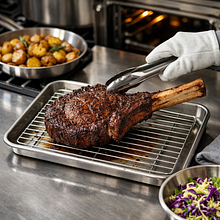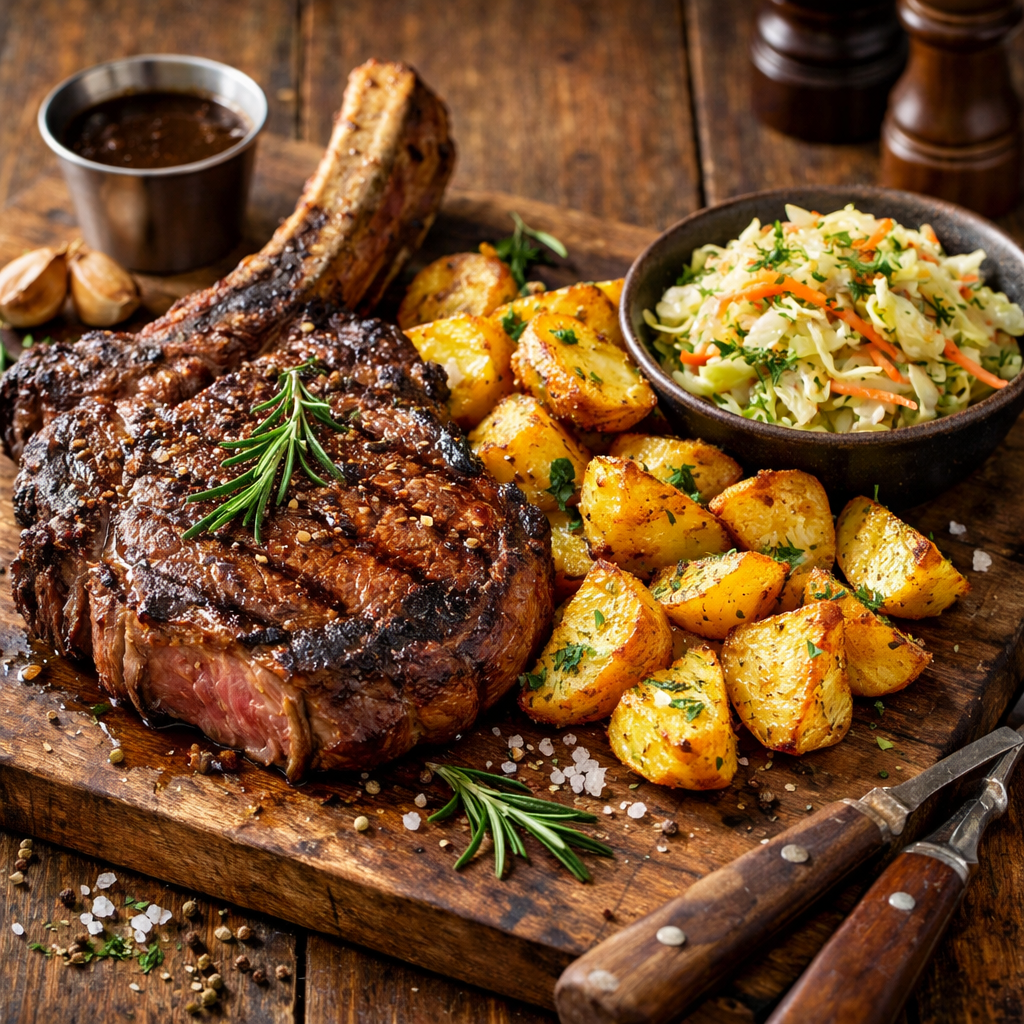
Tomahawk with roasted potatoes and coleslaw with cabbage and sauerkraut

Pikantne Main dishes Grilling Regional Cuisine of Poland 150 min Medium 38 wyświetleń ~18.08 PLN * - (0)
Rate:
(0)
Start Cooking

Description

An impressive tomahawk (a long ribeye with the bone attached) served with crispy roasted potatoes and a winter coleslaw combining fresh white cabbage with sour fermented cabbage, as well as apple and carrot. The dish combines the meaty, buttery-citrusy flavor of the steak with the earthy sweetness of the potatoes and the refreshing, tangy coleslaw that lightens the richness of the meat. This dish is perfect for a festive dinner or a weekend grill/home meal. Aesthetically presented — we arrange slices of steak in a fan shape next to a pile of golden potatoes, and serve the coleslaw in a bowl alongside or directly on the plate as a color contrast.

Ingredients Used

Ingredients (19)

Servings:
4
  • Tomahawk (ribeye steak with bone) 1200 g
  • Potatoes 5.3 szt. (~800 g)
  • Rapeseed oil 30 g
  • Garlic 3 ząbki (~15 g)
  • Fresh rosemary 0.3 pęczków (~30 g)
  • White cabbage 400 g
  • Sauerkraut 150 g
  • Apple 0.8 szt. (~150 g)
  • Carrot 1.9 szt. (~150 g)
  • 12% cream 100 g
  • Dijon mustard 20 g
  • Honey 15 ml
  • Apple cider vinegar 15 ml
  • 🌿 Przyprawy
  • Salt 10 g
  • Ground black pepper 2 szczypty (~2 g)
  • Dill 0.5 pęczek (~10 g)
  • ✨ Opcjonalne
  • Butter 50 g
  • Herb butter (optional, for drizzling over the steak) 50 g
  • Chives 0.3 pęczków (~30 g)
💰 Szacowany koszt dania: ~18.08 PLN (4.52 PLN/porcję)
* Brak cen dla niektórych składników

💡 Kliknij na składnik aby oznaczyć jako użyty

Preparation steps

Meat preparation

1

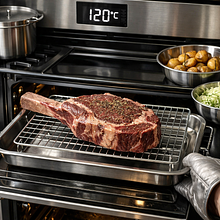
Remove the tomahawk from the refrigerator at least 60 minutes before cooking to reach room temperature — cold meat cooks unevenly. Before setting it aside, pat the meat dry with paper towels on both sides to ensure the surface is dry — this is key to achieving a good crust.

Use a large baking sheet with a rack or a plate; the meat should sit at room temperature for about 60–90 minutes. Patting it dry with a paper towel is important — moisture inhibits caramelization.
2

Rub the steak generously with salt and freshly ground pepper on both sides 30–40 minutes before cooking. You can apply the salt more thickly (coarse) — it will also act as a dry brine. If you are using coarse salt, gently rub it into the surface of the meat.

Use gloves or your hands; it's best to salt 30–60 minutes before baking. Don't be afraid of salt — thick pieces of fat need it to bring out the flavor.

Pre-baking (reverse sear)

3

Preheat the oven to 120°C (conventional mode). Place the steak on a rack over a baking tray (to allow air circulation) and put it in the oven. Bake until the internal temperature of the meat reaches about 50–52°C (for medium-rare) — this may take 40–60 minutes depending on thickness. Use a meat thermometer inserted into the thickest part of the meat, avoiding contact with the bone.

Use an electronic kitchen thermometer; it's the most reliable method. If you want rare — aim for 48–50°C, medium 56–58°C. With the reverse sear method, the inside will be evenly cooked, and only then will we achieve a crispy crust.

Potatoes - preliminary cooking

4

Wash the potatoes, if they are large cut them in half or quarters so that the pieces are roughly equal (about 4 cm). Place them in a pot with cold water, add salt to the water (about 1 teaspoon of salt per 1 liter). Bring to a boil and cook for 8–10 minutes — the potatoes should be almost soft but not overcooked; check with a fork: it should go in with slight resistance.

Use a large pot with a lid; cooking in cold water prevents uneven cooking. The time depends on the size of the pieces — do not let them become completely soft, as we will bake them afterwards.

Potatoes - seasoning and baking

5

Drain the steamed potatoes and leave them in the pot without a lid for 1–2 minutes to let excess moisture evaporate. Toss the potatoes into a large bowl, add canola oil, finely chopped garlic (pressed through a garlic press or finely chopped) and rosemary needles removed from the stems. Mix thoroughly so that each piece is lightly coated. Spread them out on a baking sheet lined with parchment paper in a single layer and bake at 220°C (top-bottom or convection) for 30–40 minutes until golden and crispy, stirring once halfway through the time.

The best is a tray with a rack — air circulation will enhance crispiness. Do not overcrowd the tray. Add garlic halfway through baking if you're worried it will brown too much.

Salad

6

Prepare the salad: finely shred the white cabbage (use a shredder or a sharp knife), drain and lightly salt (about 1/2 teaspoon). Massage the cabbage with your hands for 3–5 minutes until the leaves soften and release juice. In a separate bowl, add finely shredded sauerkraut (if it is very sour, rinse it briefly and drain), grated carrot, and apple cut into thin sticks or grated on a coarse grater.

Massaging the cabbage softens the fibers and enhances the flavor. If the sauerkraut is very sour, it's good to rinse and drain it so the salad isn't too overpowering.

Salad - dressing

7

In a small bowl, mix together 12% cream, Dijon mustard, honey, and apple cider vinegar. Season with salt and pepper to taste. Taste and adjust the proportions: add more honey if it's too sour, or more vinegar if you need to enhance the flavor. Pour the dressing over the bowl of vegetables, mix well, and set aside for 10–15 minutes to let the flavors meld.

Use a spoon or whisk to thoroughly emulsify the ingredients. The dressing should be clear, slightly creamy; avoid adding too much — it's better to add more later.

Searing the steak

8

When the steak reaches the target temperature of 50–52°C in the oven, remove it and let it rest for 10 minutes (a short 'rest' before searing). Heat a cast iron skillet (or heavy-duty skillet) over high heat. Add 1 tablespoon of canola oil — it should start to smoke slightly. Place the steak in the skillet and sear for 1.5–2 minutes on each side, pressing down gently, until a deep, caramelized crust forms. Add a sprig of rosemary and pieces of butter (if using) and baste the meat with the melted butter from the skillet for 30 seconds.

Use tongs to turn the steak; do not pierce with a fork (the juices will escape). A cast iron skillet retains high heat and gives the best crust. If the skillet starts to smoke too much, lower the heat temporarily.

Resting the meat and slicing

9

After browning, transfer the steak to a cutting board and wait 8–10 minutes before slicing — this allows the juices to redistribute evenly throughout the meat. When slicing, hold the knife at an angle to the muscle fibers (at a 45° angle) to ensure the slices are tender. If the tomahawk is large, you can first cut the meat away from the bone, and then slice it into pieces about 1 cm thick.

Resting is key — without it, the juices will run out onto the plate and the meat will be dry. Use a sharp knife for even slicing.

Finishing the potatoes and serving

10

Remove the potatoes from the oven, check the seasoning — add salt if necessary. Before serving, you can melt 20–30 g of butter and drizzle it over the potatoes for extra shine and flavor (optional). Arrange the steak slices in a fan shape on the plate, add a portion of potatoes and a portion of salad next to it. If you are using herb butter — place a slice of butter on the hot steak and let it melt. Gently sprinkle with chives (optional).

Remember the temperature contrasts: the steak and potatoes should be hot, while the salad is cold. Add decorative ingredients (rosemary, chives) at the end for aesthetics.

Serving

11

Serve the steak sliced, potatoes in groups of 3–4 pieces per serving, and the salad in a bowl next to it or on the plate. Add a sprig of rosemary and a slice of herb butter on the steak for an elegant finish. Serve with horseradish or pepper sauce on the side, if you like.

Use a wide plate so the meat can "breathe" on the plate. Serve immediately, as the best flavor experience is achieved right after the meat has rested.

Fun Fact

💡

The Tomahawk owes its name to its shape resembling a Native American tomahawk — a long bone protrusion is intentionally left for visual effect and isolates part of the meat, which affects the cooking method.

Best for

Tips

🍽️ Serving

Serve the steak sliced so that everyone can choose their preferred level of doneness. A cold salad and hot potatoes create a contrast that enhances the flavor of the steak. The addition of herb butter melted on the meat elevates the "restaurant" experience.

🥡 Storage

Store leftover meat tightly in the refrigerator for up to 2 days. Keep potatoes separately in a container for up to 2 days. Store the salad in a closed container for up to 2 days — it may become more sour. To reheat the meat, use the oven at a low temperature (about 120°C) for a few minutes to avoid drying it out.

📸 Ugotowane przez społeczność

Zaloguj się, aby dodać zdjęcie
Dodaj zdjęcie gotowej potrawy

Po zatwierdzeniu przez moderatora otrzymasz 10 punktów doświadczenia.

🍲

Nikt jeszcze nie dodał zdjęcia. Bądź pierwszy!

Comments (0)

Be the first to comment on this recipe!

Add a comment

You might also like

Recipe Categories

Main courses are the heart of every meal - hearty, nutritious, and full of flavor. In this category, we present a rich selection of recipes for lunches and dinners that will satisfy even the most discerning palates. From classic Polish pork chops to aromatic chicken dishes, to exquisite steaks an...

See all recipes in this category

Grilling is the art of preparing dishes over an open flame - the taste of summer and outdoor gatherings. Recipes for grilled meats: beef steak, pork neck, BBQ ribs, and chicken wings. Marinades that tenderize meat and add flavor: herb, Asian, honey-mustard. Grilled vegetables: bell peppers, zucch...

See all recipes in this category

Traditional recipes from various regions of Poland that showcase the richness of local flavors and ingredients.

See all recipes in this category
Reklama