

Prepare the vegetables. Place all the ingredients on the countertop. Wash the beets with a brush, peel them with a peeler, and cut them into 1–1.5 cm cubes (smaller pieces will cook faster and color the broth more easily). Peel the carrot and slice it into approximately 3–4 mm rounds. Peel the onion and chop it into small cubes. Peel the celery and cut it into cubes similar in size to the potatoes. Cut the leek lengthwise, halve the white part, and slice it into half-moons; rinse under running water to remove any sand. Peel the potatoes and cut them into 1–2 cm cubes. Peel the apple, remove the core, and cut it into small cubes. Drain the sauerkraut (if very sour, rinse briefly under water and squeeze out excess liquid) and, if it has long strands, chop it finely. Peel the garlic and gently crush it with a knife.
Description
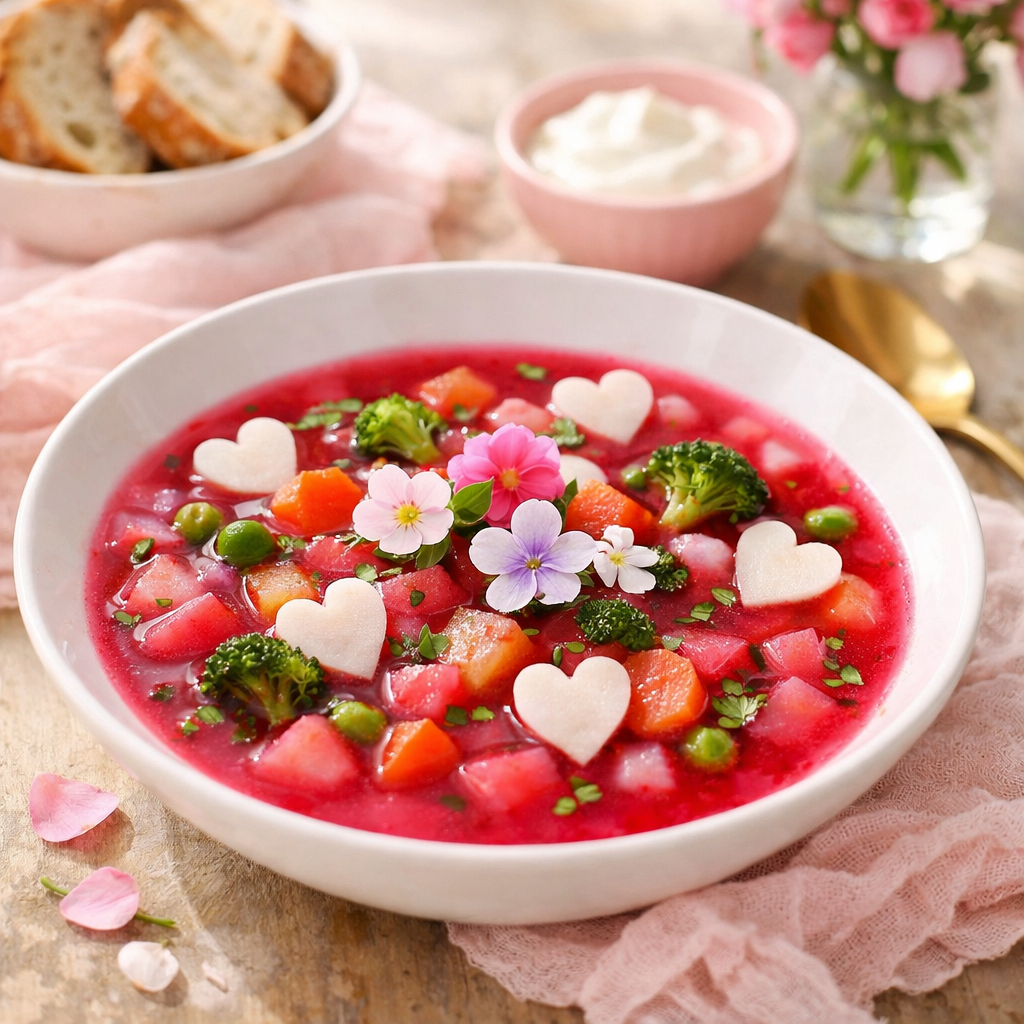
A light, aromatic soup with a delicate pink color, based on beets complemented by winter vegetables and the subtle acidity of apple and sauerkraut. This is a variation on traditional borscht, but served as a clear broth with pieces of vegetables — it looks impressive, tastes mild, and warms you up. It can be served with a dollop of cream or a spoonful of sour cream, garnished with parsley, or with thin slices of sourdough bread. Perfect for a winter lunch, a "princess-like" themed party (due to its color), or as a light appetizer before the main course. Qualities: the contrast of the sweetness of beet and apple with the tartness of sauerkraut, a beautiful pink hue, and a creamy texture when cream is added (optional).
Ingredients Used
Ingredients (18)
- Beets (raw) 600 g
- Carrot 2.5 pcs (~200 g)
- Onion 1 pcs (~150 g)
- Celeriac 150 g
- Leek 100 g
- Potatoes 2 pcs (~300 g)
- Apple 0.8 pcs (~150 g)
- Sauerkraut 150 g
- Vegetable broth 1200 ml
- Garlic 2 clove (~10 g)
- Rapeseed oil 30 g
- 🌿 Spices
- Salt 0.1 pinch (~4 g)
- Black pepper 4 pinch (~2 g)
- Parsley 0.5 bunch (~15 g)
- ✨ Optional
- Sour cream 100 g
- Apple cider vinegar 15 ml
- Canned peas 10 g
- Broccoli (florets) 20 g
💡 Click an ingredient to mark it as used
Preparation steps
Preparing the vegetables
Frying the base
In a large pot (about 3–4 l), heat canola oil over medium heat. When the oil starts to shimmer slightly (about 30–45 seconds), add the onion and sauté for 3–4 minutes, stirring with a wooden spoon, until the onion becomes translucent and slightly golden. Add the chopped leek and sauté for another 2 minutes. Add the carrot and celery, sauté for 4 minutes, stirring, so that the vegetables soften slightly and release their aroma.
Adding beets and apple
Add the chopped beets and apple to the sautéed vegetables. Fry together for 2–3 minutes, stirring to allow the beets to lightly sauté and release some juice. This short step will enhance the sweetness of the beet and apple and intensify the color of the broth.
Pouring with broth and cooking
Pour vegetable broth into the pot so that it covers the vegetables, and the liquid level reaches about 2 cm above the vegetables (we use 1200 ml). Bring to a boil over high heat, then reduce the heat to medium-low so that the broth simmers gently. Skim off the foam that appears on the surface 2–3 minutes after boiling, using a spoon. Partially cover the pot with a lid and simmer on low heat for 20–25 minutes, until the beets and potatoes are tender — check with a fork: the fork should easily go into a piece of beet and potato.
Adding sauerkraut and garlic
When the vegetables are almost soft (after about 15–20 minutes of cooking), add the sauerkraut and the chopped or pressed garlic. Stir and cook for another 5–7 minutes to let the flavors combine. The sauerkraut will add acidity and texture; you can adjust the amount to your taste.
Seasoning
Season the soup with salt and pepper. Taste the broth and add 3–4 g of salt (we have already included 4 g), then freshly ground pepper to taste. If the soup seems too sweet, add 1 tablespoon of apple cider vinegar (optional) or more cabbage; if it is too sour, sweeten with a small amount of grated apple or a bit of sugar (max 1 teaspoon). Cook for another 1–2 minutes to let the flavors meld.
Serving
Before serving, if you want to achieve a creamy note, remove the pot from the heat and mix 100 g of cream with 3–4 tablespoons of hot broth in a separate bowl (the temperature will equalize the cream), then slowly pour it back into the pot while stirring. Pour the soup into plates or deep bowls, sprinkle with finely chopped parsley, and optionally drizzle with a bit of olive oil or add a dollop of sour cream in the center. The soup should be clear with visible pieces of vegetables and a pink hue.
Alternatives and final tips
If you prefer a clear broth without larger pieces of vegetables, strain the broth through a sieve after cooking and keep the vegetables to serve as a snack, or blend some of the vegetables with a bit of broth into a smooth cream and pour it back into the pot. You can also add 50–100 g of cooked millet or buckwheat per serving as a filling element. For a vegan version, omit the cream and instead add a tablespoon of small plant-based yogurt just before serving.
Fun Fact
Beets were valued in ancient times; they were often served with vinegar and honey. The pink color of the soup evokes royal hues, hence the slightly humorous name "princess soup."
Best for
Tips
Serve hot, with a dollop of cream or plant-based yogurt for a vegan version. Sourdough bread or thin toasts sprinkled with parsley go well with the dish. At a gathering, serve in small bowls with a bit of cream and freshly ground pepper.
Store the soup in a closed container in the refrigerator for up to 3 days. When reheating, do it slowly over low heat, stirring; if the soup has become too thick, add 50–150 ml of water or broth. Freezing is possible (for up to 2 months), but the cream may curdle after thawing — add fresh cream after reheating.
📸 Cooked by the community
Log in to add a photoAdd a photo of the finished dish
After moderator approval, you will receive 10 experience points.
No one has added a photo yet. Be the first!






Comments (0)
Be the first to comment on this recipe!
Add a comment