Happy Soup with Noodles

Pikantne Regional Cuisine of Poland For Kids Kids' Lunches 40 min Medium 29 wyświetleń ~18.90 PLN - (0)
Rate:
(0)
Start Cooking

Description

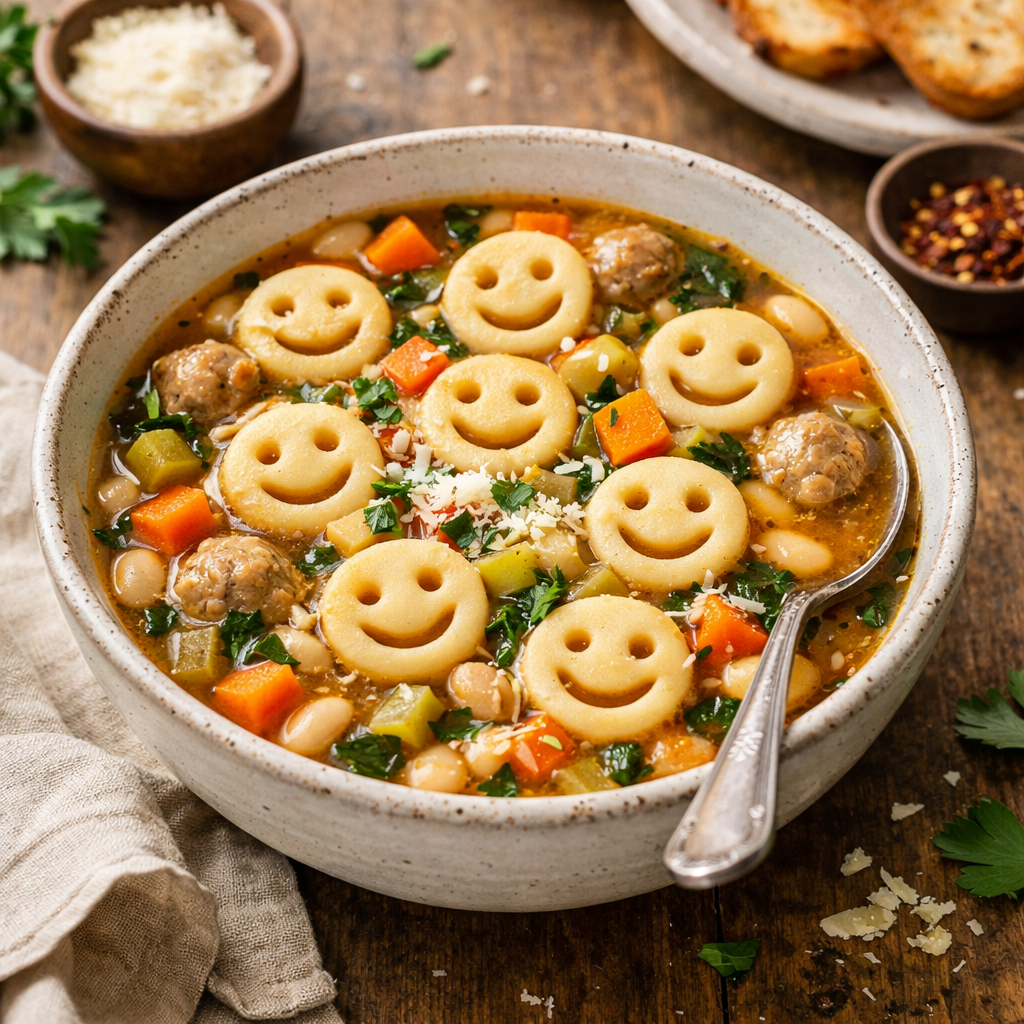
The happiness soup with noodles is a warming, clear broth made from chicken broth, enriched with homemade thin egg noodles and winter root vegetables. The dish combines the classic Polish taste of broth with a delicate sour note (optionally added by sauerkraut) and the aroma of fresh dill and marjoram. It looks appetizing: golden broth, thin strands of noodles, pieces of meat, and colorful strips of carrot. Serve hot in deep plates, with a sprinkle of fresh dill and a piece of butter for those who prefer a creamier flavor. Perfect for cold winter days when a simple, comforting homemade meal is needed.

Ingredients Used

Ingredients (18)

Servings:
4
  • Chicken egg 2 szt. (~120 g)
  • Chicken thigh 800 g
  • Carrot 2.5 szt. (~200 g)
  • Celery 150 g
  • Leek 100 g
  • Onion 1 szt. (~150 g)
  • Garlic 2 ząbki (~10 g)
  • Water 2500 ml
  • Wheat flour 200 g
  • 🌿 Przyprawy
  • Parsley 150 g
  • Bay leaf 6.7 szt. (~2 g)
  • Allspice (berries) 2 szt. (~2 g)
  • Salt 10 g
  • Black pepper 4 szczypty (~2 g)
  • Marjoram 4 g
  • Dill 1.5 pęczki (~30 g)
  • ✨ Opcjonalne
  • Sauerkraut 150 g
  • Butter 20 g
💰 Szacowany koszt dania: ~18.90 PLN (4.73 PLN/porcję)

💡 Kliknij na składnik aby oznaczyć jako użyty

Preparation steps

Broth

1

Prepare the meat: rinse the chicken thigh under cold water and pat dry with a paper towel. Remove large lumps of fat and cut larger pieces into smaller pieces so that they fit in the pot. Place the thigh in a large pot with a capacity of at least 4–5 liters.

Use a large stainless steel pot. If you don't have one, choose the deepest saucepan. Drying the meat prevents excessive foaming of the water at the beginning of cooking.

2

Cover the meat with cold water (2500 ml) so that it is completely submerged. Place the pot over medium heat and slowly heat it until small bubbles begin to appear at the edge; do not allow it to boil vigorously. When foam (white impurities) appears on the surface, reduce the heat and quickly skim the foam with a slotted spoon or a small sieve.

Use a slotted spoon or a spoon with holes. Start with cold water — this is the key to a clear broth. If the water starts to boil vigorously, reduce the heat so that the broth only gently "bubbles."
3

Prepare the vegetables: peel the carrot and cut it into sticks about 1 cm thick, peel the parsley and celery and cut them into 1–2 cm cubes, cut the leek lengthwise and wash it. Cut the onion in half. Lightly crush the garlic with the side of a knife (you don't need to peel it). Add all the vegetables along with the bay leaf and allspice to the pot after preliminary skimming.

Use a sharp knife and a cutting board. If you want a more intense color for the broth, char the cut side of the onion in a dry pan or over the flame for 1–2 minutes before adding.
4

Season and cook: add salt (but sparingly — you will taste at the end) and pepper. Reduce the heat so that the broth simmers very gently; partially cover the pot with a lid. Cook for 25–30 minutes, until the meat is falling off the bone and the vegetables are tender. Check the taste and season with salt and pepper 5–10 minutes before the end of cooking.

The best is a gentle, steady flame — boiling too hard clouds the broth. Cooking time depends on the size of the meat pieces; check with a fork if the meat easily pulls away from the bone.

Homemade Pasta

5

Prepare the pasta dough: sift the flour into a large bowl and make a well in the center. Crack the eggs into a small bowl and beat them with a fork. Pour the eggs into the well in the flour and start kneading from the center with a fork, gradually incorporating the flour from the sides. When the mixture stops being liquid, begin to knead by hand on a work surface for 6–8 minutes, until the dough is smooth and elastic. If the dough is too dry, add 5–10 ml of water; if it's too sticky, sprinkle with a tablespoon of flour.

Use a clean countertop or a large bowl. It's best to knead by hand, but you can use a stand mixer with a dough hook. The dough is ready when it doesn't stick to your hands and doesn't tear immediately when stretched.
6

Resting and shaping: form the dough into a ball, wrap it in plastic wrap, and let it rest for 10 minutes at room temperature to allow the gluten to relax. Then divide the dough into 2 parts, roll it out thinly with a rolling pin (to a thickness of about 1–2 mm), dusting with flour. Loosely roll the rolled-out dough into a log and cut thin strips (1–3 mm) with a sharp knife — you will get noodles. Unroll the strips and lightly dust with flour to prevent them from sticking together.

If you don't have a rolling pin, use a bottle. Start by making thin, shorter strips — it's easier to straighten them out later. If you prefer, you can shape 'drop dumplings' without rolling by pressing the dough through the holes of a grater into boiling water (alternative).

Cooking the soup

7

Strain the broth through a sieve into a clean pot, set the meat and vegetables aside. Separate the meat from the bones – remove the skin and cut the meat into serving portions. If you want a clear broth, strain it through cheesecloth or a very fine sieve.

Use a large sieve and a clean pot. Carefully pour the hot broth to avoid splashing. Discard the bones or use them for another cooking after removing any leftover meat.
8

Reheat the light golden broth to a boil. Add thin strands of pasta in batches — cook for 2–3 minutes from the moment it comes back to a boil, until the pasta is al dente (try one strand). The strands cook quickly, so do not overcook.

Use a wide pot so the pasta has room to float. Time it — 2–3 minutes is usually enough for thin egg noodles.
9

If you are using sauerkraut (optional): before adding it to the soup, rinse the sauerkraut with cold water, squeeze it out, and add it to the broth during the last 6–8 minutes of cooking — this will give a gentle acidity and a winter touch.

Additionally, you can add sauerkraut for a variety of flavors. Rinsing reduces acidity; if you prefer a more sour taste, use it without rinsing and add more salt later to taste.

Finishing and serving

10

On each plate, place a portion of sliced meat, pour hot broth with noodles and carrots. Sprinkle with freshly chopped dill and add 1/2 teaspoon of marjoram to taste. If you want a creamier flavor, add 5 g of butter to each plate (optional) — it will melt and add shine.

Use deep soup plates. Cut the meat into thin pieces that are easy to scoop with a spoon. Add marjoram and dill just before serving to preserve the freshness of the aroma.
11

Taste the soup and season to your liking with salt and pepper. Serve hot; you can also provide smaller bowls of horseradish or freshly ground pepper on the side if your guests enjoy spicier additions.

Taste the soup while it's hot — the flavor changes after it cools down. If the soup is too bland, add a small amount of lemon juice (optional), and if it's too sour (with cabbage), add a little sugar.

Fun Fact

💡

Broth is traditionally considered in Polish cuisine as a 'remedy' for colds and to improve well-being — hence the name of this version: 'soup of happiness'. The addition of homemade noodles is a classic way to make the soup heartier and more homely.

Best for

Tips

🍽️ Serving

Serve the soup very hot in deep, warmed plates. Place freshly ground pepper and an extra bunch of dill on the table. For children, cut the meat into small pieces. If serving before the main course, the portions should be smaller.

🥡 Storage

Store the soup in the refrigerator for up to 2 days in an airtight container. The pasta may soften — if you plan to store it, keep the pasta separate and combine before serving, briefly heating it over low heat. Use a pot for reheating and warm it slowly to avoid overboiling.

📸 Ugotowane przez społeczność

Zaloguj się, aby dodać zdjęcie
Dodaj zdjęcie gotowej potrawy

Po zatwierdzeniu przez moderatora otrzymasz 10 punktów doświadczenia.

🍲

Nikt jeszcze nie dodał zdjęcia. Bądź pierwszy!

Comments (0)

Be the first to comment on this recipe!

Add a comment

You might also like

Recipe Categories

Traditional recipes from various regions of Poland that showcase the richness of local flavors and ingredients.

See all recipes in this category

Recipes for kids are tasty, healthy, and visually appealing dishes - for little picky eaters and food lovers. Colorful and fun dishes: animals made from vegetables, faces from food, and rainbow plates. Hidden vegetables: spinach in pancakes, carrots in sauce, and zucchini in batter. Energetic bre...

See all recipes in this category
Kids' Lunches
Kids' Lunches in: For Kids

Meals for children are tasty dishes in appropriate portions - healthy and visually appealing. Meatballs in tomato sauce with pasta - a classic loved by kids. Chicken patties in a breading with carrots and potatoes. Pasta with cheese - simple and always effective. Tomato soup with letters or stars...

See all recipes in this category
Reklama