Recipe for: Cabbage and Mushroom Kulebiak (with Buckwheat)

Main dishes Regional Cuisine of Poland 60 min Hard 22 wyświetleń ~38.95 PLN * - (0)
Rate:
(0)
Start Cooking

Description

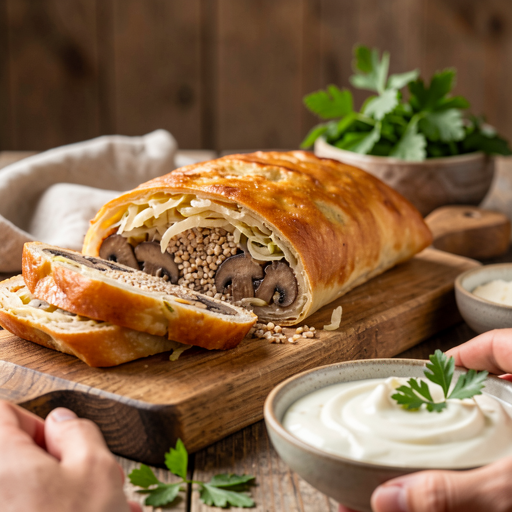
Traditional Polish kulebiak in a regional version: layered yeast dough filled with stewed sauerkraut, wild mushrooms, and loose buckwheat groats. A dish known from Eastern European tables, popular here for special occasions and Sunday dinners. Kulebiak is aromatic (cabbage and mushrooms), has a contrast of textures: soft dough, moist filling, and a slightly crispy crust after being brushed with egg. Serve warm as a main dish with sour cream or as a cold element on a festive table. Visually impressive with its golden crust and a cross-section revealing layers of cabbage, groats, and mushrooms.

Ingredients Used

Ingredients (17)

Servings:
6
  • Wheat flour 500 g
  • Fresh yeast 25 g
  • Milk 200 ml
  • Chicken egg 3 szt. (~180 g)
  • Butter 80 g
  • Sugar 20 g
  • Sauerkraut 800 g
  • Onion 2 szt. (~300 g)
  • Mushrooms 300 g
  • Dried mushroom 20 g
  • Buckwheat groats 200 g
  • Rapeseed oil 30 g
  • 🌿 Przyprawy
  • Salt 10 g
  • Black pepper 4 szczypty (~2 g)
  • Marjoram 2 g
  • ✨ Opcjonalne
  • 18% cream 100 ml
  • Parsley 1 pęczek (~30 g)
💰 Szacowany koszt dania: ~38.95 PLN (6.49 PLN/porcję)
* Brak cen dla niektórych składników

💡 Kliknij na składnik aby oznaczyć jako użyty

Preparation steps

Yeast dough

1

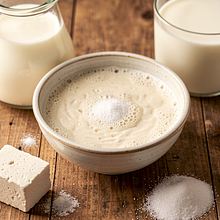
Activating the yeast: heat 200 ml of milk to a temperature of 35-37°C (it should be warm to the touch, not hot). Crumble 25 g of fresh yeast into a small bowl, add 1 tablespoon (about 10 g) of sugar from the portion and pour in 50 ml of warm milk. Mix with a fork until the yeast dissolves. Set aside for 8-10 minutes in a warm place — a frothy, slightly white foam should appear on the surface, indicating the yeast is active.

Ingredients: Fresh yeast, Milk, Sugar
Use a small bowl and a kitchen thermometer if you have one. If no foam appears after 10 minutes, the yeast is inactive — start over. The milk must not be hot (>45°C).
2

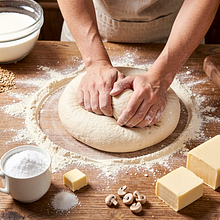
Preparing the dough: sift 500 g of wheat flour into a large bowl (or onto a work surface). Make a well in the center, pour in the activated yeast, add 2 eggs from the total amount (about 120 g), the remaining sugar, 10 g of salt, and 50 g of melted, cooled butter (leave 30 g of butter for the filling). Stir with a wooden spoon, starting with just the center, gradually incorporating the flour from the sides. When the ingredients are combined, knead by hand or with a hook mixer for 8-10 minutes until the dough is smooth, elastic, and not overly sticky to the hands.

Ingredients: Wheat flour, Fresh yeast, Sugar, Salt, Butter
Use a large bowl or countertop. If you don't have a mixer, knead by hand for 8-10 minutes; the dough is ready when it springs back after being pressed with a finger. Do not add too much flour – it's better to lightly grease your hands with rapeseed oil than to add more flour.
3

First rise: shape the dough into a ball, lightly brush the surface with a teaspoon of rapeseed oil, place it in a large bowl, cover with a damp cloth or plastic wrap, and set aside in a warm place for 20-25 minutes — the dough should increase in volume by 40-60%. Do not let it rise too long (it may collapse).

Ingredients: Wheat flour, Rapeseed oil
The best place is a turned-off oven with a slightly warm interior or next to a warm radiator. If the dough rises too quickly, you can shorten the time.

Filling

4

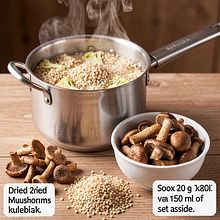
Soaking the mushrooms and cooking the buckwheat: soak 20 g of dried mushrooms in 150 ml of warm water and set aside for 20-30 minutes. After soaking, drain the mushrooms, keeping the soaking water. Rinse 200 g of buckwheat in a sieve under cold water, transfer to a pot, add 400 ml of water, bring to a boil, reduce the heat, and cook for 12-15 minutes covered until the buckwheat absorbs the water and is fluffy. After cooking, let it sit covered for 5 minutes, then fluff with a fork. The buckwheat should be al dente, not overcooked.

Ingredients: dried mushroom, Buckwheat groats
Use a pot with a matching lid. Rinsing the groats removes dust and prevents clumping. The water from soaking the mushrooms will add flavor to the filling — strain it through a sieve lined with cheesecloth to remove any sand.
5

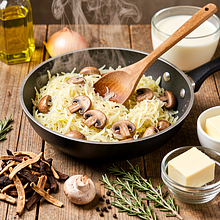
Preparing the cabbage: if the cabbage is very sour, rinse it with cold water and squeeze it out well with your hands in a strainer. Chop finely. In a large skillet, heat 1 tablespoon (15 g) of rapeseed oil and 30 g of butter, add 300 g of chopped onion and sauté for 4-6 minutes over medium heat until the onion is translucent and sweet — it should be semi-transparent and soft.

Ingredients: Sauerkraut, Onion, Rapeseed oil, Butter
Use a pan with a diameter of 26-28 cm. Do not brown the onion too much — it should only soften and release its sweetness, which will nicely balance the cabbage.
6

Add the drained and chopped cabbage (800 g) and the drained and chopped mushrooms (after soaking) to the onion. Sauté everything over medium heat for 10–12 minutes, stirring every 2–3 minutes. If the filling looks dry, add 2–3 tablespoons (30–40 ml) of the mushroom soaking water. Season with 2 g of black pepper and 2 g of marjoram; if the cabbage requires it, add 5 g of salt — remember that sauerkraut is salty on its own. Cook over low heat for another 5–8 minutes, until the cabbage is tender but not mushy.

Ingredients: Sauerkraut, dried mushroom, Onion, Rapeseed oil, Black pepper, Marjoram, 18% cream, Butter
Check the moisture of the filling — it should be moist but not watery. If you are using cream (optional), add 2–3 tablespoons (about 30–50 g) at the end and mix.
7

Combine the layers of the filling: remove the pan from the heat, add the cooked buckwheat and gently mix to allow the buckwheat to absorb some of the cabbage juice and combine the ingredients. Taste the filling and season if necessary (salt/pepper). The filling should be aromatic, slightly sour, with distinct pieces of mushrooms and fluffy buckwheat.

Ingredients: Buckwheat groats, Sauerkraut, dried mushroom
Use a large wooden spoon for mixing. The filling should be warm, but not hot — this will make it easier to shape the kulebiak.

Assembling and baking

8

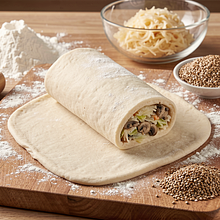
Shaping the kulebiak: roll out the risen dough on a lightly floured surface into a rectangle measuring about 40x30 cm (thickness approx. 0.5–1 cm). In the center of the rectangle, evenly spread the filling along the longer side, leaving a 3–4 cm free edge on the sides. Roll the dough into a log like a sponge cake roll, starting from the longer edge, pressing the edges to seal tightly. Pinch the ends well and slightly tuck them under. Transfer the kulebiak seam side down onto a baking sheet lined with parchment paper.

Ingredients: Wheat flour, Buckwheat groats, Sauerkraut
Use a rolling pin and a large surface. If the dough shrinks while rolling, wait 5 minutes and try again. Pinch the edges to prevent the filling from leaking during baking.
9

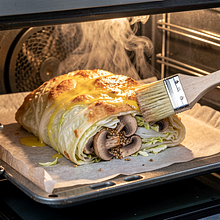
Preparation before baking: preheat the oven to 200°C with convection (or 220°C without convection). Beat the remaining 60 g of egg and brush it evenly over the top of the kulebiak with a pastry brush. You can make a few light slashes (2–3) on the top to allow steam to escape. Place the tray in the preheated oven and bake for 30–35 minutes until the crust is deeply golden. If the top browns too quickly, cover it with aluminum foil for the last 10 minutes.

Use a silicone brush to coat with egg. Baking is done when the crust is crispy and brown — you can also check the internal temperature (about 90°C) or cut into it to see that the filling is hot.

Finishing

10

Cooling and serving: after baking, remove the kulebiak from the oven and let it cool on a rack for 10–15 minutes — this will stabilize the juices inside and make slicing clean. Before serving, sprinkle with finely chopped parsley (optional) and serve in slices, with sour cream on the side or warm soup as an accompaniment.

Ingredients: Parsley, 18% cream
Use a sharp, long knife for cutting. If you cut too early, the filling may leak out; a 10–15 minute resting time is a good compromise.

Fun Fact

💡

Kulebiak originates from Russian and Ukrainian cuisine, where it was traditionally baked for rich tables; Polish versions adopted local fillings (cabbage, mushrooms, groats), creating a hearty, portable pastry.

Best for

Tips

🍽️ Serving

Kulebiak is best sliced warm, but not hot. Serve with sour cream and pickled cucumber for contrast. For a party, you can slice it thinly and arrange it on a serving board with fresh parsley.

🥡 Storage

Store in the refrigerator in an airtight container for up to 3 days. To reheat, place the slices in the oven at 170°C for 10–12 minutes to restore the crispiness of the crust. Long-term storage of frozen filling in dough is not recommended (freezing affects the structure of the yeast dough).

📸 Ugotowane przez społeczność

Zaloguj się, aby dodać zdjęcie
Dodaj zdjęcie gotowej potrawy

Po zatwierdzeniu przez moderatora otrzymasz 10 punktów doświadczenia.

🍲

Nikt jeszcze nie dodał zdjęcia. Bądź pierwszy!

Comments (0)

Be the first to comment on this recipe!

Add a comment

You might also like

Recipe Categories

Main courses are the heart of every meal - hearty, nutritious, and full of flavor. In this category, we present a rich selection of recipes for lunches and dinners that will satisfy even the most discerning palates. From classic Polish pork chops to aromatic chicken dishes, to exquisite steaks an...

See all recipes in this category

Traditional recipes from various regions of Poland that showcase the richness of local flavors and ingredients.

See all recipes in this category
Reklama