Devil's Pierogi

Pikantne Main Dishes Regional Cuisine of Poland 90 min Medium 38 wyświetleń ~22.06 PLN - (0)
Rate:
(0)
Start Cooking

Description

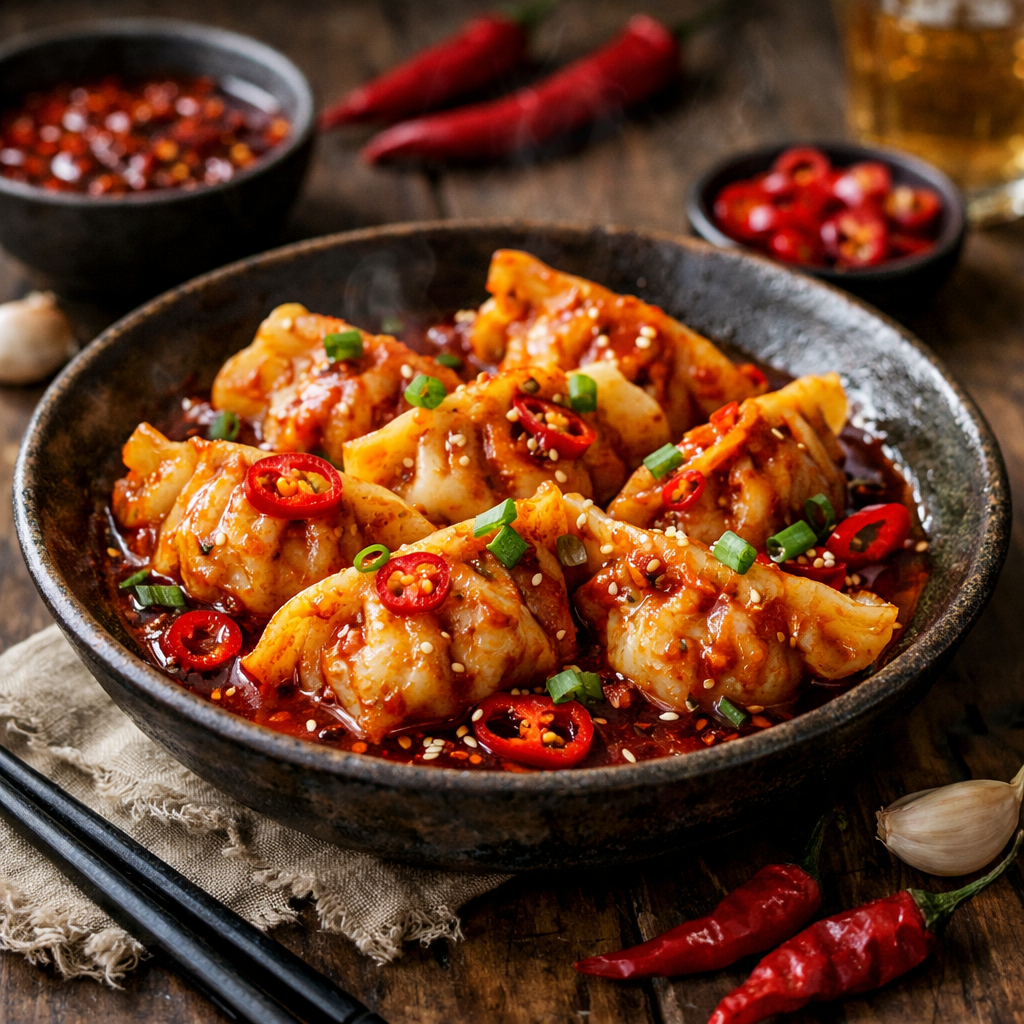
Devil's pierogi are a spicy, warming variation of classic Polish pierogi — the filling combines juicy ground meat and smoked sausage with sour fermented cabbage and hot pepper, creating an intense, "devilish" flavor. The dish has roots in home cooking, where it was common to combine meat with fermented cabbage for depth of flavor; here we add spiciness and a smoky note that enhances the character of the filling. Serve hot, drizzled with sour cream or sautéed in butter with onions. Perfect for winter meals when we need hearty and warming dishes. Bold, impressive, and easy to freeze.

Ingredients Used

Ingredients (17)

Servings:
4
  • Wheat flour 400 g
  • Water 160 ml
  • Rapeseed oil 15 g
  • Ground pork 400 g
  • Sausage 150 g
  • Sauerkraut 300 g
  • Onion 1 szt. (~150 g)
  • Garlic 3 ząbki (~15 g)
  • Ground hot pepper 4 g
  • Apple cider vinegar 15 ml
  • Sugar 5 g
  • Chicken egg 2 szt. (~120 g)
  • 🌿 Przyprawy
  • Salt 8 g
  • Black pepper 4 szczypty (~2 g)
  • ✨ Opcjonalne
  • 18% cream 200 ml
  • Butter 30 g
  • Smoked paprika 1 łyżeczka (~2 g)
💰 Szacowany koszt dania: ~22.06 PLN (5.52 PLN/porcję)

💡 Kliknij na składnik aby oznaczyć jako użyty

Preparation steps

Cake

1

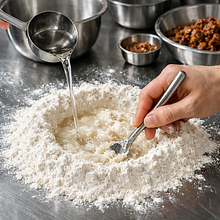
Sift 400 g of wheat flour onto a large work surface or into a large bowl. Make a well in the center with your finger or the end of a spoon. In a separate bowl, whisk together 120 g of eggs with 8 g of salt and 160 ml of water. Pour 15 g of rapeseed oil into the liquid and mix well.

Use a large metal bowl or a clean countertop. Sifting the flour removes lumps and aerates it, making it easier to knead.
2

Slowly pour the liquid into the well in the flour and mix with a fork or the handle of a spoon, only the center part, first bringing the flour from the sides to the center. Once the ingredients are combined, start kneading with your hands: gather the flour from the sides and knead until a uniform, smooth dough forms. Knead for 6–8 minutes until the dough stops sticking and becomes elastic. If it is too dry, add 1 tablespoon of water (15 ml); if it is too sticky, sprinkle with a tablespoon of flour.

Use a wooden or silicone spatula for the initial mixing. If you have a mixer with a dough hook, knead on speed 2 for 4–5 minutes.
3

Form the dough into a ball, cover it with a cloth, and let it rest for at least 20–30 minutes at room temperature. This allows the gluten to relax, making the dough easier to roll out.

Cover the bowl with a damp cloth so the dough doesn't dry out. Feel free to prepare the filling while the dough is resting.

Filling

4

Prepare the vegetables: peel 150 g of onion and chop it into small cubes. Mince 15 g of garlic (3 cloves). If the sauerkraut is very sour, rinse it under cold water and squeeze out the excess juice; then chop it into smaller pieces up to 300 g.

Use a sharp knife and a cutting board. Well-drained cabbage will not be watery and will not dilute the filling.
5

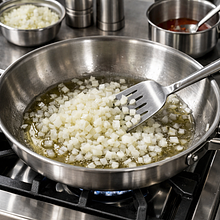
Heat 15 g of rapeseed oil in a large skillet over medium heat. Add the chopped onion and sauté for 4–5 minutes until it becomes translucent and slightly golden. Add 400 g of ground meat and 150 g of chopped sausage, breaking up the meat with a wooden spoon. Cook for 8–10 minutes until the meat is well browned. Add 15 g of garlic and sauté for an additional 1 minute — the garlic should be fragrant but not burnt.

The best is a wide pan with a diameter of at least 26–28 cm. Use a wooden spoon to break up the meat so that no larger chunks remain.
6

Add the chopped sauerkraut, 15 ml of apple cider vinegar, and 5 g of sugar to the sautéed meat, sprinkle with 4 g of hot paprika and 2 g of black pepper. Mix thoroughly and reduce the heat to low. Simmer the filling for 10–12 minutes, stirring every 2–3 minutes, until the flavors combine and the excess moisture evaporates. Taste and season with salt if necessary.

If the filling is too sour, add a little sugar; if it's too dry, add 1–2 tablespoons of water. Use a lid for simmering, but stir every few minutes to prevent anything from burning.
7

If you are using smoked paprika (optional), add 2 g to the filling at the end of cooking and mix. Set the filling aside to cool completely — the filling must be cold or at least lukewarm to avoid softening the dough during shaping.

Chilled filling is easier to shape and won't melt the dough from the inside. Cover the bowl with the filling with plastic wrap to prevent it from drying out.

Shaping and Cooking

8

Divide the rested dough into two parts. Roll out one part on a floured surface to a thickness of about 2 mm. Use a round cutter or a glass with a diameter of 7 cm to cut out circles — each disc should have an even edge.

The rolling pin and countertop should be lightly dusted with flour, but don't overdo it – too much flour will make the dumplings tough. A 7 cm cutter yields portion-sized dumplings perfect for lunch.
9

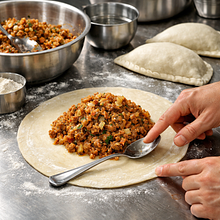
Place about 18–22 g of filling on each circle (use a teaspoon). Wet the edges of the circle with your finger, fold it in half, and seal the edges tightly by pressing with your fingers and removing the air. You can also crimp the edges with a fork or create a ruffled edge with one finger by folding small pleats.

Use a damp finger to moisten the edge — it's the simplest way to ensure a good seal. Check one dumpling to see if it holds together before cooking.
10

In a large pot, bring 2.5–3 liters of water to a boil with 8 g of salt. Add the dumplings in batches (not too many at once, so the water doesn't stop boiling). When the dumplings float to the surface, cook them for another 2–3 minutes from the time they surface, gently stirring with a slotted spoon to prevent them from sticking together. Remove to a tray or directly onto plates.

Use a large pot and a large slotted spoon. Dropping many dumplings in at once will lower the temperature and cause them to fall apart.

Sautéing and Serving

11

If you want to sauté the dumplings (recommended for texture): heat 30 g of butter in a pan over medium heat. Transfer the drained dumplings to a dry pan and fry for 2–3 minutes on each side until the edges are golden and crispy. Sautéed dumplings have a contrast between the soft filling and the crunchy skin.

The best is a non-stick pan with a diameter of about 26 cm. If you don't want to use butter, you can sauté in a tablespoon of rapeseed oil (optional).
12

Serve the dumplings hot, drizzled with 200 g of 18% sour cream or with a little on the side. You can also sprinkle them with sautéed chopped onion (leftover from frying the filling) for sweetness and texture. Additionally, you can serve pickled cucumbers or a red cabbage salad.

Use flat plates for an aesthetic presentation. Sour cream softens the spiciness; if you like it hot, serve additional vinegar or peppers on the side.

Fun Fact

💡

In Polish cuisine, fillings that combine meat with cabbage have a long tradition — sauerkraut was an important method of preservation, and the combination with meat provided a hearty meal for cold days. The addition of hot pepper is an influence of external flavors that enhance local traditions.

Best for

Tips

🍽️ Serving

Serve the dumplings hot, drizzled with sour cream, and topped with sautéed onions. For a contrast in textures, sauté some of the dumplings in butter. We recommend dark beer or dried fruit compote as a drink.

🥡 Storage

Pierogi can be frozen arranged on a tray after cooling, then transferred to a bag — freeze for up to 3 months. Cook straight from the freezer by dropping them into lightly salted boiling water and cook for 4–6 minutes after they float. Store in the refrigerator for up to 2 days.

📸 Ugotowane przez społeczność

Zaloguj się, aby dodać zdjęcie
Dodaj zdjęcie gotowej potrawy

Po zatwierdzeniu przez moderatora otrzymasz 10 punktów doświadczenia.

🍲

Nikt jeszcze nie dodał zdjęcia. Bądź pierwszy!

Comments (0)

Be the first to comment on this recipe!

Add a comment

You might also like

Recipe Categories

Main Dishes
Main Dishes in: Christmas Eve Dinner

Main courses are the heart of every meal - hearty, delicious, and full of nutrients. Meats: beef, pork, poultry, and lamb in various versions. Fish and seafood: baked, fried, grilled, and stewed. Vegetarian dishes: tofu, tempeh, legumes as the main protein. Casseroles: pasta, potato, vegetable wi...

See all recipes in this category

Traditional recipes from various regions of Poland that showcase the richness of local flavors and ingredients.

See all recipes in this category
Reklama