Recipe for: Gluten-Free Russian Pierogi

Main Dishes Regional Cuisine of Poland 60 min Medium 2 wyświetleń ~13.79 PLN * - (0)
Rate:
(0)
Start Cooking

Description

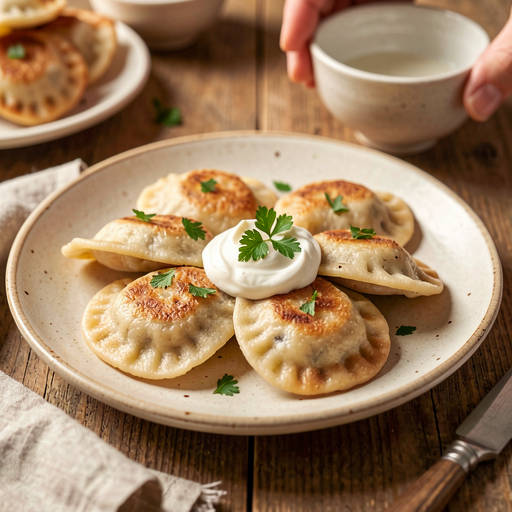
Traditional Russian dumplings in a gluten-free version — delicate dumplings filled with mashed potatoes and cottage cheese, topped with golden onions. This dish originates from East Polish cuisine and is a classic on Polish tables; this version retains the creamy texture of the filling and the lightness of the dough, but uses a gluten-free flour blend so that those avoiding gluten can enjoy it. Serve with melted butter, sour cream, and chopped parsley; visually appealing thanks to the golden onions and slightly translucent edges of the dumplings. The recipe teaches step by step how to prepare the filling, knead the gluten-free dough, shape, and cook the dumplings — perfect for someone making dumplings for the first time.

Ingredients Used

Ingredients (12)

Servings:
4
  • Gluten-free flour 300 g
  • Chicken egg 2 szt. (~120 g)
  • Rapeseed oil 30 g
  • Water 120 ml
  • Potatoes 4 szt. (~600 g)
  • Cottage cheese 250 g
  • Onion 1 szt. (~150 g)
  • Butter 50 g
  • 🌿 Przyprawy
  • Salt 0.2 szczypt (~5 g)
  • Black pepper 4 szczypty (~2 g)
  • ✨ Opcjonalne
  • Sour cream 200 g
  • Parsley 1 pęczek (~30 g)
💰 Szacowany koszt dania: ~13.79 PLN (3.45 PLN/porcję)
* Brak cen dla niektórych składników

💡 Kliknij na składnik aby oznaczyć jako użyty

Preparation steps

Cake

1

Prepare the ingredients for the dough: weigh the gluten-free flour into a large bowl, add 5 g of salt. Beat two eggs in a separate container and measure 120 ml of warm water (about 40°C). Measure 30 g of rapeseed oil. Pour the flour into the bowl and make a well in the center.

Ingredients: gluten-free flour, Salt, Water, Rapeseed oil
Use a large metal or plastic bowl (min. 3 l) — it will be easier to mix. To measure the water temperature, you can use a kitchen thermometer; if you don't have one, the water should be warmer than your hand but not scalding.
2

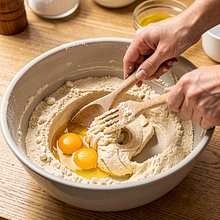
Combine the ingredients: pour the beaten eggs, oil, and half of the water into the well. Start mixing with a fork or spoon in the center, gradually incorporating the flour from the sides until a thick mixture forms. Add the remaining water gradually — the dough should have a smooth, slightly elastic consistency and not stick too much to your hands.

Ingredients: gluten-free flour, Water, Rapeseed oil, Salt
Use a wooden spoon or spatula; if you have a stand mixer with a dough hook, use it on low speed for 2-3 minutes. The gluten-free dough will not be as elastic as wheat dough — do not over-dry it (if it is too dry, add 1-2 tablespoons of water).
3

Remove the dough from the bowl onto a lightly floured surface with gluten-free flour and briefly knead by hand (about 1 minute) until it becomes smooth. Form a ball, cover with a bowl or plastic wrap, and let it rest for 20 minutes — this resting period will make the dough easier to roll out.

Ingredients: gluten-free flour
If the dough is very soft, sprinkle it with a small amount of gluten-free flour while kneading. Cover it with plastic wrap to prevent it from drying out — gluten-free dough dries out faster than wheat dough.

Filling

4

Prepare the potatoes: peel 600 g of potatoes, cut them into equal pieces, and place them in a pot with cold water. Bring to a boil and cook for 15–20 minutes until they are soft (insert a knife — it should go in easily). Drain and let them sit for a moment to steam off.

Use a medium-sized pot with a lid; salting the water for boiling potatoes is not necessary, as the filling will be salted later. Check for softness with a fork, do not leave hard pieces.
5

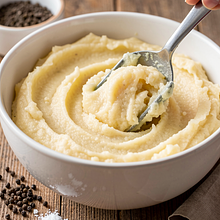
Mash the hot potatoes with a potato masher or press them through a ricer until smooth. Add 250 g of cottage cheese to the warm potatoes and mix with a wooden spoon or spatula — the mixture should be uniform and creamy. Taste and season with salt (about 2–3 g) and 1–2 pinches of black pepper.

Ingredients: Cottage cheese, Black pepper, Salt
If the filling seems too dry, add 1 tablespoon of hot milk or a bit of butter. It's best to add the cottage cheese while the potatoes are still warm — it will spread better.
6

Prepare the onion: peel and chop 150 g of onion into small cubes. Heat a 24–26 cm skillet over medium heat, add 30 g of butter and wait for it to melt. Add the onion and sauté for 6–8 minutes, stirring, until it becomes soft and golden — do not let it burn. Add the sautéed onion to the filling and mix well.

Ingredients: Onion, Butter
Use a non-stick or cast iron skillet; stir every few dozen seconds. You will achieve a golden color over medium heat — too high a temperature will cause burning and a bitter taste.

Shaping and Cooking

7

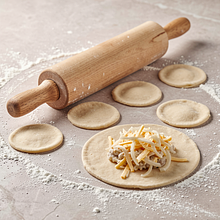
Prepare your workspace for shaping: roll out the dough between sheets of parchment paper or on a lightly gluten-free flour-dusted countertop to a thickness of about 2–3 mm. Cut out circles with a diameter of 7–8 cm (you can use a glass). Place a portion of filling about 15–20 g (a small tablespoon) on each circle, leaving the edges free.

Ingredients: gluten-free flour, Cottage cheese, Onion
Use a rolling pin and a glass of appropriate diameter. Roll the dough thin — too thick dumplings will be heavy and take longer to cook. If the dough tears, let it rest for an additional 5–10 minutes.
8

Sealing: moisten the edge of the circle with your finger, fold it in half and press the edges with your finger, then pinch with your fingers or make characteristic notches (pleats). Make sure there are no air bubbles inside — gently smooth the edges to ensure they are sealed.

Ingredients: Water, gluten-free flour
If the edges don't stick, add a tiny bit of water and press again. Don't add too much filling — excess causes it to burst during cooking.
9

Cooking: bring a large pot of water to a boil (about 2–3 l). Salt the water (about 15 g of salt per 2 l). Add the dumplings in batches — no more than 10–12 at a time, to avoid crowding the pot. Once the dumplings float to the surface, cook them for another 2–3 minutes. Remove with a slotted spoon and place on a plate.

Ingredients: Salt
Use a large pot with a wide bottom. If the water stops boiling after adding the dumplings, gently increase the heat; cooking too slowly may cause the dumplings to fall apart.

Serving

10

Serving: melt 20–30 g of butter in a pan and briefly sauté the cooked dumplings for a few minutes on each side until they are lightly golden (optional). Serve hot, drizzled with butter, with a spoonful of sour cream and chopped parsley.

Ingredients: Butter, Sour cream, Parsley
For frying, use a pan 24–26 cm in diameter. Additionally, you can add cream and parsley to enhance the flavor/texture (optional ingredients are listed).

Fun Fact

💡

Russian pierogi, despite the name, are a classic dish of Polish and Ukrainian cuisine. The name 'Russian' comes from the region of Kievan Rus / Red Rus, not from modern-day Russia.

Best for

Tips

🍽️ Serving

Serve immediately after preparation with melted butter or crispy fried onions and a spoonful of sour cream. For a festive presentation, add parsley leaves and finely chopped bacon or pancetta (for meat-eaters).

🥡 Storage

Raw pierogi can be frozen by placing them on a baking sheet individually until they harden, and then transferring them to bags (for up to 3 months). Cooked ones can be stored in the fridge for a maximum of 48 hours in a closed container; reheat in a pan with a bit of butter or in a pot of boiling water (2–3 minutes).

📸 Ugotowane przez społeczność

Zaloguj się, aby dodać zdjęcie
Dodaj zdjęcie gotowej potrawy

Po zatwierdzeniu przez moderatora otrzymasz 10 punktów doświadczenia.

🍲

Nikt jeszcze nie dodał zdjęcia. Bądź pierwszy!

Comments (0)

Be the first to comment on this recipe!

Add a comment

You might also like

Recipe Categories

Main Dishes
Main Dishes in: Valentine's Day

Exquisite main dishes that will delight with their flavor and aroma, perfect for a romantic dinner.

See all recipes in this category

Traditional recipes from various regions of Poland that showcase the richness of local flavors and ingredients.

See all recipes in this category
Reklama