Take the duck breast out of the refrigerator 20-30 minutes before cooking to reach room temperature. Pat it dry with a paper towel. If there are feathers or remnants on the skin, gently singe them with a gas torch or check and remove them with tweezers.
Description
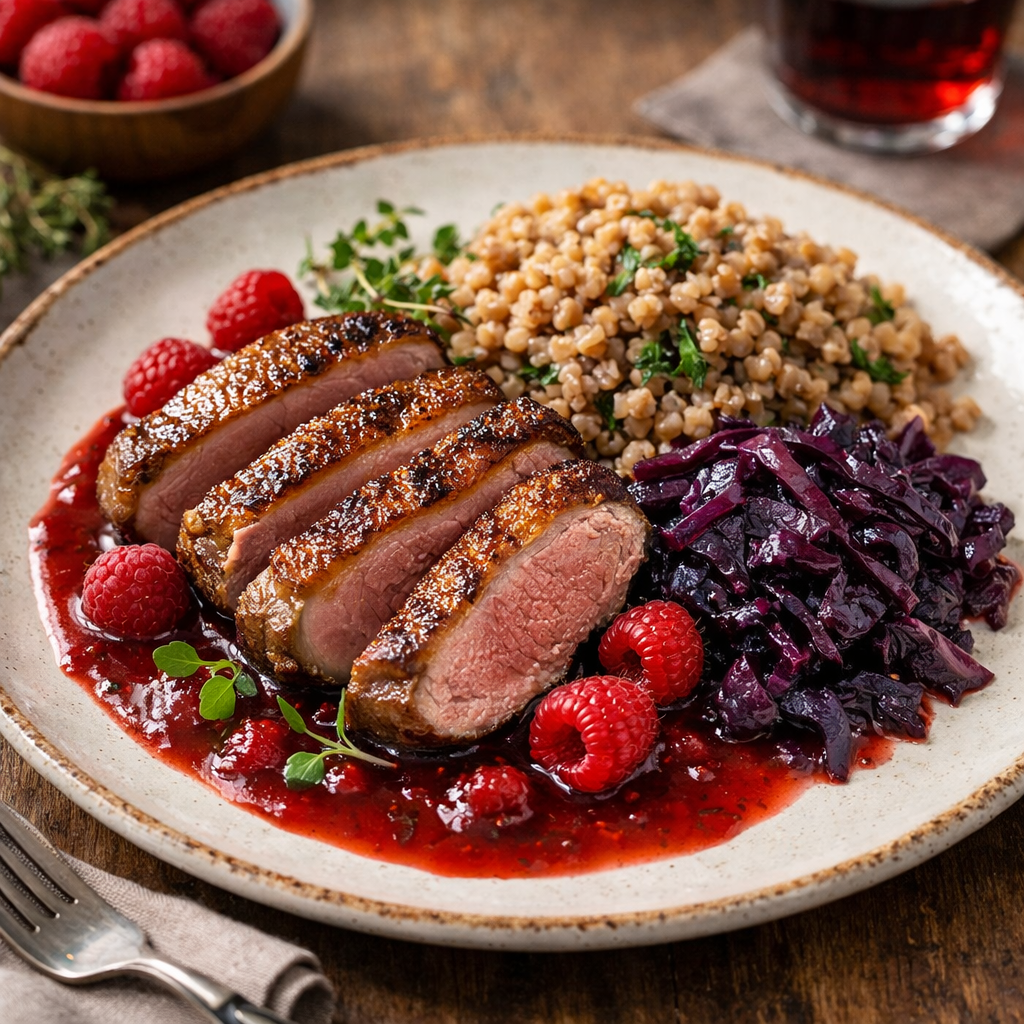
Duck in raspberry sauce is a dish that combines Polish tradition with a modern, slightly sweet and sour fruity accent. The roasted and well-cooked duck breast receives a glossy, shiny glaze made from raspberries, honey, and balsamic vinegar, which highlights the natural sweetness of the meat and fat. Accompanying this is a classic regional side: roasted buckwheat groats and braised red cabbage with apple and warming spices — a contrast of textures and flavors (caramelized raspberries, crispy duck skin, soft cabbage). This dish is perfect for winter lunches and family occasions. Appearance: golden duck skin, rich red raspberry sauce glistening on the meat, alongside a portion of dark groats and purple cabbage — the whole presentation is visually appealing and offers a hearty warmth of flavors.
Ingredients Used
Ingredients (20)
- Duck breast 3.6 szt. (~720 g)
- Rapeseed oil 30 g
- Butter 80 g
- Raspberry 400 g
- Balsamic vinegar 30 ml
- Honey 30 ml
- Chicken broth 300 ml
- Onion 1 szt. (~150 g)
- Garlic 2 ząbki (~10 g)
- Red cabbage 800 g
- Apple 0.8 szt. (~150 g)
- Apple cider vinegar 15 ml
- Sugar 20 g
- Buckwheat groats 240 g
- 🌿 Przyprawy
- Salt 0.1 szczypt (~4 g)
- Black pepper 8 szczypt (~4 g)
- Bay leaf 6.7 szt. (~2 g)
- Allspice (berries) 2 szt. (~2 g)
- ✨ Opcjonalne
- Dark chocolate 20 g
- Parsley 1 pęczek (~30 g)
💡 Kliknij na składnik aby oznaczyć jako użyty
Preparation steps
Preparing duck breast
Gently score the skin in a crosshatch pattern with a sharp knife (not into the meat) — cuts about every 1 cm. Rub the skin and sides of the meat with salt and freshly ground pepper. Let it sit for 5 minutes to allow the salt to work.
Frying duck breast
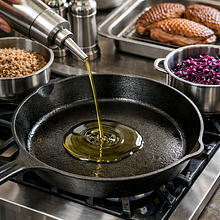
Heat a large skillet (preferably cast iron or heavy-bottomed) over medium heat. Pour in the rapeseed oil. Place the breasts skin-side down. Do not flip them for 8–10 minutes — the fat should render, and the skin should become golden and crispy. During this time, spoon off any excess fat if the skillet collects it.
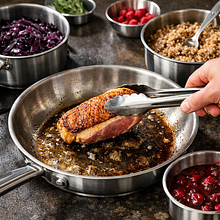
After rendering the fat and achieving a golden crust, turn the breasts to the meat side. Fry for 3–5 minutes depending on thickness (3 minutes for medium, 5 minutes for well done). Check the internal temperature with a thermometer – 58–60°C for medium, 68°C for well done. After frying, transfer the breasts to a cutting board and loosely cover with aluminum foil, let rest for 8–10 minutes (resting the meat).
Raspberry sauce
In the same pan (drain excess fat, leaving 1 tablespoon), sauté the finely chopped onion for 3–4 minutes over medium heat until it becomes translucent. Add the minced garlic and cook for 30 seconds until it becomes fragrant.
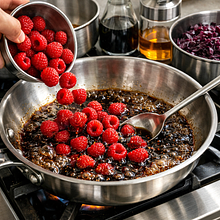
Add the raspberries to the pan along with the balsamic vinegar and honey. Heat over medium heat for 6–8 minutes, until the raspberries break down. Blend the sauce with an immersion blender until smooth (you can also strain it through a sieve to remove the seeds).
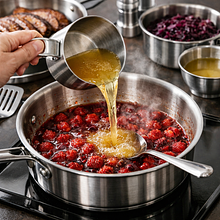
Add chicken broth to the raspberries and cook over medium heat for 6–10 minutes, until the sauce thickens slightly. Add butter and optionally grated dark chocolate (optional 20 g) and stir vigorously until the sauce becomes glossy. Season with salt and pepper to taste.
Braised red cabbage
In a large pot, heat 15 g of butter (part of the previously mentioned amount) or 1 tablespoon of oil. Add the chopped red cabbage and sauté over medium heat for 5 minutes, stirring until slightly wilted.
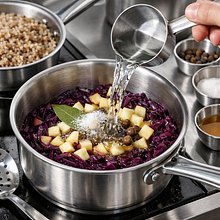
Add the chopped apple, sugar, apple cider vinegar, bay leaf, and allspice. Pour in 50–100 ml of water (about 50–100 g) and simmer covered on low heat for 25–30 minutes, stirring occasionally. The cabbage should soften but retain a slight structure. Remove the bay leaf and allspice before serving.
Buckwheat groats
Rinse the buckwheat groats under cold water in a sieve. Pour the groats into a pot, add 480 ml of water (2× the volume of the groats) and a pinch of salt. Bring to a boil, reduce the heat, and cook covered for 12–15 minutes, until all the water is absorbed. After cooking, let it sit for 5 minutes and fluff with a fork.
Assembly and serving
Slice the duck breast diagonally into 1–1.5 cm thick pieces. On a plate, arrange a portion of buckwheat, next to it a portion of braised red cabbage, and the slices of duck. Generously drizzle the duck with hot raspberry sauce. Sprinkle with finely chopped parsley (optional).
Final seasoning
Taste the dish and season with salt and freshly ground pepper if needed. If you want balance – add a few drops of balsamic vinegar to the sauce before serving.
Fun Fact
In traditional Polish cuisine, duck was often paired with fruity flavors (apple, plum). Raspberries are a more modern twist, but they pair wonderfully with duck fat, just as fruits and jams were used in old recipes.
Best for
Tips
Serve the duck breast sliced thinly so that everyone can enjoy the crispy skin and pink center. Adjust the portions of the sauce individually so it doesn't overpower the cabbage. A dry red wine (e.g., pinot noir) or a dried fruit compote works well as a non-alcoholic option.
Store the raspberry sauce separately in an airtight container in the fridge for up to 3 days. Keep the sliced duck and cabbage individually for up to 2 days; when reheating, briefly warm the meat in a pan over medium heat to restore the crispiness of the skin. Buckwheat can be stored for up to 2 days — add a little water when reheating.
📸 Ugotowane przez społeczność
Zaloguj się, aby dodać zdjęcieDodaj zdjęcie gotowej potrawy
Po zatwierdzeniu przez moderatora otrzymasz 10 punktów doświadczenia.
Nikt jeszcze nie dodał zdjęcia. Bądź pierwszy!
Comments (0)
Be the first to comment on this recipe!
Add a comment