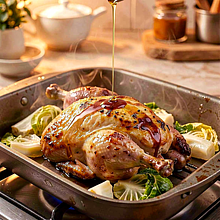
Take the duck out of the fridge 30–60 minutes before roasting to reach room temperature. Pat the skin dry with a paper towel, then check the cavity — remove any giblets, which you can save for broth. With a sharp knife, gently pierce the skin on the breast and thighs at intervals of 1–1.5 cm — do not pierce the meat, just the skin, so the fat can render.
Description
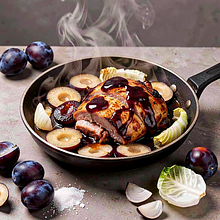
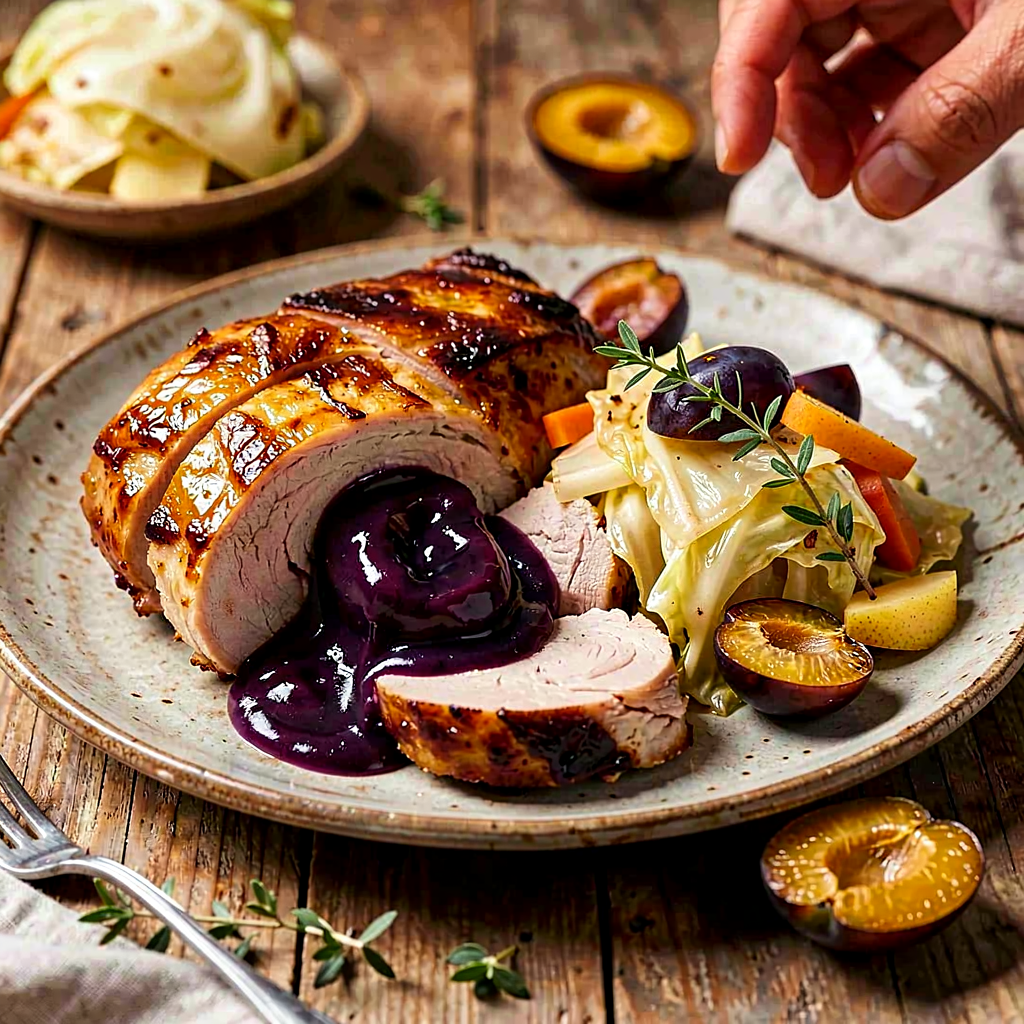
Traditional Greater Poland roasted duck with a summer touch of fresh plums and young cabbage. The dish combines the crispy, golden skin of the duck and juicy meat with a thick, slightly sweet and sour plum sauce, while the delicate young cabbage with apple and carrot balances the flavor with its freshness. This dish is perfect for a Sunday dinner, family gathering, or summer party; it can be served with roasted potatoes or buckwheat. Aesthetically presented, it looks rustic and appetizing — the dark sauce contrasts with the golden skin and light green cabbage.
Ingredients Used
Ingredients (17)
- Duck 2200 g
- Plum 600 g
- Onion 2 pcs (~300 g)
- Garlic 3 clove (~15 g)
- Butter 100 g
- Rapeseed oil 30 g
- Chicken broth 500 ml
- Sugar 50 g
- Balsamic vinegar 30 ml
- Young cabbage 0.7 pcs (~800 g)
- Carrot 1.3 pcs (~100 g)
- Apple 0.8 pcs (~150 g)
- 🌿 Spices
- Salt 10 g
- Black pepper 4 pinch (~2 g)
- Marjoram 4 g
- ✨ Optional
- Red wine 100 ml
- Honey 30 ml
💡 Click an ingredient to mark it as used
Preparation steps
Preparing the duck
Rub the duck with salt and 1 pinch of pepper both inside and out. You can additionally fill the inside with apple halves and one clove of garlic cut in half — it will add aroma. Grease the skin with a thin layer of rapeseed oil.
Roasting the duck
Preheat the oven to 180°C (with top and bottom heating). Place the duck breast side up on a rack over a deep baking tray or roasting pan — the fat will drip below. Roast for 90 minutes, then check if the fat is draining evenly. Every 30 minutes, baste the duck with the rendered fat from the pan to ensure the skin browns evenly.
After about 90 minutes, increase the oven temperature to 220°C and bake for another 15–25 minutes, until the skin is deeply golden and crispy. Check the internal temperature of the meat in the thickest part of the thigh — it should be around 75°C, and the juices that run out when pierced should be clear (without any pink tint).
Resting the meat
Remove the duck from the oven and transfer it to a cutting board. Loosely cover it with aluminum foil and let it rest for 15–20 minutes — the meat will 'stabilize', and the juices will distribute evenly, making it easier to carve.
Plum sauce
Chop the onion into small cubes and mince the garlic. Cut the plums in half and remove the pits. In a medium skillet, heat 20 g of butter and 15 g of canola oil over medium heat. Add the onion and sauté for 4–5 minutes until it becomes translucent and soft. Add the garlic and sauté for 30 seconds, being careful not to burn it.
Add the plums to the pan and sprinkle with 50 g of sugar. Fry for 6–8 minutes over medium heat until the plums release their juice and the sugar begins to caramelize. If using wine, pour in 100 ml of red wine and cook for 2–3 minutes until the alcohol evaporates.
Pour 200–250 ml of chicken broth and 30 g of balsamic vinegar into the pan. Bring to a boil, reduce the heat, and cook for 15–20 minutes until the mixture thickens and the flavors meld. Taste and season with salt and pepper. If the sauce is too sour, add 30 g of honey (optional).
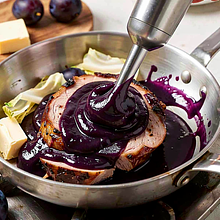
Blend the sauce until smooth with an immersion blender directly in the pan or transfer it to a stand blender. Strain through a fine sieve to remove skins and fibrous bits. Finish the sauce with 20 g of cold butter — add pieces of butter and stir until combined, until the sauce is shiny and velvety.
Young cabbage
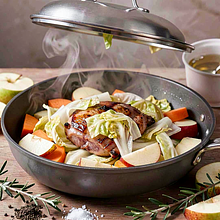
Remove the outer leaves of the cabbage, cut the head in half and finely shred it with a knife. In a large, wide skillet, heat 20 g of butter and 15 g of rapeseed oil. Add the finely chopped half of the onion (about 150 g) and sauté for 3–4 minutes until it softens. Add the grated carrot and sauté for 2 minutes.
Add the chopped cabbage to the pan, stir and sauté for 4–5 minutes until the leaves are slightly wilted. Add the chopped apple, 50–80 ml of water or broth, cover and simmer on low heat for 12–15 minutes until the cabbage is tender but not overcooked. At the end, season with salt, pepper, and a teaspoon of marjoram.
Assembly and serving
Cut the duck: remove the legs and thighs, then slice the breasts diagonally against the grain. On a plate, place a portion of young cabbage, next to it arrange the slices of breast and a piece of thigh. Drizzle the meat with 2–3 tablespoons of hot plum sauce. Serve immediately.
Final Tips
Serve with roasted potatoes, Silesian dumplings, or burnt barley. Pour any leftover sauce into a jar and store in the fridge for up to 3 days. The remaining duck fat can be saved — it's great for frying potatoes.
Fun Fact
Traditionally, Greater Poland combined richer poultry meats with fruits served as sauces — plum is a classic summer addition that cuts through the richness of roasted duck.
Best for
Tips
Serve the duck sliced thin, warm, with the sauce served separately so guests can add as much as they like. For decoration, use fresh parsley or thyme leaves and a few plum halves for contrast.
Store the remaining duck in an airtight container in the refrigerator for up to 2 days. The plum sauce in a jar will keep in the refrigerator for up to 3 days. To reheat the meat, use an oven preheated to 160°C and cover it with aluminum foil, heating for 15–20 minutes to avoid drying out the meat.
📸 Cooked by the community
Log in to add a photoAdd a photo of the finished dish
After moderator approval, you will receive 10 experience points.
No one has added a photo yet. Be the first!
Comments (0)
Be the first to comment on this recipe!
Add a comment