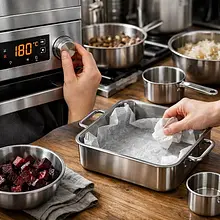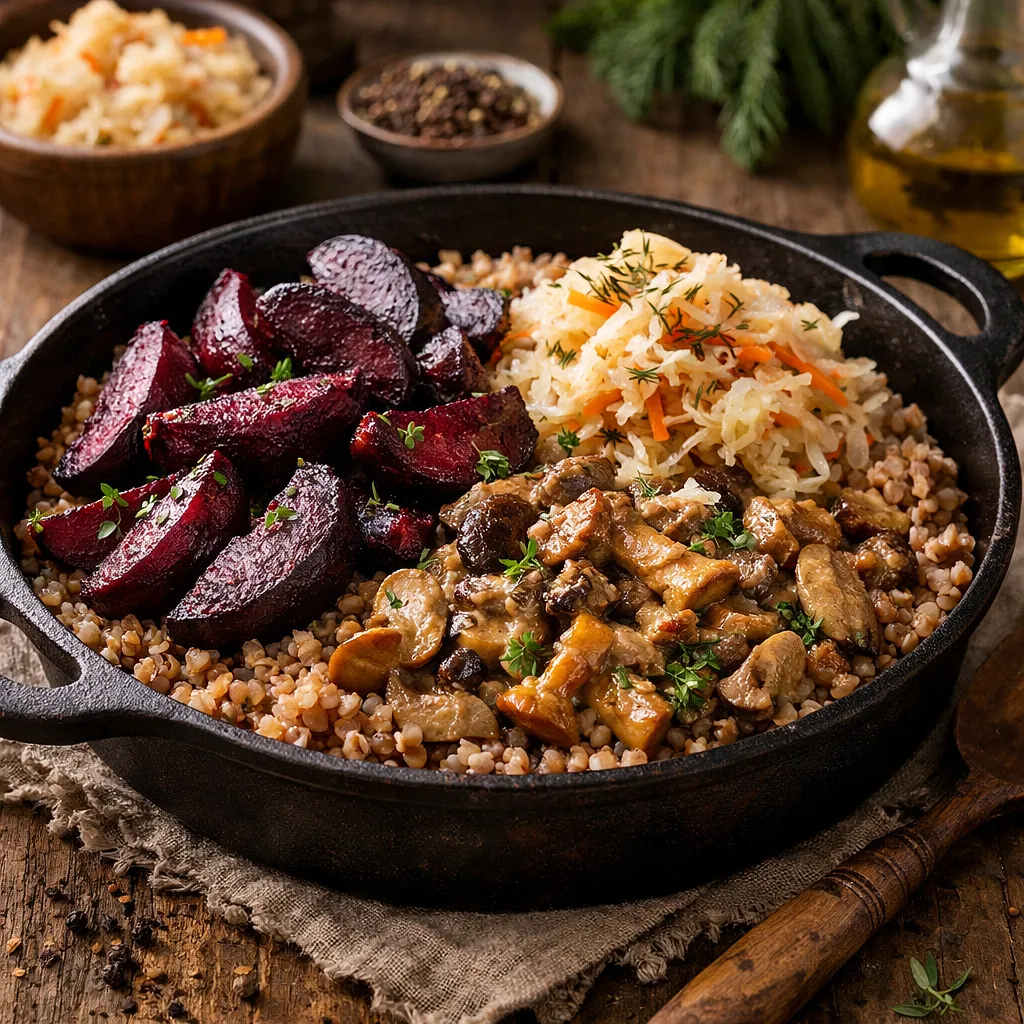
Preheat the oven to 200°C with the convection option (if not available, set to 220°C). Thoroughly wash the beets (600 g) with a fibrous brush under running water, trim the thin ends, and lightly scrape the skin if it is very dirty. Dry with a paper towel, drizzle with 1 tablespoon of rapeseed oil (15 g), and lightly salt (2 g). Wrap each beet individually in aluminum foil and place on a baking sheet. Bake for 50-70 minutes (depending on size) — check with a skewer: it should slide in smoothly, and the beet should be soft. After baking, set aside to cool slightly (10-15 min) so they can be peeled with fingers or a knife; peel the skin and slice into thin rounds (about 3-4 mm).
Description
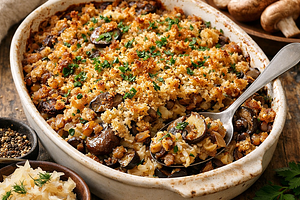
A rustic, hearty casserole combining two Polish grains (buckwheat and pearl barley) with roasted beets, sautéed sauerkraut, and an aromatic ragù of wild mushrooms and dried plums. This dish is inspired by rural cuisine: warming, with surprising contrasts of flavors — the sweetness of roasted beets and dried plums, the acidity of sauerkraut, and the earthy umami of mushrooms. Serve as a main dish for winter lunches or family gatherings; it pairs wonderfully with thick buttermilk or farmer's cheese as an option. Visual appeal: layers of different colors — burgundy beets, golden grains, dark mushrooms, and light specks of cheese — present a rustic and appetizing look.
Ingredients Used
Ingredients (19)
- Buckwheat groats 200 g
- Barley groats 150 g
- Sauerkraut 400 g
- Fresh forest mushrooms 200 g
- Dried forest mushrooms 30 g
- Onion 1 szt. (~150 g)
- Garlic 3 ząbki (~15 g)
- Rapeseed oil 30 g
- Vegetable broth 1000 ml
- Dried plums 100 g
- Apple 1.1 szt. (~200 g)
- Honey 40 ml
- Beets (raw) 600 g
- 🌿 Przyprawy
- Salt 6 g
- Black pepper 4 szczypty (~2 g)
- Cumin 2 g
- Parsley 0.5 pęczek (~15 g)
- ✨ Opcjonalne
- Cottage cheese 200 g
- Buttermilk 200 g
💡 Kliknij na składnik aby oznaczyć jako użyty
Preparation steps
Preparing the beets
Rehydration of dried mushrooms
In a small bowl, pour 200 ml of hot water (not boiling) over the dried mushrooms (30 g) and let them sit for 20–30 minutes until they swell. After rehydration, strain through a sieve, reserving the water (pour through a fine sieve lined with cheesecloth to separate any sand), and squeeze the mushrooms by hand, then chop them finely.
Cooking barley
Rinse the pearl barley (150 g) in a sieve under cold water, drain, and place it in a medium pot. Pour in 450 ml of hot vegetable broth. Bring to a boil over high heat, then reduce the heat to low and cook covered for 35–40 minutes, until the grains are soft but slightly chewy. If there is any liquid left, drain and keep it. After cooking, uncover the pot and let it sit covered for 5 minutes to allow the barley to finish cooking.
Cooking buckwheat groats
Rinse the buckwheat (200 g) thoroughly under running water in a sieve. In a wide saucepan, heat a dry skillet and toast the buckwheat for 2–3 minutes, stirring — this will release its nutty aroma. Transfer to a pot, pour in 360 ml of hot broth, bring to a boil, reduce the heat, and cook covered for 12–15 minutes or until the liquid is absorbed and the buckwheat is tender. After removing from heat, let it sit covered for another 5 minutes, then fluff with a fork.
Preparation of mushroom ragù
In a large skillet, heat 1 tablespoon of canola oil (15 g). Add chopped onion (150 g) and sauté over medium heat for 8–10 minutes until it becomes translucent and lightly caramelized — the onion should be soft and golden. Add minced garlic (15 g) and sauté for 30–40 seconds until fragrant. Then add sliced fresh mushrooms (200 g) and sauté for 6–8 minutes until most of the water evaporates and the mushrooms are browned. Toss in the chopped rehydrated mushrooms and 100–150 ml of the drained soaking water from the dried mushrooms and mix. Season with 2 g of pepper, 2 g of salt (be careful, the cabbage is salty), and 2 g of cumin. Simmer on low heat for 8–10 minutes until the sauce thickens and the flavors meld. Taste and adjust seasoning as needed.
Braised cabbage with apple and plum
In a separate wide pot, heat 1 tablespoon of oil (15 g). Add the drained, chopped sauerkraut (400 g). If the cabbage is very sour, rinse it gently and squeeze out the excess water. Add the diced apple (200 g) and chopped dried plums (100 g). Add 40 g of honey and 50–80 ml of boiling broth to facilitate the stewing. Simmer on low heat for 15–20 minutes, stirring occasionally, until the apple softens, the cabbage loses its raw acidity, and the ingredients combine. Finally, season lightly with salt (if needed) and pepper.
Combining grains
In a large bowl, gently mix the cooked spelt and buckwheat, fluffing with a fork. Add the remaining 1 tablespoon of rapeseed oil (15 g) and finely chopped parsley (15 g). Season to taste with 1–2 g of salt and a pinch of pepper, if needed. Stir gently to keep the grains separate.
Assembly of the casserole (key step)
Preheat the oven to 180°C. Prepare a baking dish measuring about 24×24 cm or a casserole dish. Lightly grease the bottom with a thin layer of oil. Layer the ingredients in the following order: 1) evenly spread 1/2 of the grain mixture on the bottom (use your hands or a spoon to lightly level it), 2) spread half of the stewed cabbage with apple and plum, 3) place a layer of roasted beet slices so that they slightly overlap, 4) evenly distribute half of the mushroom ragù. Repeat the layers: the second half of the grains, the remaining cabbage, beet slices, and ragù on top. You can place a few thin slices of beet on top for decoration. Gently press the surface to bond the layers together.
Baking and Resting
Place the layered casserole in the preheated oven and bake for 20–25 minutes at 180°C — the goal is to heat the center and lightly blend the flavors, not to burn it. After the time is up, remove the casserole and let it sit for 10 minutes to allow the juices to stabilize, making it easier to cut portions.
Serving and toppings
Cut the casserole into 4 portions. Place a portion on a plate and sprinkle with fresh parsley (additionally). Optionally, crumble 200 g of farmer's cheese on top (for the lacto-ovo version) or serve a tablespoon of chilled buttermilk (200 ml) on the side for drizzling. Serve warm.
Fun Fact
In the rural kitchens of Poland, grains were often combined with cabbage and mushrooms — this combination has roots in the practical use of local supplies for winter. Dried mushrooms and plums were traditionally added to enhance the flavor of dishes during the cold months.
Best for
Tips
Serve with a side of sour buttermilk or crumbled cottage cheese, which will balance the sweetness of the beets and plums. Sour cream (if your diet allows) or a portion of pickled cucumbers also pairs well with the casserole as a textural contrast. Serve with dark bread on the side.
Store in the refrigerator in a closed container for up to 3 days. For reheating: in the oven at 160°C for 15–20 minutes (cover with foil to prevent drying out) or in the microwave for 2–3 minutes, stirring halfway through. Freezing with the addition of cottage cheese is not recommended — add the cottage cheese only after thawing and reheating.
📸 Ugotowane przez społeczność
Zaloguj się, aby dodać zdjęcieDodaj zdjęcie gotowej potrawy
Po zatwierdzeniu przez moderatora otrzymasz 10 punktów doświadczenia.
Nikt jeszcze nie dodał zdjęcia. Bądź pierwszy!
Comments (0)
Be the first to comment on this recipe!
Add a comment