

Prepare the marinade: peel the garlic (30 g = about 6 cloves) and finely chop it with a knife on a cutting board (1–2 minutes). Cut off the rosemary needles (10 g) and chop them very finely (2–3 minutes). Remove the thick stems from the parsley (1 bunch = 30 g) and chop it finely. Grate a thin layer of lemon peel (1 piece) using a microplane — only the yellow part (zest) — about 1–2 teaspoons. Squeeze the juice from half a lemon. In a medium bowl, combine the garlic, rosemary, thyme (6 g, chopped leaves), parsley, zest, and lemon juice, canola oil (30 g), salt (8 g), and black pepper (2 g). Mix thoroughly with a spoon until a thick paste forms. If using mustard (optional), add it now (30 g) and mix. The marinade should have a thick, sticky-cream consistency that adheres well to the meat.
Description
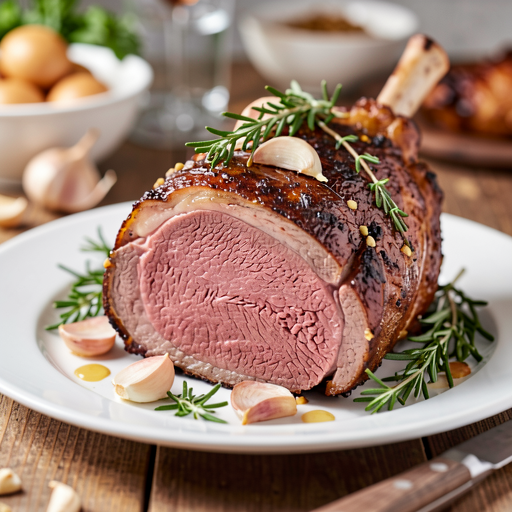
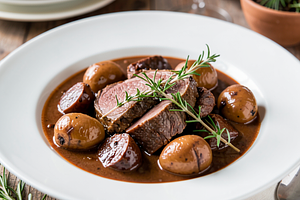
Juicy, aromatic lamb shank marinated in a mixture of fresh herbs, garlic, and lemon, slowly roasted to perfection and served with delicious buttery pearl barley. The dish combines the traditional Polish meatiness of a festive table with a distinct herbal twist: rosemary and thyme give the dish a piney-spicy character, parsley and lemon brighten the flavor, while garlic and butter add depth. Perfect for an Easter dinner — it looks impressive on the table, has a beautiful crust, and a pink center. Serve with a light roasting sauce, lemon for drizzling, and a side of pearl barley. The recipe includes detailed step-by-step instructions for the beginner cook.
Ingredients Used
Ingredients (16)
- Lamb shank 1600 g
- Garlic 6 clove (~30 g)
- Lemon 1.3 pcs (~100 g)
- Rapeseed oil 30 g
- Butter 50 g
- Onion 1 pcs (~150 g)
- Chicken broth 200 ml
- White wine 100 g
- Barley groats 200 g
- 🌿 Spices
- Parsley 1 bunch (~30 g)
- Rosemary 10 g
- Thyme 6 g
- Salt 8 g
- Black pepper 4 pinch (~2 g)
- ✨ Optional
- Honey 20 ml
- Mustard 30 g
💡 Click an ingredient to mark it as used
Preparation steps
Marinade
Meat preparation
Prepare the lamb shank (1600 g): dry the meat with paper towels. Make even cuts on the surface with a knife, about 1–1.5 cm deep, every 2–3 cm (they should be large enough to push the marinade into). Scoop the marinade with a spoon and rub it firmly into the cuts and over the entire surface of the meat; massage the paste with your fingers until the meat is evenly coated. If you have kitchen twine, tie the shank lengthwise (trussing) to maintain an even shape during roasting — tie every 4–5 cm. Transfer the meat to a bowl or dish, cover with plastic wrap, and place in the refrigerator for at least 2 hours, preferably 8–12 hours (the longer marination will enhance the flavor).
Frying (roasting)
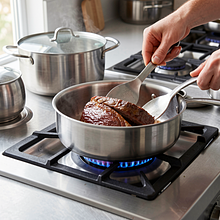
Remove the meat from the refrigerator 30 minutes before roasting to reach room temperature. Heat a large, heavy cast iron or steel skillet over high heat for 4–5 minutes — the skillet should be very hot. Add canola oil (1 tablespoon from the prepared oil) and place the shank in the pan, first with the side that has more fat. Sear without moving for 3–4 minutes until a deep brown color forms, then turn and brown the other sides for 3–4 minutes each, totaling 10–14 minutes. In the last minute, add butter (50 g) and use a spoon to baste the meat with the melted butter to enhance flavor and speed up caramelization.
Baking
Preheat the oven to 160°C (with fan) or 170°C without fan. Transfer the seared leg to a roasting pan. Cut the onion (150 g) into thick wedges and arrange them around the meat — they will create an aromatic base. Pour white wine (100 ml) and chicken broth (200 ml) into the roasting pan, so that the liquids reach about 1–2 cm at the bottom. Cover the roasting pan tightly with aluminum foil or a lid. Place it in the oven and roast for 75–90 minutes, until the internal temperature of the meat reaches 58–60°C for medium doneness (use a meat thermometer inserted into the thickest part).
Baking — monitoring and glazing
After 25 minutes, carefully uncover the roasting pan and baste the meat with the sauce using a spoon – this will prevent it from drying out and add flavor. In the last 10–15 minutes of baking, prepare the glaze: mix honey (optional, 20 g) with mustard (optional, 30 g) and a little lemon juice. Brush the meat with a thin layer of glaze and roast uncovered for 10–15 minutes, until the glaze caramelizes and forms a shiny coating.
Resting the meat and slicing
Remove the meat from the oven, loosely cover it with aluminum foil, and let it rest for 15–20 minutes. Resting allows the juices to redistribute evenly, making the meat juicy. After resting, remove any kitchen twine (if used) and place the leg on a cutting board. While slicing, keep your hand on the meat for stability and cut slices about 5–7 mm thick, cutting against the grain to ensure the slices are tender.
Pan sauce
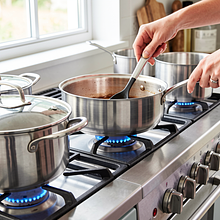
Place the roasting pan on the stove over medium heat. Add the remaining 50 ml of wine or 50 ml of broth if needed and gently scrape the browned bits waiting at the bottom (deglazing) with a wooden spoon. Cook for 3–5 minutes until the liquid slightly reduces. Strain the sauce through a sieve into a saucepan, pressing with a spoon to extract the flavor from the onions. Season with salt and pepper, and before serving, whisk in cold butter (about 20 g) into the sauce — add pieces of butter and vigorously mix with a whisk until you achieve a smooth, glossy consistency.
Preparation of barley
Rinse the pearl barley (200 g) under cold water in a sieve until the water runs clear (1–2 minutes). Optionally, soak the pearl barley in cold water for 20–30 minutes to shorten the cooking time. In a pot, bring 600 ml of salted water (about 1.5 teaspoons of salt) to a boil. Add the pearl barley and cook over medium heat for 30–40 minutes, until the grains are soft but still slightly firm. Drain any excess water. In the same pot, add butter (20 g) and half of the chopped parsley (from 30 g), mix, and season with salt and pepper to taste. The pearl barley should be moist, not dry.
Plate assembly and serving
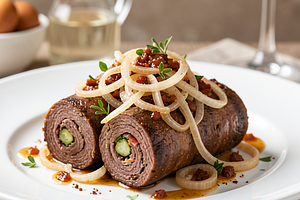
On a warm plate, place a portion of barley (about 150–180 g of cooked barley per person). On top of the barley, arrange slices of lamb (3–4 slices per portion). Drizzle the meat with warm sauce from the roasting pan. Sprinkle with the remaining fresh parsley and serve with a lemon half on the side for optional squeezing. Serve immediately; the meat should be warm and slightly rare in the center at a medium doneness level.
Final Tips
If you want a more roasted effect, increase the oven temperature to 190°C and bake the last 10–15 minutes uncovered. If you don't have a thermometer, check the meat by piercing the thickest part: the meat should be firm but not hard. You can modify the herbs: add mint (optional) for freshness or more rosemary for a woodier aroma.
Fun Fact
Lamb has been a symbol of spring and Easter in many regions of Europe for centuries; in Poland, it is often associated with the first greens of the season in folk tradition, and herbs like rosemary and thyme are added to balance the natural flavor of the meat.
Best for
Tips
Serve the meat on warm plates, with the sauce poured just before serving. A dry red wine (e.g., from the syrah or cabernet variety) or a fuller-bodied dry white wine used in cooking pairs well with lamb. Additionally, serve lemon for squeezing and fresh parsley for a contrast of colors.
Store sliced meat in the refrigerator in an airtight container for up to 48 hours. Keep the sauce separately in an airtight jar. Reheating: place in an oven preheated to 140°C covered for 15–20 minutes or gently heat in a pan with a little broth. It is not recommended to freeze the whole roasted leg in slices for longer than 2 months, but you can freeze portions of the sauce.
📸 Cooked by the community
Log in to add a photoAdd a photo of the finished dish
After moderator approval, you will receive 10 experience points.
No one has added a photo yet. Be the first!


Comments (0)
Be the first to comment on this recipe!
Add a comment