Prepare the duck: Remove the bag of giblets from the inside of the duck (if there is one). Rinse the duck quickly under cold water and thoroughly dry the outside and inside with paper towels — dry skin is key for a crispy skin.
Description
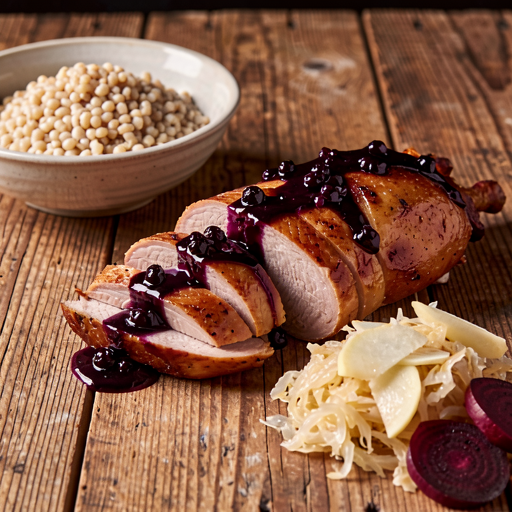
Traditional roasted duck served with a thick, slightly sweet-and-sour currant sauce, on a rustic Polish plate with barley groats and stewed sauerkraut with apple. The dish combines the intense flavor of duck with the refreshing acidity of currants and the creaminess of butter in the sauce, along with the grainy texture of barley groats. Inspired by the meat traditions of Upper Silesia and Lublin, as well as the winter use of preserves (sauerkraut), this dish is hearty, warming, and elegant — perfect for a festive lunch or a special dinner. In the recipe, you will find detailed instructions for preparing the duck, making the sauce, stewing the cabbage, and cooking the barley groats, as well as tips on how to recognize the doneness of the meat and how to serve the dish to make it look appetizing.
Ingredients Used
Ingredients (17)
- Duck 2000 g
- Garlic 4 ząbki (~20 g)
- Currant 300 g
- Sugar 30 g
- Balsamic vinegar 30 ml
- Red wine 100 ml
- Chicken broth 200 ml
- Onion 2 szt. (~300 g)
- Butter 30 g
- Barley groats 300 g
- Sauerkraut 800 g
- Apple 0.8 szt. (~150 g)
- 🌿 Przyprawy
- Salt 25 g
- Black pepper 8 szczypt (~4 g)
- Marjoram 2 g
- ✨ Opcjonalne
- Beets (raw) 300 g
- Honey 30 ml
💡 Kliknij na składnik aby oznaczyć jako użyty
Preparation steps
Duck
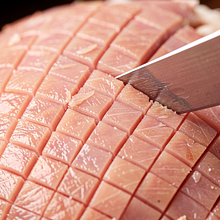
Scoring the skin: Place the duck breast side up. Using a sharp knife, score the skin at a 45° angle in a diamond pattern on the breast and thighs, just down to the layer of fat — do not cut into the meat. Make regular cuts every 1–1.5 cm, which will help render the fat and speed up the crisping.
Brining: In a bowl, mix the salt (about 60% of the salt will remain on the skin, the rest will be rubbed in). Rub the entire duck inside and out with salt and black pepper (gently massage into the cuts in the skin). Inside, place half an onion (cut into quarters) and 2 crushed garlic cloves. Sprinkle the entire duck with marjoram on the outside.
Refrigeration (dry brine): After seasoning, place the duck on a rack set over a baking tray (to allow the fat to drip off) and put it in the refrigerator for at least 60 minutes, uncovered — this will help the skin dry out and become crispy.
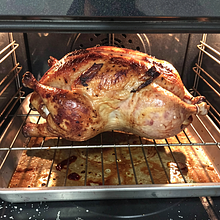
Preheat the oven to 220°C with convection. Place the duck breast side up on a rack over a deep baking tray. Put the tray in the preheated oven at 220°C and bake for 20 minutes — the high temperature will quickly brown the skin and start rendering the fat.
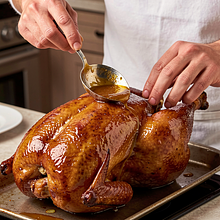
Reduce the temperature to 170°C and continue baking for about 50 minutes. Every 15–20 minutes, baste the duck with the rendered fat from the pan using a spoon, so that the skin browns evenly. If the skin browns too much, cover it loosely with aluminum foil.
Check for doneness: After 50 minutes, check the temperature in the thickest part of the thigh (without touching the bone) — it should be around 75°C. If you don't have a thermometer, check: the thigh should move freely and the juices that flow out when pierced should be clear, not pink.
Resting the meat
Remove the duck from the oven and transfer it to a cutting board. Loosely cover it with aluminum foil and let it rest for 10–15 minutes to allow the juices to redistribute. Do not carve it immediately — this will cause the juices to run out.
Blackcurrant sauce
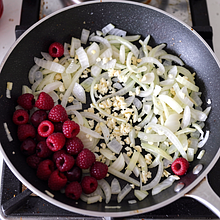
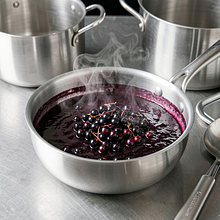
Prepare the sauce while the duck is roasting: In a medium skillet, heat 10 g of butter (from the total amount). Chop half of the remaining onion and 2 cloves of garlic. Sauté the onion for 3–4 minutes until it becomes translucent, then add the garlic and sauté for 30 seconds without browning.
Adding currants and reducing: To the sautéed onion, add the currants, sugar (you can replace part with honey — optional), pour in the red wine and balsamic vinegar. Cook over medium heat for 8–10 minutes, until the wine evaporates and the currants begin to soften. Then add the chicken broth and cook for another 10–12 minutes, until the sauce thickens. If you want a smooth sauce — blend with an immersion blender and strain through a sieve.
Finishing the sauce: Reduce the heat to the minimum and add pieces of cold butter (the remaining butter) while stirring vigorously to give the sauce shine and smoothness. Taste and season with salt and pepper. Set the sauce aside in a warm place.
Barley
Prepare the spelt: Rinse the spelt under cold water. In a heavy-bottomed pot, bring 600 ml of water with 5 g of salt to a boil, add the spelt, and cook on low heat covered for 35–45 minutes until tender but chewy. After cooking, drain the excess water and cover to let it 'rest' for 5 minutes.
Sauerkraut
Braised cabbage: Chop the sauerkraut (if it is very sour, rinse quickly). In a large skillet, heat 10 g of butter, sauté the remaining onion until translucent (3-4 minutes), add the grated apple and fry for 2 minutes. Add the cabbage, 50–100 ml of water, half a teaspoon of marjoram, and braise covered for 20–25 minutes, stirring every 5–7 minutes. Season with salt and pepper to taste.
Additions (optional)
Roasted beet (optional): If you are using a beet, peel it, cut it into wedges, drizzle with a little oil (oil was not listed in the ingredients — use a minimal amount), salt it, and roast at 200°C for 30–40 minutes until tender. Serve sliced as a color contrast.
Assembly and serving
Slicing and serving: After 10–15 minutes of resting, transfer the duck to a cutting board. Separate the breasts from the thighs: first pull away the thigh, then slice the breast diagonally into pieces about 1–1.5 cm thick. On a plate, arrange a portion of barley, next to it a portion of sauerkraut, the slices of breast, and one thigh. Drizzle the meat with 1–2 tablespoons of hot currant sauce. Additionally, serve the sauce in a gravy boat.
Final tips
Seasoning and serving: If the sauce is too sour, sweeten it with a bit of honey (optional). Serve hot — best after a short resting period for the meat. For decoration, use a few fresh currants or a sprig of parsley (optional).
Fun Fact
In traditional Polish cuisine, duck was often served with sour accompaniments (such as sauerkraut or forest fruits) because the acidity balanced the richness of the meat. Sauces made from currants and other berries have been known for centuries in regions where access to berries was easy.
Best for
Tips
Serve the duck immediately after a short rest; arrange the sliced breast pieces slightly overlapping. Serve the sauce in a gravy boat so guests can add it to their liking. A stronger red wine with moderate tannins or a dark craft beer pairs well with the dish.
Leftovers: Store meat and sauce separately in airtight containers in the fridge for up to 2 days. The sauce can be stored for up to 4 days or frozen. To reheat the meat, use an oven preheated to 150°C, cover with foil, and heat for 10–15 minutes to avoid drying out the meat.
📸 Ugotowane przez społeczność
Zaloguj się, aby dodać zdjęcieDodaj zdjęcie gotowej potrawy
Po zatwierdzeniu przez moderatora otrzymasz 10 punktów doświadczenia.
Nikt jeszcze nie dodał zdjęcia. Bądź pierwszy!
Comments (0)
Be the first to comment on this recipe!
Add a comment