Artichokes with Eggs Polish Style

Pikantne Regional Cuisine of Poland Main Dishes 60 min Medium 25 wyświetleń ~155.19 PLN * - (0)
Rate:
(0)
Start Cooking

Description

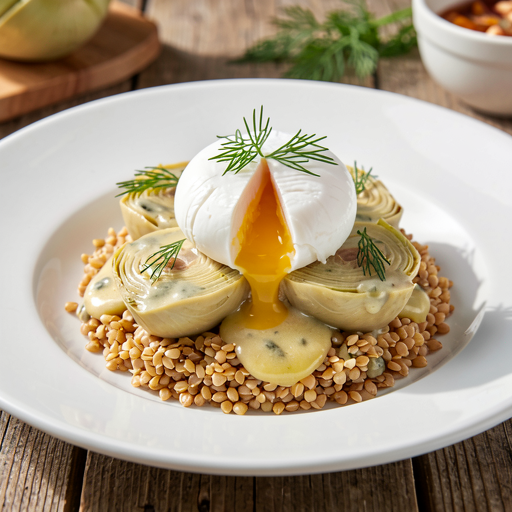
Artichokes with eggs in Polish style is a spring main dish that combines delicate, slightly nutty artichoke hearts stewed in butter and broth with creamy sour cream, served on aromatic pearl barley and topped with a poached egg. The dish combines a Mediterranean ingredient (artichoke) with a Polish grain addition (pearl barley) and a simple method of preparing eggs. It has a velvety sauce, a distinct lemon accent, and fresh dill as a counterpoint. It is perfect for a family spring dinner when artichokes are available; serve with green salad or young potatoes. For convenience, a version can use canned artichoke hearts, but fresh ones offer a more pronounced flavor and texture.

Ingredients Used

Ingredients (13)

Servings:
4
  • Artichoke 1200 g
  • Chicken egg 4 szt. (~240 g)
  • Butter 70 g
  • Onion 1 szt. (~150 g)
  • Garlic 3 ząbki (~15 g)
  • Lemon juice 30 g
  • Vegetable broth 400 ml
  • 12% cream 100 g
  • Barley groats 200 g
  • Rapeseed oil 15 g
  • 🌿 Przyprawy
  • Salt 0.1 szczypt (~4 g)
  • Black pepper 4 szczypty (~2 g)
  • ✨ Opcjonalne
  • Dill 1.5 pęczki (~30 g)
💰 Szacowany koszt dania: ~155.19 PLN (38.80 PLN/porcję)
* Brak cen dla niektórych składników

💡 Kliknij na składnik aby oznaczyć jako użyty

Preparation steps

Barley

1

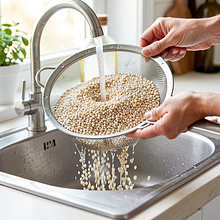
Prepare the pearl barley: pour 200 g of pearl barley into a strainer and rinse under cold water, shaking until the water is almost clear. In a 2-3 liter pot, heat 1 tablespoon (15 g) of rapeseed oil, add the rinsed pearl barley and sauté for 2 minutes, stirring with a wooden spoon until the grains are slightly glossy. Pour in 400 ml of boiling water, add 1 g of salt (the remaining salt will be added later) and cover. Cook on low heat for 30-35 minutes until the grains are soft but firm (al dente). If the pearl barley absorbs all the water and is still hard, add 50-100 ml of hot water and continue cooking.

Ingredients: Barley groats, Rapeseed oil, Salt
Use a pot with a thick bottom and a lid. If you have time, soak the pearl barley for 30 minutes before cooking; this will shorten the cooking time by 10-15 minutes. Check the texture after 25 minutes: the pearl barley should be soft on the outside and slightly chewy on the inside.
Artichoke - preparation

2

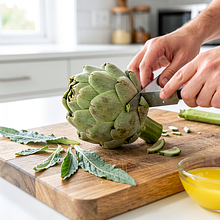
Clean the artichokes: cut off the stem level with the base of the head, trim about 1 cm from the top of the head, and remove the outer, tougher leaves until you reach the lighter, softer leaves. Cut each artichoke in half vertically. Using a spoon (or knife), scoop out the fibrous 'choke' from the halves to leave the soft heart. Immediately after peeling, scrape the surface of each half with lemon juice (from 30 ml of prepared juice) to prevent browning.

Ingredients: Artichoke, lemon juice
Use a sharp knife and gloves if you have sensitive hands. It's most convenient to work on a cutting board with a bowl of lemon juice next to it. If you are using canned/jarred artichokes: rinse under warm water and skip cutting out the core; proceed to the sautéing step and reduce the cooking time by 8-10 minutes.

Artichoke - braising

3

Chop 150 g of onion finely and 15 g (3 cloves) of garlic thinly. In a wide skillet with a diameter of 26-28 cm, heat 50 g of butter over medium heat, add the onion and sauté for 3-4 minutes until the onion becomes translucent and slightly golden. Add the garlic and sauté for 30 seconds until it releases its aroma. Place the prepared artichoke halves cut side down and sauté for 2-3 minutes until browned. Pour in 400 ml of hot vegetable broth so that it reaches halfway up the artichokes, reduce the heat to low, cover, and simmer for 18-22 minutes until the artichokes are tender (check with a sharp knife - the knife should slide in smoothly).

Ingredients: Butter, Onion, Garlic, Artichoke, Vegetable broth
The best is a pan with a lid or a wide pot. Monitor the liquid: it should not boil vigorously (small bubbles), as the artichokes may fall apart. If the broth evaporates too quickly, add 50 ml of hot water.

Artichoke - finishing the sauce

4

When the artichokes are tender, remove the lid, increase the heat, and evaporate the excess liquid for 2 minutes. Reduce the heat to low and add 100 g of 12% cream, gently stir with a wooden spoon, and cook for 1-2 minutes until the sauce thickens. Add 20 g of butter for shine and creaminess. Season with 2-3 g of salt and 1-2 g of freshly ground black pepper to taste. Taste the sauce: it should be creamy, slightly tangy from the lemon, without a raw garlic aftertaste.

Ingredients: 12% cream, Butter, Salt, Black pepper
Add the cream over low heat, do not bring to a boil to prevent it from curdling. If the sauce is too fatty, add 1-2 tablespoons of the cooking water from the barley to adjust the consistency.

Poached Eggs

5

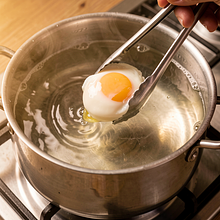
Prepare the water for boiling the eggs: in a medium pot, bring 1 liter of water to a boil and reduce the heat to a gentle simmer (small bubbles). Add 1 teaspoon of vinegar (optional, it will work without it) - vinegar helps the egg white to coagulate faster. Crack one egg into a small cup. Using a spoon, stir the water to create a whirlpool, then gently slide the egg from the cup into the center of the whirlpool. Cook for 3 minutes for a runny yolk (3.5-4 minutes for a slightly runny yolk). Remove with a slotted spoon and place on a plate lined with paper towels. Repeat for the remaining eggs.

Use a wide, shallow pot (about 18-20 cm in diameter) and a slotted spoon. If you don't know how to poach an egg, an alternative is very delicate fried eggs in butter (fry for 2-3 minutes). The finished egg white should be set without any raw parts, and the yolk should be soft to the touch.

Assembly and serving

6

On a warmed plate, place a portion of barley (about 120-140 g of cooked barley per person). On the barley, arrange 2-3 halves of artichoke with sauce, drizzling a spoonful of the frying sauce over it. In the center, place a poached egg. Gently break the egg so that the yolk flows slightly (if desired) and sprinkle with finely chopped dill (use 30 g of the bunch to taste) — dill is optional. Add freshly ground pepper and season with salt if needed.

Ingredients: Barley groats, Artichoke, Butter, Dill, Black pepper, Salt
Use a flat, wide plate for an aesthetic presentation. Additionally, you can add a few leaves of young lettuce or lemon slices for decoration.

Cleaning and servicing

7

After serving, immediately check the temperature of the dish with your guests – the dish tastes best when warm. Store leftovers separately: the spelt and artichokes in an airtight container, and do not store the eggs after preparation for more than 2 hours at room temperature.

Use airtight containers for storage in the fridge and label with the preparation date. For reheating, use a pan over low heat, adding a little water or cream to regain a creamy consistency.

Fun Fact

💡

Artichoke was valued in the Renaissance kitchens of Europe; although associated with Mediterranean cuisine, it pairs well with Polish grains like barley, which connects local tradition with an exotic gift of nature.

Best for

Tips

🍽️ Serving

Serve hot, with fresh dill and a slice of lemon. If you want to enrich the plate, add a salad of young leaves and a simple vinaigrette. For a heartier version, serve with additional young potatoes drizzled with butter.

🥡 Storage

Store the pearl barley and artichokes separately in the refrigerator for up to 3 days in airtight containers. Poached eggs are best consumed immediately; if you need to store them, do so for no longer than 24 hours and gently reheat in a water bath (not directly over the flame). Reheat the sauce over low heat, adding a little water or cream to prevent curdling.

📸 Ugotowane przez społeczność

Zaloguj się, aby dodać zdjęcie
Dodaj zdjęcie gotowej potrawy

Po zatwierdzeniu przez moderatora otrzymasz 10 punktów doświadczenia.

🍲

Nikt jeszcze nie dodał zdjęcia. Bądź pierwszy!

Comments (0)

Be the first to comment on this recipe!

Add a comment

You might also like

Recipe Categories

Traditional recipes from various regions of Poland that showcase the richness of local flavors and ingredients.

See all recipes in this category
Main Dishes
Main Dishes in: Valentine's Day

Exquisite main dishes that will delight with their flavor and aroma, perfect for a romantic dinner.

See all recipes in this category
Reklama