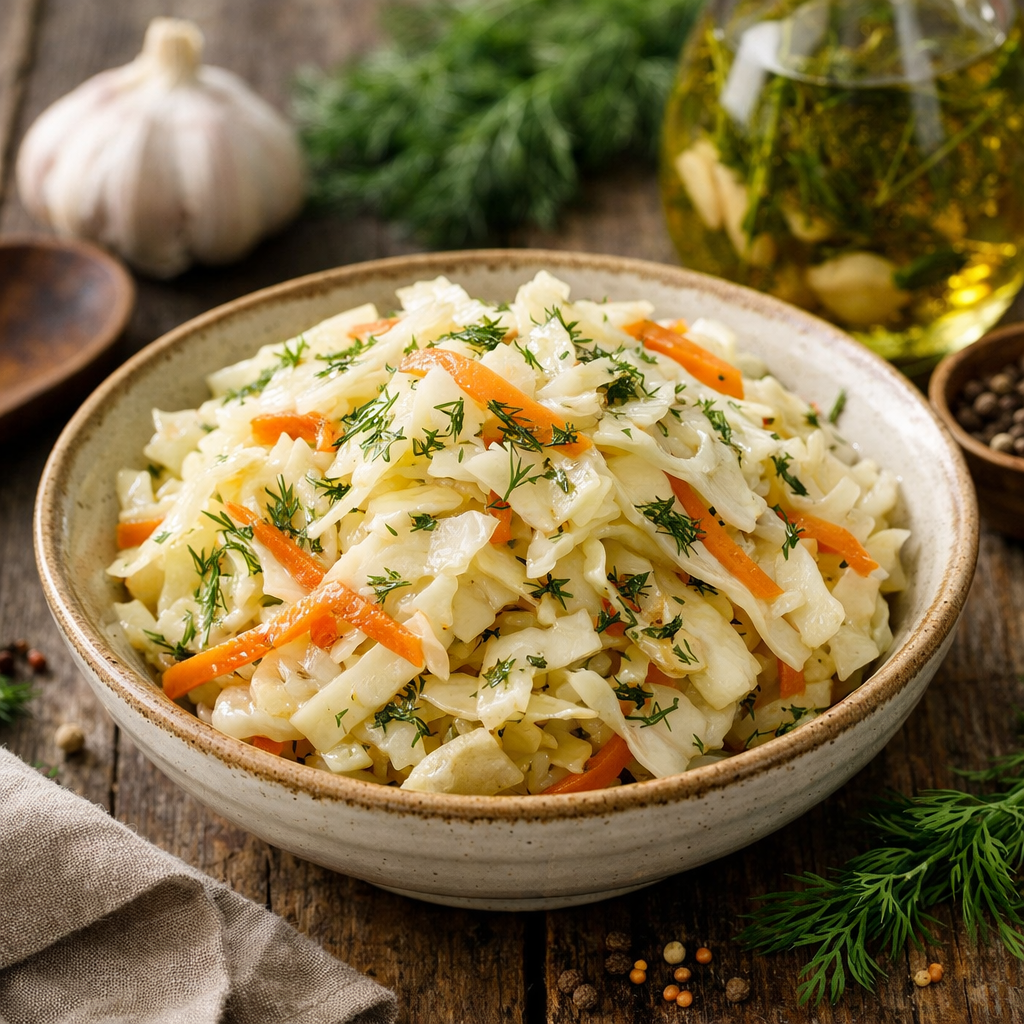
Marinated cabbage with herbal vinegar and dill

Additions Regional Cuisine of Poland 90 min Medium 10 wyświetleń ~3.37 PLN * - (0)
Rate:
(0)
Start Cooking

Description

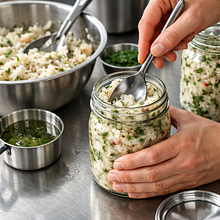
Marinated cabbage with herbal vinegar and dill is a winter side dish with a distinct, slightly tangy flavor and a herbal touch, complemented by the fresh aroma of dill. Inspired by Polish preserves, but with a spring twist thanks to the intense dill and a delicate mix of dried herbs in the vinegar. It works well as a side for roasted meats (pork, duck), with buckwheat, potatoes, or as a base for sandwiches and salads. Visually, it presents as bright, crunchy strips of cabbage with green dill leaves and darker spice seeds, creating an attractive contrast on the plate.

Ingredients Used

Ingredients (13)

Servings:
4
  • Cabbage 800 g
  • Sugar 25 g
  • Spirit vinegar 8 łyżek (~120 g)
  • Water 120 ml
  • Dried thyme 2 g
  • Rapeseed oil 30 g
  • 🌿 Przyprawy
  • Salt 12 g
  • Dill 1.5 pęczki (~30 g)
  • Bay leaf 10 szt. (~3 g)
  • Allspice (berries) 4 szt. (~4 g)
  • Black pepper 4 szczypty (~2 g)
  • ✨ Opcjonalne
  • Carrot 1.3 szt. (~100 g)
  • Cumin 5 g
💰 Szacowany koszt dania: ~3.37 PLN (0.84 PLN/porcję)
* Brak cen dla niektórych składników

💡 Kliknij na składnik aby oznaczyć jako użyty

Preparation steps

Herb vinegar

1

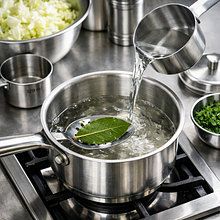
Prepare the herbal vinegar. In a small saucepan, combine spirit vinegar (120 ml) with water (120 ml). Add bay leaves (3 pieces), allspice (4 pieces), and dried thyme (2 teaspoons). Heat over low heat until it starts to lightly steam (do not bring to a boil). Gently simmer for 2-3 minutes to allow the herbs to release their aroma.

Ingredients: Spirit vinegar, Water, Bay leaf, Dried thyme
Use a small saucepan with a capacity of 1 l or larger. Do not allow it to boil — steaming is enough for the flavors to infuse into the vinegar. If you want a stronger aroma, leave it on the heat for an extra minute.
2

Remove the pot from the heat and let it sit for 15-20 minutes to allow the vinegar to infuse. After this time, strain the liquid through a fine sieve into a clean container, discarding the leaves and spices. Add sugar (25 g) and salt (12 g) to the strained vinegar. Stir until completely dissolved.

Ingredients: Sugar, Salt, Spirit vinegar
Use a fine sieve or cheesecloth to obtain clear vinegar. Make sure the salt and sugar are completely dissolved, stirring with a spoon for 30-60 seconds.

Preparing the cabbage

3

Prepare the cabbage: cut off the core, slice the head into quarters, and remove the tough parts near the core. Then shred the cabbage into thin strips — it's best to use a sharp knife or a mandoline. The strips should be about 3-5 mm wide. If you prefer thicker pieces, leave them at 5-7 mm.

Ingredients: cabbage
Use a large cutting board and a sharp chef's knife. If you don't feel confident with the knife, use a mandoline with a finger guard. Don't slice too thinly, as the cabbage may become too soft after pickling.
4

If you are using carrot (optional), peel the carrot and grate it on a large grater. Add the grated carrot to the shredded cabbage and mix the raw vegetables evenly.

Ingredients: Carrot, cabbage
Use a grater with large holes or a food processor with a shredding disc. Carrot adds color and a subtle sweetness - you can omit it if you prefer a cleaner cabbage flavor.
5

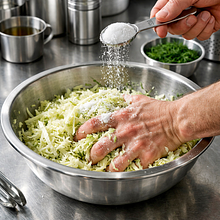
In a large bowl, sprinkle the shredded cabbage with salt (12 g) and vigorously knead with your hands for 5-7 minutes: squeeze portions, stretch, and crush the leaves. The goal is to release the juice from the cabbage — it should become softer and juice should appear at the bottom of the bowl. Taste: the cabbage should be slightly salty, but not overly salty.

Ingredients: cabbage, Salt
Use a large metal or glass bowl. If you don't want to get your hands dirty, put on disposable gloves. Don't overdo the salt — it's easier to add salt later than to remove it.

Marinating

6

Pour the cooled herbal vinegar with salt and sugar (the prepared brine) over the mashed cabbage. Add the rapeseed oil (30 g). Mix thoroughly with a wooden spoon or by hand, ensuring the brine reaches all layers. If you are using caraway seeds (optional), lightly crush them in a mortar and add them now.

Ingredients: cabbage, Rapeseed oil, Cumin, Sugar
Use a wooden spoon or silicone spatula. Stir for at least 1-2 minutes, pressing the cabbage against the sides of the bowl to absorb the brine. Additionally, you can add caraway seeds for a traditional aroma.
7

Add chopped fresh dill (green stems along with the leaves). Mix again to evenly distribute the dill in the cabbage. Taste and season with black pepper (2 pinches) or additional salt if needed.

Ingredients: Dill, Black pepper, cabbage
Chop the dill with a sharp knife or kitchen scissors over a cutting board to avoid crushing the leaves. Add the pepper gradually — the aroma and spiciness will increase after a few hours.
8

Transfer the cabbage to clean jars or a container with a lid. Pack the cabbage tightly with a spoon, so there are no large air pockets and the brine reaches 1-2 cm below the edge. Seal the jars or cover tightly.

Ingredients: cabbage, Spirit vinegar, Water, Rapeseed oil
The best jars are Weck jars or regular jars with a lid. When pounding the cabbage, you can use a potato masher or a special cabbage pounder. Leave about 1-2 cm of free space under the lid.

Resting and serving

9

Set the jars in a cool place (refrigerator or pantry at around 6-10°C) for at least 24 hours, preferably 2-3 days — the flavors will meld, and the cabbage will become more harmonious. After opening, store in the refrigerator.

Ingredients: cabbage
If you want to speed up the process, leave the jars in a warmer place (20°C) for 12 hours, but monitor the taste. The cabbage tastes best after 48-72 hours.
10

Serve as a side dish: transfer a portion of cabbage to a plate and add fresh dill leaves for decoration. It pairs well with roasted meats, potato pancakes, buckwheat, or as an ingredient in sandwiches and salads.

Ingredients: cabbage, Dill
When serving with warm meats, you can also place a teaspoon of rapeseed oil alongside and freshly ground pepper. Additionally, you can add thinly sliced raw beets for a color contrast.

Fun Fact

💡

Fermenting and pickling cabbage is an old Polish technique for preserving vegetables that allowed people to survive the winter. The addition of dill and herbal vinegar combines tradition with a lighter, spring aroma.

Best for

Tips

🍽️ Serving

Serve chilled or at room temperature. For a flavor contrast, pair with fatty meat (e.g., roasted duck) or buckwheat. Before serving, you can add a teaspoon of 12% cream to soften the acidity (optional).

🥡 Storage

Store in tightly sealed jars in the refrigerator for up to 3 weeks. Avoid dipping dirty utensils into the jar — use a clean spoon. If you want to extend shelf life, pasteurize the jars (10 minutes in boiling water) before longer storage.

📸 Ugotowane przez społeczność

Zaloguj się, aby dodać zdjęcie
Dodaj zdjęcie gotowej potrawy

Po zatwierdzeniu przez moderatora otrzymasz 10 punktów doświadczenia.

🍲

Nikt jeszcze nie dodał zdjęcia. Bądź pierwszy!

Comments (0)

Be the first to comment on this recipe!

Add a comment

You might also like

Recipe Categories

Additions
Additions in: Valentine's Day

Delicious additions that will enhance the main dishes and enrich the Valentine's table.

See all recipes in this category

Traditional recipes from various regions of Poland that showcase the richness of local flavors and ingredients.

See all recipes in this category
Reklama