Pork roast with forest mushrooms

Pikantne Main Dishes Regional Cuisine of Poland 120 min Hard 92 wyświetleń ~18.16 PLN * - (0)
Rate:
(0)
Start Cooking

Description

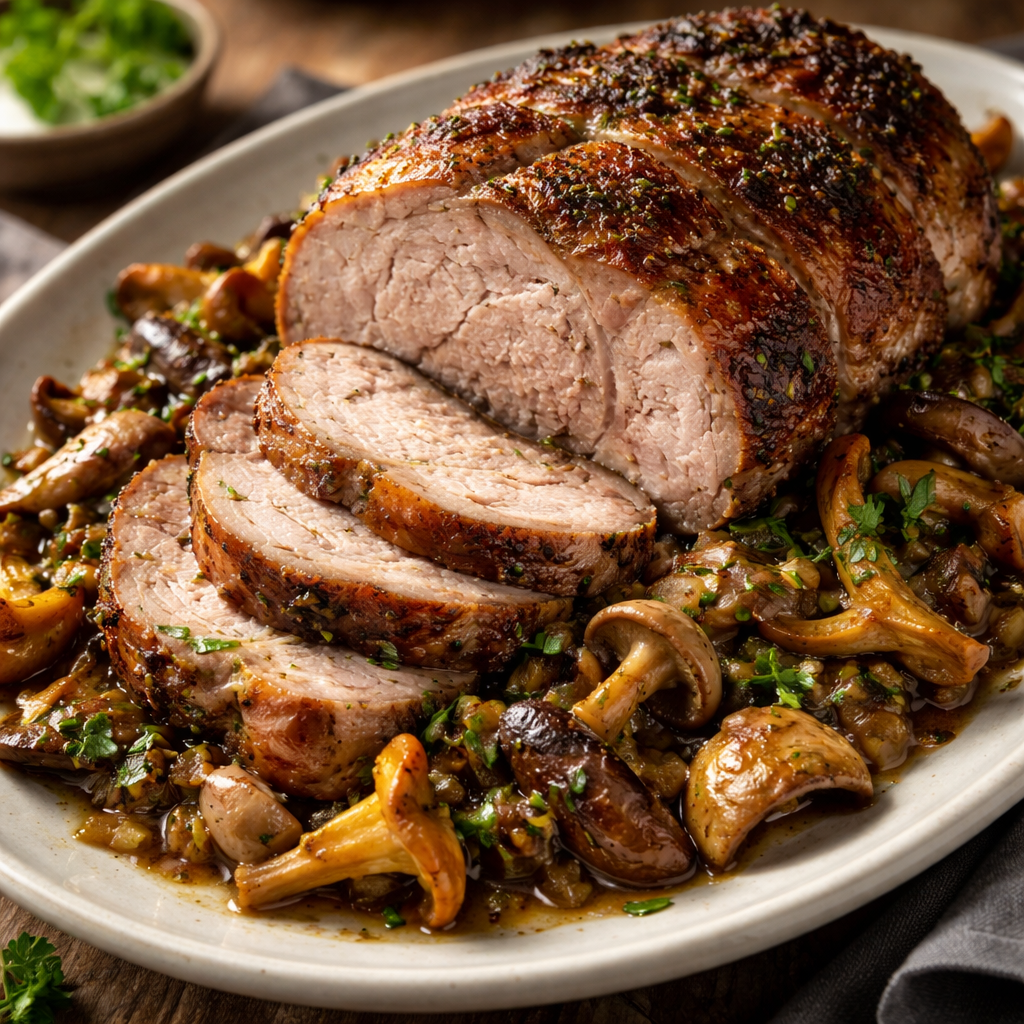
Traditional Polish pork roast enriched with a modern, forest filling of mushrooms. This flavorful, juicy dish combines fatty, marbled pork neck with the aroma of forest mushrooms, sautéed onions and garlic, and a delicately reduced sauce made from broth and cream. The roast is perfect as a main course for a family dinner or a festive gathering — served in slices with a thick sauce, it looks impressive and appetizing. Flavor qualities: the meat is juicy and aromatic, the filling adds an earthy note, and the sauce binds the flavors and provides a creamy texture. I recommend serving it with spring accompaniments: young potatoes, buckwheat, or blanched asparagus.

Ingredients Used

Ingredients (16)

Servings:
6
  • Pork neck 1500 g
  • Wild mushroom 400 g
  • Onion 2 szt. (~300 g)
  • Garlic 6 ząbków (~30 g)
  • Carrot 2.5 szt. (~200 g)
  • Butter 50 g
  • Rapeseed oil 30 g
  • Chicken broth 500 ml
  • Wheat flour 15 g
  • Mustard 30 g
  • Sour cream 120 g
  • 🌿 Przyprawy
  • Thyme 4 g
  • Salt 10 g
  • Black pepper 8 szczypt (~4 g)
  • ✨ Opcjonalne
  • Smoked bacon 100 g
  • Dry white wine 100 ml
💰 Szacowany koszt dania: ~18.16 PLN (3.03 PLN/porcję)
* Brak cen dla niektórych składników

💡 Kliknij na składnik aby oznaczyć jako użyty

Preparation steps

Meat preparation

1

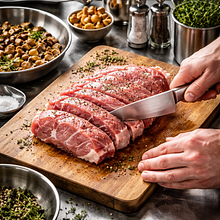
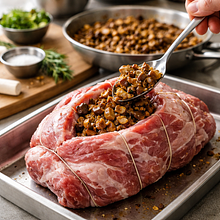
Prepare the pork neck: if it is whole, place it on a cutting board. With a meat knife, make a horizontal cut inserting the blade about 2/3 of the thickness of the meat, creating a pocket for the filling. If the piece is very uneven, gently pound it with a meat mallet to achieve an even thickness of about 3 cm. Pat dry with a paper towel.

Ingredients: pork neck
Use a sharp, long knife and a stable cutting board. If you're afraid of cutting the meat, make shorter, controlled cuts. The meat mallet should be covered with a cloth to avoid tearing the meat.
Marinade

2

Prepare the marinade for rubbing the meat: in a bowl, mix the mustard (30 g), half of the salt (5 g), half of the pepper (2 g), and half of the thyme (2 teaspoons → 4 g). Rub the mixture thoroughly on the outside and inside of the pork neck, using your fingers to massage it in.

Ingredients: Mustard, Salt, Black pepper, Thyme
Use a kitchen brush or your hands with disposable gloves to spread the marinade. Marinating just before frying is sufficient, but if you have time, let the meat sit in the fridge for 1-2 hours — it will bring out a deeper flavor.

Mushroom filling

3

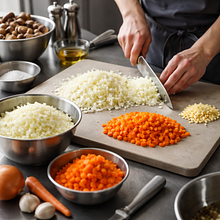
Prepare the filling: chop the onion (300 g) into small cubes, the carrot (200 g) into small cubes, and finely chop the garlic (30 g). Clean the mushrooms (400 g) with a brush, and cut larger caps into pieces. In a large skillet, heat 15 g of butter and 15 g of rapeseed oil. First, add the bacon (if using, 100 g) and fry for 3-4 minutes until the fat renders. Add the onion and carrot and fry for 6-8 minutes until the onion becomes translucent. Add the garlic and fry for 30 seconds. Add the mushrooms and fry over high heat for 8-10 minutes, until most of the liquid evaporates and the mushrooms are lightly browned. Season with salt (2 g), pepper (1 g), and 1 teaspoon of thyme (2 g). Set aside to cool slightly.

Ingredients: Smoked bacon, Onion, Carrot, Garlic, wild mushroom, Butter, Rapeseed oil, Salt, Black pepper, Thyme
Use a wide skillet so the mushrooms can fry and evaporate evenly. Do not cover the skillet — you want the liquid to evaporate. If you are using dried mushrooms, soak them beforehand and add them along with the liquid after draining.

Filling

4

Fill the meat pocket with the filling: place the filling inside the pork neck so that it does not push the meat out too much (leave about 1–1.5 cm of space from the edge). If there is a lot of filling left, you can spread some on top before tying. Tie the roast with kitchen twine every 3–4 cm, starting from one end to the other, so that the meat retains an even shape.

Ingredients: pork neck, wild mushroom
Use strong kitchen twine and tie it tightly, but not so tight that it cuts into the meat. You can use a needle and cotton thread for stitching if the filling needs to be sealed. Set the tied roast aside for a moment to let the marinade settle.

Frying

5

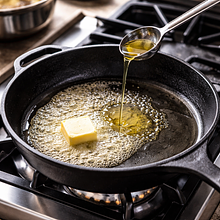
Heat a large, heavy skillet (preferably cast iron) with 15 g of butter and 15 g of canola oil over high heat. Sear the roast on all sides for 2–3 minutes per side, until you achieve a nice golden-brown crust. Turn carefully using tongs to avoid damaging the string.

Ingredients: pork neck, Butter, Rapeseed oil
The best is a pan with a diameter of 26–28 cm or a cast iron pot. Searing seals the meat's pores and adds flavor — do not skip this step. Be careful of oil splatters.

Baking

6

Transfer the seared roast to a baking dish or deep baking pan. Pour hot broth (500 ml) into the dish so that it reaches about 1/3 of the height of the meat. Cover the dish with a lid or tightly with aluminum foil. Bake in an oven preheated to 160°C (fan oven 140°C) for 70–80 minutes. After 50 minutes, check every 15 minutes and baste with the sauce formed at the bottom of the dish.

Ingredients: pork neck
Use a meat thermometer: the roast is ready when the internal temperature reaches 70–72°C in the thickest part. Cooking at a lower temperature for a longer time results in a more even, juicy texture.

Resting the meat

7

Remove the roast from the oven and place it on a cutting board, loosely cover it with aluminum foil, and let it rest for 15–20 minutes. Resting allows the juices to redistribute evenly in the meat, making it juicy when sliced.

Ingredients: pork neck
Don't cut the meat right away! If you cut it too early, the juices will run out onto the board. Use a thermometer to ensure that the meat has reached the target temperature before resting.

Sauce

8

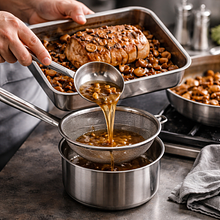
Prepare the sauce from the drippings in the roasting pan: pour the drippings from the roasting pan into a small saucepan through a strainer, collecting all the browned bits and juices. If you used wine (100 ml), deglaze the roasting pan before pouring: pour the wine into the hot pan, scrape the stuck bits with a wooden spoon, and let it reduce for 2–3 minutes, then add the broth from the roasting pan. In the saucepan, melt 25 g of butter, add 15 g of flour, and stir for 1–2 minutes over medium heat to create a light roux. Gradually pour in the filtered liquids while constantly whisking to avoid lumps. Cook for 4–6 minutes over low heat until the sauce thickens. Add the cream (120 g), and season with salt and pepper to taste. If desired, add a teaspoon of mustard for a livelier flavor.

Ingredients: Butter, Wheat flour, Sour cream, Mustard
Use a strainer to filter the sauce and a small silicone whisk. If the sauce is too thin, cook longer uncovered; if too thick, add a bit of hot broth.

Slicing and serving

9

Remove the kitchen twine with scissors and slice the roast into pieces about 1–1.5 cm thick. On the plates, arrange a portion of buckwheat or potatoes, place the slices of roast, and drizzle with sauce. Top with a tablespoon of mushroom filling for decoration and extra aroma. Serve immediately while the sauce is hot.

Ingredients: pork neck, wild mushroom, Sour cream
Use a long, sharp knife for slicing the meat and a large fork for stabilization. By cutting at an angle, you will achieve nicer slices. Additionally, you can add blanched asparagus or a young cabbage salad.

Fun Fact

💡

Pork neck (meat from the area around the pig's neck) has long been valued in Polish cuisine for its marbling and flavor — in the hands of a cook, it gains aroma through long braising and the addition of mushrooms known from the forests of Poland.

Best for

Tips

🍽️ Serving

Serve the roast in thin slices with the sauce poured under the meat. It pairs wonderfully with toasted buckwheat, young potatoes with dill, or blanched spring asparagus. A lightly acidic dry white wine or a pint of craft beer complements the burgundy sauce well.

🥡 Storage

Store the roast in the refrigerator in an airtight container for up to 3 days. Keep the sauce separate. Reheat in the oven (160°C) for 15–20 minutes or in a skillet over medium heat, adding a little broth to prevent the meat from drying out. Do not freeze stuffed meat — the filling may lose its texture; if freezing, do so only with raw meat without cream.

📸 Ugotowane przez społeczność

Zaloguj się, aby dodać zdjęcie
Dodaj zdjęcie gotowej potrawy

Po zatwierdzeniu przez moderatora otrzymasz 10 punktów doświadczenia.

🍲

Nikt jeszcze nie dodał zdjęcia. Bądź pierwszy!

Comments (0)

Be the first to comment on this recipe!

Add a comment

You might also like

Recipe Categories

Main Dishes
Main Dishes in: Christmas Eve Dinner

Main courses are the heart of every meal - hearty, delicious, and full of nutrients. Meats: beef, pork, poultry, and lamb in various versions. Fish and seafood: baked, fried, grilled, and stewed. Vegetarian dishes: tofu, tempeh, legumes as the main protein. Casseroles: pasta, potato, vegetable wi...

See all recipes in this category

Traditional recipes from various regions of Poland that showcase the richness of local flavors and ingredients.

See all recipes in this category
Reklama