Clean the rabbit: if you have a carcass divided into pieces, dry the pieces with a paper towel. In a dish (preferably a heatproof bowl or a bowl with a lid), mix rapeseed oil (30 g), half of the chopped garlic (about 2 cloves = 10 g), thyme (4 g), rosemary (2 g), salt (4 g), and black pepper (1 g). Rub the meat with the mixture thoroughly on all sides, add the onion cut into thick wedges (150 g), and set aside covered in the refrigerator for at least 1 hour, preferably for 3-4 hours. Marinating helps the herbs penetrate the meat and tenderizes it.
Description
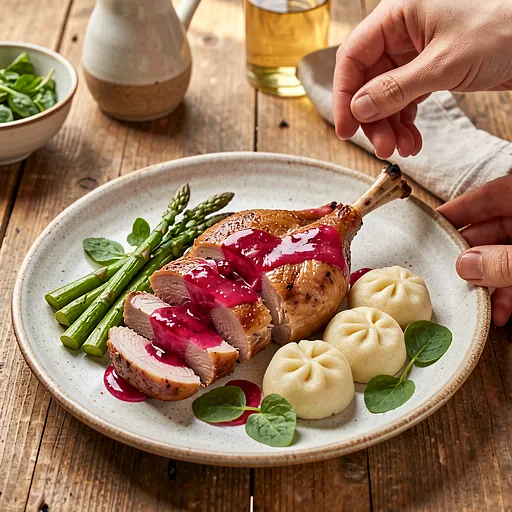
Mazurian rabbit roast with rhubarb and cranberries is a spring combination of tender meat with distinctly tart notes of rhubarb and sweet-sour cranberries. The dish is inspired by the cuisine of Mazury, where the simplicity of meat is combined with forest and garden flavors. We serve the roast in a rhubarb-cranberry sauce alongside fluffy Silesian dumplings and optionally with young asparagus and sorrel leaves, which complement the tartness of the sauce. Visually, the dish contrasts the pink sauce and light dumplings, while flavor-wise it combines sweet, sour, and herbal notes.
Ingredients Used
Ingredients (19)
- Rabbit 1200 g
- Rhubarb 300 g
- Cranberry 80 g
- Onion 1 szt. (~150 g)
- Garlic 3 ząbki (~15 g)
- Butter 80 g
- Rapeseed oil 30 g
- Chicken broth 500 ml
- Sour cream 200 g
- Potatoes 6 szt. (~900 g)
- Potato starch 200 g
- Chicken egg 2 szt. (~120 g)
- Sorrel 50 g
- 🌿 Przyprawy
- Thyme 4 g
- Rosemary 2 g
- Salt 8 g
- Black pepper 4 szczypty (~2 g)
- ✨ Opcjonalne
- Asparagus 200 g
- Honey 30 ml
💡 Kliknij na składnik aby oznaczyć jako użyty
Preparation steps
Marinade
Meatloaf
Preheat the oven to 170°C (top-bottom) or 150°C (with fan). In a large ovenproof skillet or cast iron dish, heat 1 tablespoon of oil (15 g) and 20 g of butter over medium-high heat. Sear the pieces of rabbit in batches for 4-5 minutes on each side until the skin is golden brown. Do not overcrowd the skillet – the meat should be in contact with the bottom to achieve a nice crust. After searing, return all the pieces to the dish along with the sautéed onion from the marinade.
Add the chopped rhubarb (300 g) and cranberries (80 g) to the dish with the meat. Pour in the chicken broth (500 ml). Cover the dish with a lid or tightly with aluminum foil and place it in the preheated oven. Bake for 60 minutes. After 60 minutes, check the tenderness: insert a fork into the largest piece – it should go in easily, and the meat should pull away from the bone. If it is still firm, bake for an additional 15-20 minutes.
Sauce
Remove the dish from the oven (carefully – it's hot). Transfer the meat to a cutting board and cover it with foil to rest for 10-15 minutes. Pour the contents of the dish along with the juices into a wide pot or remove the liquids from the baking dish. Add the remaining chopped garlic (5 g) and simmer the sauce over low heat for 8-10 minutes, stirring, until the rhubarb starts to break down and the sauce thickens slightly.
Reduce the heat, pour in the cream (200 ml) and add 30 g of butter. Heat slowly for 3-4 minutes until the sauce becomes smooth and slightly creamy. Taste and season with salt (remaining 4 g) and pepper. If you want a smooth consistency without any pieces, strain the sauce through a sieve or blend it with an immersion blender for 20-30 seconds. The sauce should be glossy and distinctly sweet and sour.
Silesian dumplings
Peel the potatoes (900 g), cut them into even pieces, and place them in a pot with cold salted water. Bring to a boil and cook for 20-25 minutes from the moment it starts boiling, until the potatoes are soft (a knife inserted into a potato should go in easily). Drain, let steam for 2-3 minutes, then mash or thoroughly crush the hot potatoes until there are no lumps. Set the mixture aside to cool completely (preferably 20-30 minutes) - it is important that the mixture is cold before adding the starch.
To the cooled mashed potatoes, add the egg (120 g) and mix with a wooden spoon. Gradually add the potato starch (200 g) one tablespoon at a time, kneading with your hand or spoon until you get a firm, non-sticky dough that can be shaped. The amount of starch may vary slightly depending on the type of potatoes - add until you achieve a firm consistency.
Form the dumplings: take portions of dough the size of a walnut (about 30 g) and coat them in a small amount of starch, shape into a ball, then press your thumb into the center to create a characteristic indentation. Place the dumplings on a board dusted with flour or starch. In a large pot, bring salted water to a boil and cook the dumplings in batches: gently place them into the boiling water, bring to a boil again, and cook for 3-4 minutes from the moment they rise to the surface.
Additions
If you are using asparagus (optional 200 g): snap off the tough ends, sauté in 10 g of butter for 3-4 minutes over medium heat or briefly steam for 3-4 minutes until they are tender-crisp. Prepare the sorrel (50 g) for decoration: rinse and dry the leaves.
Serving
Slice the rested rabbit roast into pieces or divide into portions. On a plate, place a portion of Silesian dumplings, arrange the slices of rabbit next to them, and generously drizzle with rhubarb-cranberry sauce. Add a few leaves of sorrel for freshness and optionally a few pieces of sautéed asparagus. Serve immediately while the sauce is still warm and glossy.
Fun Fact
In Masurian cuisine, game and farm meats were often combined with sour additions from the garden, such as rhubarb or wild fruits, which helped preserve the flavor and introduce lightness to heavier meats.
Best for
Tips
Serve the roast on warmed plates, and serve the sauce hot. The dumplings taste best fresh — serve them immediately after cooking. A light white wine (e.g., riesling) or a chilled wheat beer pairs well with the dish. For a non-alcoholic version, serve rhubarb compote or lightly sparkling water with a slice of lemon.
Store the roast and sauce separately in the refrigerator for up to 3 days in airtight containers. The dumplings can be stored in the refrigerator for 1-2 days; before reheating, dip them in hot water for a few seconds or steam them to regain their elasticity. The sauce can be frozen for up to 2 months – thaw slowly in the refrigerator and heat gently.
📸 Ugotowane przez społeczność
Zaloguj się, aby dodać zdjęcieDodaj zdjęcie gotowej potrawy
Po zatwierdzeniu przez moderatora otrzymasz 10 punktów doświadczenia.
Nikt jeszcze nie dodał zdjęcia. Bądź pierwszy!
Comments (0)
Be the first to comment on this recipe!
Add a comment