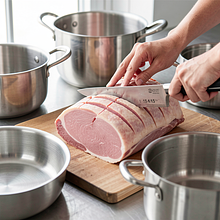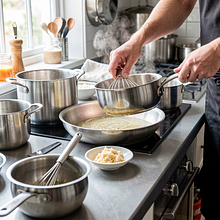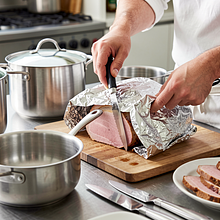
Take the ham out of the fridge 30–60 minutes before preparation to reach a cool room temperature. At a temperature no lower than 10°C, the meat cooks more evenly. Wash the ham under cold water and dry it with paper towels. Place the ham on a cutting board with the skin side up.
Description
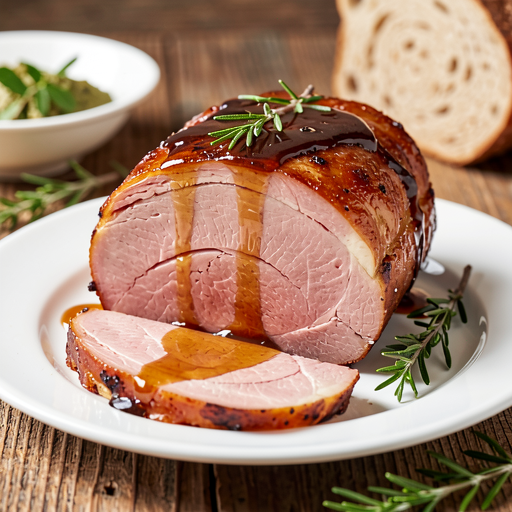
Traditional Easter ham baked with a crispy, sweet-spicy glaze made from honey and mustard. The dish combines the aromas of warm spices (cinnamon, clove) with a fresh hint of lemon and apple cider vinegar, while butter and gentle basting during baking ensure extra juiciness. Served on a platter with fresh horseradish or braised young vegetables, it will become the centerpiece of the Easter table. The recipe includes detailed instructions: how to score the ham, studding with cloves, preparing the glaze, and steps for baking and resting the meat, so even beginners can achieve the perfect result — a golden, sticky-glazed crust and juicy meat inside.
Ingredients Used
Ingredients (14)
- Pork ham 2000 g
- Honey 120 ml
- Mustard 80 g
- Brown sugar 50 g
- Apple cider vinegar 30 ml
- Lemon juice 30 ml
- Garlic 3 ząbki (~15 g)
- Butter 50 g
- 🌿 Przyprawy
- Cloves 12 g
- Cinnamon 2 g
- Black pepper 4 szczypty (~2 g)
- Salt 10 g
- ✨ Opcjonalne
- Horseradish 50 g
- Thyme 10 g
💡 Kliknij na składnik aby oznaczyć jako użyty
Preparation steps
Preparing the ham
If the ham has skin and fat, use a sharp knife to score the skin: make cuts every 1–1.5 cm at a 45° angle, without cutting too deep (just the skin and part of the fat). The scoring will help the glaze adhere better and crack nicely during baking.
Insert whole cloves into the tips of the squares: stick a clove into the intersection or just next to it, about every 3–4 cm, so that they create an even pattern. The cloves will be aromatic "anchors" of the glaze.
Rub the surface of the ham with salt and freshly ground pepper — gently work the salt into the slits to distribute it evenly.
Glaze
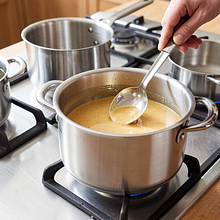
Prepare the glaze: in a small saucepan, melt the butter over medium heat (about 1–2 minutes). Add the honey, mustard, brown sugar, apple cider vinegar, lemon juice, finely chopped garlic, ground cinnamon, and 1/3 of the crushed cloves (if you want extra aroma). Heat over low heat, stirring with a wooden spoon, until the sugar dissolves and the mixture becomes thick and syrupy — about 5–7 minutes. The glaze should slightly drip off the spoon, forming a smooth coating.
Baking - preparation
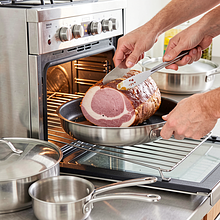
Preheat the oven to 160°C (top-bottom). Place the ham on a rack in a roasting pan or on a baking sheet with high edges. Pour 200–300 ml of hot water into the bottom of the dish (you can add a bit of apple juice if you want some flavor) — the steam will prevent the meat from drying out during the long baking. Loosely cover the ham with aluminum foil (shiny side up) or a lid.
Baking - first baking
Place the ham in the preheated oven and bake covered for 60–75 minutes. As a guideline: for 2 kg, bake for about 60–75 minutes covered, allowing the meat to heat slowly. After this time, check the internal temperature of the meat with a thermometer — it should be around 55–60°C before glazing (if the ham was already pre-cooked) or higher if raw (min. 70°C).
Baking - glazing
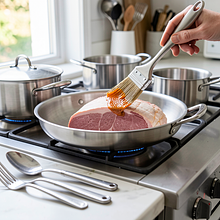
Remove the ham from the oven and take off the foil. Using a kitchen brush, evenly spread a layer of glaze over the entire surface of the ham, rubbing it into the cuts. Slide the ham back into the oven and increase the temperature to 180°C. Bake uncovered for another 30–40 minutes, adding a thin layer of glaze every 10–12 minutes — this will create a shiny, caramelized surface.
Baking - monitoring
At the end of baking, check the temperature: the target internal temperature should reach 68–72°C for cured ham (a safe and juicy temperature). The caramelization should be even and golden brown. If the edges are browning too quickly, cover them with foil.
Resting
Remove the ham from the oven and transfer it to a cutting board. Loosely cover with foil and let it rest for 15–20 minutes. Resting allows the juices to distribute evenly — when sliced, the meat will be juicy and won't leak.
Slicing and serving
After resting, remove the cloves (if you prefer) and slice the ham into thin slices with a sharp carving knife. Arrange the slices on a warm platter. Serve with horseradish as a classic accompaniment and garnish with sprigs of thyme. You can serve the remaining glaze in a gravy boat.
Storage
Store leftover ham in a sealed container in the refrigerator for 3–4 days. You can slice the pieces and layer them with parchment paper to prevent sticking. Thinly sliced pieces are suitable for the freezer — store for up to 2 months.
Fun Fact
Ham with cloves is a traditional way of decorating meat in many European kitchens — cloves not only adorn but also preserve the surface of the meat, adding a spicy aroma.
Best for
Tips
Serve the slices of ham slightly warm or at room temperature. It pairs perfectly with fresh horseradish, mustard, roasted young potatoes, and a salad of young vegetables or beets. Serve the remaining glaze in a sauce boat as an additional drizzle.
Store in the refrigerator in an airtight container for 3–4 days. Gently reheat in the oven at 140–150°C covered. Freeze thinly sliced pieces for no longer than 2 months, thaw slowly in the refrigerator.
📸 Ugotowane przez społeczność
Zaloguj się, aby dodać zdjęcieDodaj zdjęcie gotowej potrawy
Po zatwierdzeniu przez moderatora otrzymasz 10 punktów doświadczenia.
Nikt jeszcze nie dodał zdjęcia. Bądź pierwszy!
Comments (0)
Be the first to comment on this recipe!
Add a comment