St. Martin's Croissants with Rose Filling (Poznań Tradition Inspired Version)

Regional Cuisine of Poland Desserts Cakes and Bakes 120 min Hard 28 wyświetleń ~54.32 PLN * - (0)
Rate:
(0)
Start Cooking

Description

Rogale marcińskie are traditional pastries from Poznań, baked on November 11th, usually filled with a mixture of white poppy seeds, almonds, and candied fruits. In this version, we maintain the richness of layers and techniques (puff pastry with a yeast element), but we replace the filling with an aromatic rose filling with almond and honey — a spring twist that combines the delicacy of rose petals with the nutty texture of almonds. The pastries are buttery, flaky, and require stages of kneading, laminating, and shaping, resulting in many thin layers of dough inside. Serve slightly cooled, drizzled with lemon icing and sprinkled with toasted almonds or rose petals. The result: a golden, crispy crust, moist rose-almond interior, and beautiful appearance — perfect for a festive breakfast, coffee dessert, or handmade gift.

Ingredients Used

Ingredients (15)

Servings:
12
  • Wheat flour 600 g
  • Milk 300 ml
  • Fresh yeast 25 g
  • Sugar 80 g
  • Chicken egg 4 szt. (~240 g)
  • Butter 380 g
  • Rose jam 300 g
  • Almond 250 g
  • Powdered sugar 100 g
  • Honey 50 ml
  • Lemon 1.3 szt. (~100 g)
  • Vanilla sugar 8 g
  • 🌿 Przyprawy
  • Salt 0.2 szczypt (~5 g)
  • ✨ Opcjonalne
  • Rose petals 10 g
  • Walnuts 50 g
💰 Szacowany koszt dania: ~54.32 PLN (4.53 PLN/porcję)
* Brak cen dla niektórych składników

💡 Kliknij na składnik aby oznaczyć jako użyty

Preparation steps

Preparing the starter

1

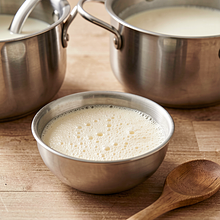
In a small saucepan, heat 100 ml of milk to a temperature of 35-37°C (it should feel warm to the touch, not hot). Crumble the fresh yeast into a bowl, add 1 teaspoon of sugar (from the prepared 80 g), and pour in the warm milk. Mix with a fork until the yeast dissolves. Set aside in a warm place for 8-10 minutes — a frothy foam should appear on the surface, indicating that the yeast is activated.

Ingredients: Milk, Fresh yeast, Sugar
Use a small bowl and a food thermometer if you have one. If there is no foam after 10 minutes, the yeast may be inactive — it's better to start over with a different batch. Do not use hot milk (above 45°C kills the yeast).
Cake

2

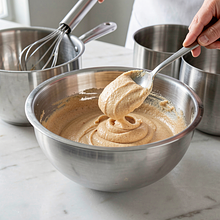
In a large bowl, sift the wheat flour. Add the remaining sugar (the rest of 80 g minus what was used for the starter), salt, and vanilla sugar. Make a deeper well in the flour. In a separate bowl, beat 3 eggs (180 g) with a fork. Pour the activated yeast starter, the beaten eggs, and 200 ml of lukewarm milk into the well (do not use all the milk, keep the remaining part for adjusting the consistency). Start mixing the ingredients with a wooden spoon, bringing the flour from the edges to the center, until the ingredients combine and form a glossy mass.

Ingredients: Wheat flour, Sugar, Salt, Vanilla sugar, Milk, Fresh yeast
Use a large bowl (at least 4 l) or a stand mixer with a dough hook. Mix just until the ingredients are combined — do not knead intensely yet, this is the mixing stage.
3

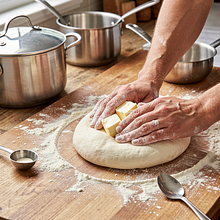
Add 80 g of soft butter cut into pieces to the mixture. Start kneading by hand on a countertop or with a hook mixer for 8-10 minutes, until the dough becomes smooth, elastic, and stops sticking to your hands. If the mixture is too dry, add a maximum of 1 tablespoon (15 ml) of milk at a time to achieve elasticity. Form a ball from the dough.

Ingredients: Butter, Wheat flour, Milk
Use a dough mixer if you have one — kneading takes 6-8 minutes on medium speed. If kneading by hand, spray your hands with a little oil so the dough doesn't stick. The dough is ready when it springs back after being pressed with a finger and doesn't stick significantly to your hands.
4

Place the shaped dough ball in a large bowl greased with a thin layer of butter, cover with a clean cloth or plastic wrap, and set aside in a warm place for 45-60 minutes, until it doubles in volume.

Ingredients: Butter
The best place is a turned-off, slightly warmed oven (without convection) or near a warm wall. Do not rush the heating too quickly — too high a temperature will kill the yeast.

Preparation of the rose mass

5

In a bowl, place the ground almonds (blend in a blender to a fine consistency) and sifted powdered sugar. Add rose jam and honey, the grated zest of 1 medium lemon, and 1 teaspoon of lemon juice. Stir with a wooden spoon or spatula until you achieve a uniform, thick mixture. The mixture should be moist but not liquid — if it is too dry, add 1-2 teaspoons of warm milk.

Ingredients: almond, Powdered sugar, Rose jam, Honey, Lemon
Use a food processor or blender to grind the almonds into a powder before mixing with the other ingredients. Do not grind the almonds for too long (they release oil), short pulses will be sufficient. If you don't have rose jam, use raspberry jam with 2-3 drops of rose water (optional).

Preparation of the butter block for laminating

6

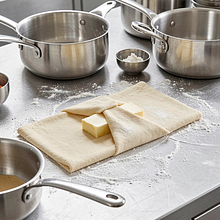
Take the remaining butter intended for laminating (about 300 g). Shape it into a flat rectangle (about 18x20 cm) between two sheets of baking paper, tapping and rolling it to an even thickness. Chill in the refrigerator for 20-30 minutes — the butter should be cool but pliable (not hard) so that it can be rolled out together with the dough.

Ingredients: Butter
It's best to prepare the block of butter in advance and chill it. If the butter is too soft, place it in the fridge for 10 minutes. If it is too hard, wait a few minutes at room temperature before rolling it out.

Laminating (first rolling)

7

Remove the risen dough onto a lightly floured work surface. Roll it out into a rectangle measuring about 30x40 cm. Place the chilled block of butter on the middle third of the dough. Fold the first third of the dough (without butter) over the center, then fold the second one over it, so that the butter is enclosed between the layers of dough. Rotate the folded dough by 90 degrees.

Ingredients: Wheat flour, Butter
Use a rolling pin and do not press too hard — the goal is to anchor the butter between the layers of dough. If the dough starts to stick too much or the butter leaks out, chill everything for 10-15 minutes in the fridge before continuing to roll.

Laminating (rolling and folding again)

8

Roll out the folded dough into a rectangle about 30x40 cm. Fold it again into three layers (book fold). Repeat the rolling and folding process 3 times in total. After each rolling session, set the dough aside in the refrigerator for 15-20 minutes to allow the butter to firm up and not leak out. After the last fold, chill the dough for 30 minutes.

Ingredients: Wheat flour, Butter
Patience is key — chilling between rolling gives clear layering. Use a rolling pin that is at least 20 cm wide. If you're short on time, you can reduce the number of ingredients to 2, but the layering effect will be weaker.

Shaping the croissants

9

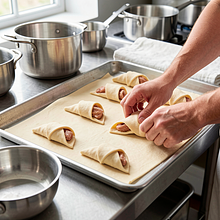
After cooling, roll out the dough into a rectangle about 3-4 mm thick (approx. 40x60 cm). Divide the rectangle into 12 triangles of similar size (you can use a ruler and a sharp knife or a pastry wheel). On the wider end of each triangle, place 1-2 tablespoons of rose filling (approx. 30 g). Starting from the wider end, roll the triangle towards the tip, forming a crescent — gently pull the tip, tucking it underneath to create the characteristic crescent shape.

Ingredients: Wheat flour, Rose jam, almond, Powdered sugar
Use a pizza cutter or pastry wheel to cut straight. Spread the filling so that there is about a 1 cm margin from the edge — the filling should not leak onto the edge. Roll with a firm but gentle motion to avoid pushing out the filling.

Rising of the croissants

10

Place the shaped crescents on a baking sheet lined with parchment paper, leaving 3-4 cm of space between them. Cover loosely with a cloth and let rise for 30-40 minutes — the crescents should noticeably increase in volume (about 40-60% of their size).

Do not rise in a draft or in a place that is too hot — best at room temperature 22-24°C. If you have chilled the dough for a long time beforehand, the rising may take a bit longer.

Baking

11

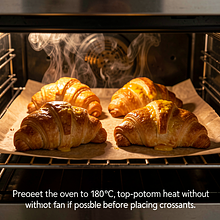
Preheat the oven to 180°C (top and bottom heat, without fan if possible). Before placing the croissants in, beat 1 egg (60 g) and gently brush each croissant with it — apply a thin layer. Bake in the middle of the oven for 18-22 minutes, until the croissants are golden and nicely risen. After 12-14 minutes, watch the color — if the tops are browning too quickly, reduce the temperature by 10°C.

Use an oven thermometer if you have one. When baking two trays at the same time, swap their positions after 10 minutes to ensure evenly baked croissants.

Preparing the icing

12

While the croissants are in the oven, prepare the icing: sift 100 g of powdered sugar into a bowl, add 1-2 tablespoons (about 15-30 ml) of juice from one lemon and 1-2 tablespoons of water (or milk), and mix until smooth and thick — the icing should be thick but pourable. If you like, add a little lemon juice for freshness.

Ingredients: Powdered sugar, Lemon
If the icing is too runny, add a bit of powdered sugar; if it's too thick, add a drop of water. Use a small whisk or a fork.

Decoration and finishing

13

Remove the baked croissants from the oven and let them cool for a moment (about 5 minutes). Glaze each croissant with a thin layer of the prepared icing using a spoon or brush. Sprinkle with finely chopped walnuts or toasted almond flakes. Finally, gently decorate with a few dried rose petals (optional). Set the croissants aside to cool completely — the icing should set well.

Ingredients: Powdered sugar, rose petals, Lemon
Use a small spoon for icing and work quickly so that the icing doesn't run too much over the edges. Additionally, you can add a little more honey on top for shine.

Serving

14

Once completely cooled, transfer the croissants to a serving plate. Serve at room temperature with a cup of strong coffee or tea. The croissants taste best 1-2 days after baking, when the flavors meld — during this time, the rose filling will soften the structure of the dough inside.

For serving, use a large flat plate or board. If you are preparing it as a gift, wrap each one individually in baking paper.

Fun Fact

💡

St. Martin's croissants are a symbol of Poznań — according to legend, they were baked in honor of Bishop Martin of Tours. The tradition of Poznań croissants is protected and certified, but many variations (like this one with rose filling) are modern interpretations that preserve the baking technique.

Best for

Tips

🍽️ Serving

Serve slightly cooled (not hot) — this way the filling is moist, and the pastry retains its flaky structure. Pair with strong black coffee or mint tea; for an elegant presentation, garnish the plate with fresh rose petals and toasted almond flakes.

🥡 Storage

Store in a closed container at room temperature for up to 2 days. To refresh slightly hardened croissants, heat in the oven for 5-7 minutes at 150°C. Long-term storage in the refrigerator is not recommended — it dries out the dough. You can also freeze baked and cooled croissants (without icing) wrapped tightly for up to 2 months; thaw slowly at room temperature and briefly refresh in the oven.

📸 Ugotowane przez społeczność

Zaloguj się, aby dodać zdjęcie
Dodaj zdjęcie gotowej potrawy

Po zatwierdzeniu przez moderatora otrzymasz 10 punktów doświadczenia.

🍲

Nikt jeszcze nie dodał zdjęcia. Bądź pierwszy!

Comments (0)

Be the first to comment on this recipe!

Add a comment

You might also like

Recipe Categories

Traditional recipes from various regions of Poland that showcase the richness of local flavors and ingredients.

See all recipes in this category
Desserts
Desserts in: New Year's Eve

A sweet ending to the New Year's Eve dinner is a must-have that will put everyone in a joyful mood for the new year.

See all recipes in this category

Homemade cakes and pastries are the heart of Polish culinary tradition - sweet memories from childhood. In our collection, you will find recipes for classic yeast cakes, shortcrust, sponge, and cheesecake. Apple pie, poppy seed cake, gingerbread, Easter babka, chocolate cake, and New York cheesec...

See all recipes in this category
Reklama