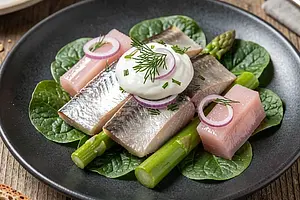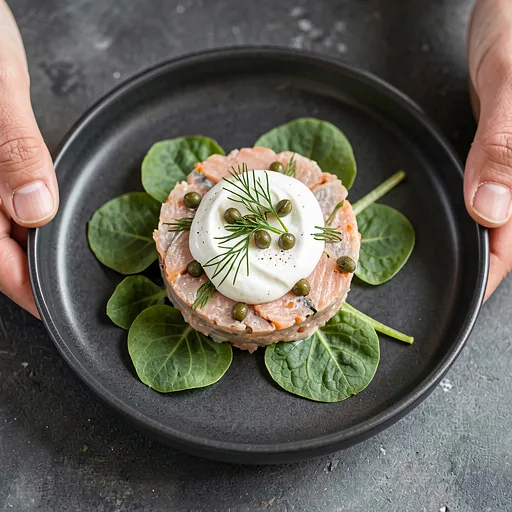
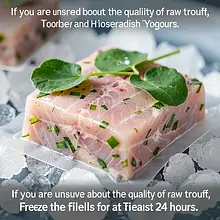
Delicate trout tartare is a light and spring-like appetizer perfect for a fit New Year's Eve. Raw, finely chopped trout combines with crunchy green onions and tangy pickled cucumber, while fresh sorrel adds a green, slightly lemony touch to the dish. Yogurt with horseradish serves as the sauce — providing a creamy texture and a spicy twist without the heavy taste of cream. The dish is visually appealing: a pink trout fillet against the intensely green sorrel leaves, garnished with dill or capers. Serve chilled, preferably with thin slices of whole grain bread or on small spoons as an appetizer. Benefits: low in calories, high in protein, and packed with fresh seasonal vitamins; great for those watching their figure.
If you are unsure about the quality of the raw trout, freeze the fillets for at least 24 hours at a temperature of -18 to -20°C (this reduces the risk of parasites). If you are buying sashimi-grade or certified fillet, you can skip the freezing. After thawing or purchasing fresh, prepare the fish immediately.
Ingredients:
Trout
Use a freezer at the appropriate temperature; if you plan to freeze, do it as soon as possible after purchase. Make sure the fillet has been stored chilled and does not smell "old."
Preparing the fillet
2
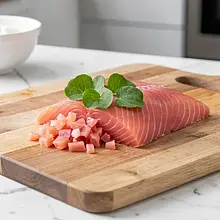
Place the fillet on a clean cutting board skin side down. Check for fine bones with your fingers (against the grain of the meat). Remove the bones with fish tweezers — grasp each bone close to the skin and pull it out towards the end. If the fillet has skin, hold the skin with your fingers and use a sharp knife to cut at an angle, slicing along the skin to separate the meat. Then, cut the fillet along the grain first into strips, then across into small cubes measuring 3-5 mm on each side. The cubes should be uniform to ensure a consistent texture for the tartare.
Ingredients:
Trout
Use a sharp chef's knife (20 cm) and tweezers for bones. A plastic cutting board is easier to disinfect. When cutting, make controlled movements with the knife several times — do not crush the meat. Small cubes will ensure a uniform taste and a nice appearance.
Preparation of horseradish yogurt
3
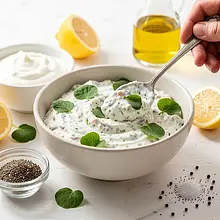
In a medium bowl, combine natural yogurt (200 g) with grated horseradish (30 g). Add the juice of half a lemon (about 15-20 g of lemon juice from the prepared amount) and 15 g of rapeseed oil. Mix thoroughly with a spoon until the sauce is smooth. Season with salt (about 1 g) and pepper (about 0.5 g), taste, and if necessary, add more horseradish for heat. The consistency should be thick but pourable — if too thick, add a little water or additional oil in 5 g increments.
Ingredients:
Natural yogurt, horseradish, Lemon, Rapeseed oil, Salt, Black pepper
Use a small bowl and a spoon to mix. If you want a very smooth texture, you can blend the sauce with a whisk. Remember that the horseradish will "develop" and become sharper after a few minutes.
Preparation of toppings
4
Rinse the spring onion, dry it, and slice it thinly (the white part thinly lengthwise, the green part cut diagonally). Drain the pickled cucumber on a paper towel, trim the ends, and dice it finely (about 3-4 mm). Rinse the capers (if using) from the brine, drain, and chop finely. Chop the dill (optional) finely.
Ingredients:
Green onion, Pickled cucumber, Capers, Dill
Use a sharp small knife for precise chopping. Draining the cucumber and capers prevents the tartare from becoming watery.
Mixing the tartare
5
In a large bowl, gently combine the chopped trout (400 g) with 2/3 of the prepared horseradish yogurt (adjust the amount to your desired creaminess), green onion, and pickled cucumber. Add capers if using (30 g). Stir gently with a spoon for 30-40 seconds — the goal is to combine the ingredients, not to mash the fish. Taste and season with a pinch of salt and pepper to your liking. The consistency should be firm but creamy.
Ingredients:
Trout, Natural yogurt, horseradish, Green onion, Pickled cucumber, Capers, Salt, Black pepper
Use mixing only to combine the ingredients. If you add too much sauce, the tartare will become 'wet'. It's better to adjust the seasoning later than to oversalt at the beginning.
Chilling and refining the flavor
6
Cover the bowl with plastic wrap and place it in the refrigerator for 10-15 minutes to let the flavors meld. After removing it, check the seasoning again: if needed, add a bit of lemon juice or a touch of horseradish.
Ingredients:
Trout, Lemon, horseradish
Do not chill the tartare for more than 2 hours before serving — raw fish loses freshness and texture. An optimal short break in the fridge enhances the flavor.
Serving
7
On the plates, arrange the washed and dried sorrel leaves (10-12 g per serving). On the leaves, form portions of tartare (about 100 g of raw fish after making the mixture) using a spoon or a ring mold (diameter 6-7 cm). On top, add a bit of the remaining horseradish yogurt, and sprinkle with finely chopped dill or capers for contrast. You can add a thin strip of lemon peel as a decoration.
Use a ring for shaping if you want aesthetic portions. The best choice is cool porcelain or a dark plate — it highlights the colors of the tartare and sorrel.
Final notes
8
Serve immediately, preferably chilled. As an accompaniment, I suggest thin slices of whole grain bread or whole grain crackers. Make sure each serving is fresh and cold — tartare loses its best flavor after a few hours.
Ingredients:
Trout
Do not heat the tartare. If there are leftovers, store them tightly in the fridge and eat them by the next morning at the latest. Raw fish tastes best when fresh.
Fun Fact
💡
Tatar fish has a long tradition in the kitchens of Northern Europe and the Baltic; using sorrel as an addition is a classic Polish touch that combines acidity with the delicacy of the fish.
Serve very chilled, on individual spoons as finger food or on small plates. It pairs well with thin whole grain bread, crispy crackers, or thinly sliced baguette (optionally toasted). Pay attention to color contrast: a dark plate will highlight the pink of the fish and the green of the sorrel.
🥡Storage
Store in the refrigerator in an airtight container for up to 24 hours. Do not refreeze after thawing. Do not reheat; best when fresh. If there is leftover sauce, store separately in a jar for up to 3 days.
New Year's Eve is a special time when we bid farewell to the old year and welcome the new one with great joy and hope. It is an extraordinary occasion that brings loved ones together at the table, where delicious dishes and drinks are a must. Traditionally, we celebrate this evening with a variet...
Comments (0)
Be the first to comment on this recipe!
Add a comment