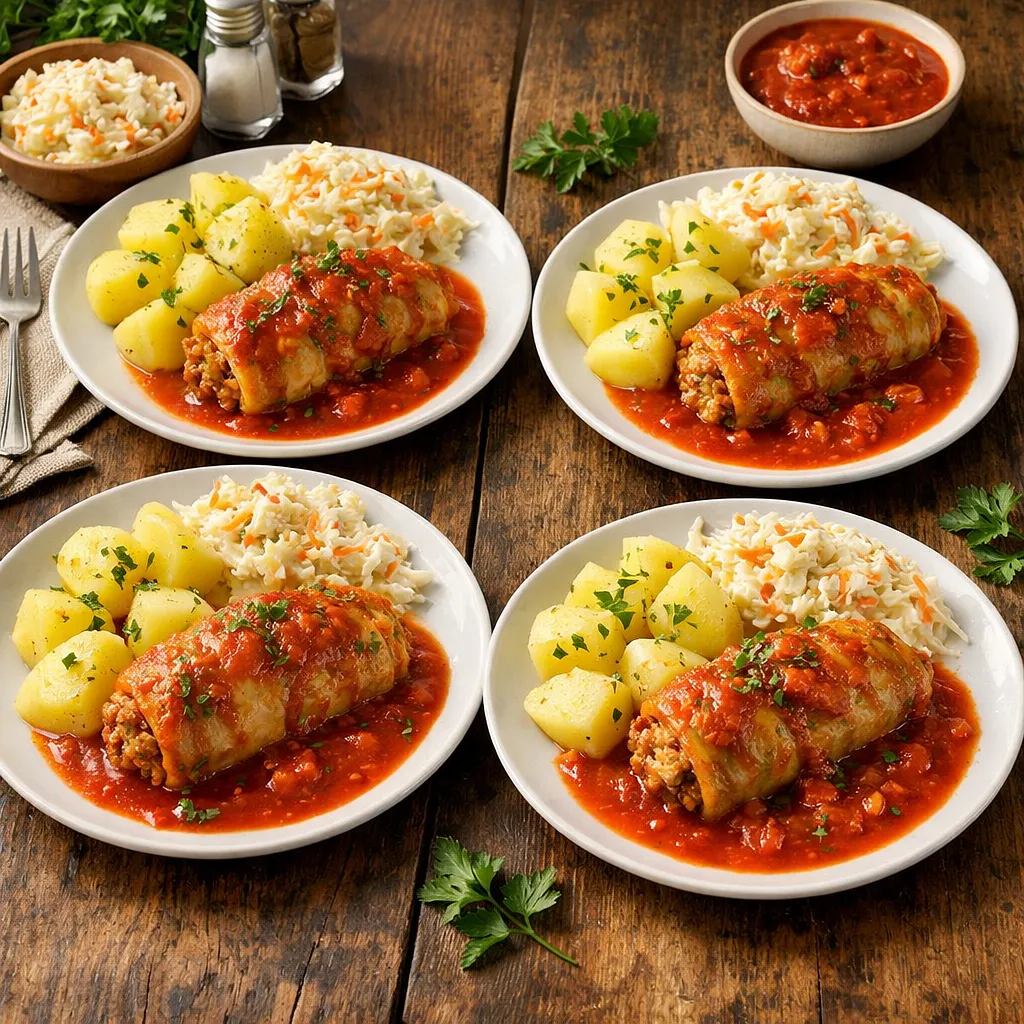
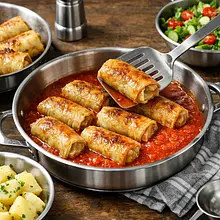
Unstuffed Cabbage Rolls in Tomato Sauce with Potatoes and Salad (4 servings)

Pikantne Regional Cuisine of Poland Main dishes Additions 90 min Medium 4 wyświetleń ~38.81 PLN * - (0)
Rate:
(0)
Start Cooking

Description

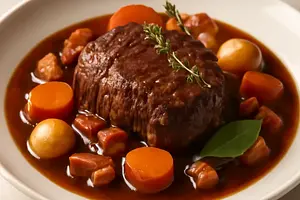
A modern, winter reinterpretation of traditional stuffed cabbage: ground meat combined with finely chopped raw cabbage and cooked pearl barley shaped into oval 'cabbages' and simmered in an aromatic tomato sauce. The dish has a distinct homemade flavor: tender meat, slightly crunchy cabbage in the filling, and a mild acidity from the tomato sauce. Serve with simple mashed or buttered potatoes and a fresh salad of carrot, apple, and pickled cucumber, which provides a pleasant contrast of textures and flavors. This convenient one-pot dish is perfect for a family lunch or Sunday gathering – hearty, warming, and easy to reheat.

Ingredients Used

Ingredients (24)

Servings:
4
  • Chicken egg 2 szt. (~120 g)
  • Pork and beef minced meat 600 g
  • Pearl barley (dry) 120 g
  • White cabbage 300 g
  • Onion 1 szt. (~150 g)
  • Garlic 3 ząbki (~15 g)
  • Breadcrumbs 40 g
  • Rapeseed oil 30 g
  • Tomato passata 500 g
  • Tomato paste 60 g
  • Sugar 10 g
  • Potatoes 6.7 szt. (~1000 g)
  • Carrot 2.5 szt. (~200 g)
  • Apple 1.1 szt. (~200 g)
  • Pickled cucumber 1.5 szt. (~150 g)
  • Lemon juice 20 ml
  • Vegetable broth 400 ml
  • 🌿 Przyprawy
  • Salt 6 g
  • Ground black pepper 2 szczypty (~2 g)
  • Dried marjoram 2 łyżeczki (~4 g)
  • Bay leaf 13.3 szt. (~4 g)
  • Allspice (berries) 2 szt. (~2 g)
  • ✨ Opcjonalne
  • Butter 50 g
  • Parsley 0.7 pęczek (~20 g)
💰 Szacowany koszt dania: ~38.81 PLN (9.70 PLN/porcję)
* Brak cen dla niektórych składników

💡 Kliknij na składnik aby oznaczyć jako użyty

Preparation steps

Filling - Buckwheat

1

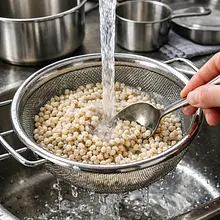
Prepare the pearl barley: pour 120 g of dry pearl barley into a sieve and rinse under cold running water, stirring with your hand until the water runs clear. Transfer to a pot, add 360 ml (3 times the volume of the barley) of cold water, add a pinch of salt (about 1 g), and bring to a boil. Reduce the heat to low, cover, and cook for 25–30 minutes, until the barley is tender but not overcooked (it should be whole and slightly chewy). Drain any excess water, fluff with a fork, and set aside to cool.

Use a pot with a lid; cook on low heat to prevent the pearl barley from sticking. The grain does not need to be mushy — it should provide structure to the filling. If you don't have pearl barley, you can use cooked buckwheat (120 g dry corresponds to about 300–350 g cooked).
Filling - Vegetables

2

Prepare the cabbage: trim off the outer leaves if they are damaged, cut the head in half and remove the core with a sharp knife. Lay the halves flat and chop finely – cut as thinly as possible so that the cabbage distributes well in the filling. Place the chopped cabbage in a large bowl and lightly salt it (about 2 g), mix by hand and set aside for 5 minutes to release its juice, then gently squeeze out the excess moisture (do not dry it completely – it should remain slightly moist).

Use a sharp knife and a large cutting board or a food processor with a grating disc (if you are a beginner, it's better to chop by hand to control the thickness). Squeezing prevents the filling from becoming too watery, but if you squeeze too much – the filling will be too dry.

Filling - Sautéing the onion

3

Chop the onion (150 g) into small cubes. Heat 15 g of rapeseed oil (1 tablespoon) in a 26–28 cm skillet over medium heat. Add half of the chopped onion (about 75 g) and sauté for 4–5 minutes, stirring, until the onion becomes translucent and slightly golden. Add 1 clove of chopped garlic (5 g), sauté for 30–40 seconds until you smell the garlic aroma, then remove the skillet from the heat and let the onion cool.

Use a heavy-bottomed pan; do not allow the onions to brown over too high heat (they will burn and taste bitter). After cooling, add to the bowl with the meat so as not to 'cook' the egg in the filling.

Filling - Mixing the filling

4

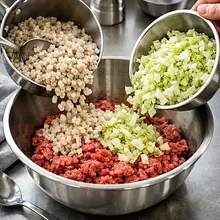
In a large bowl, place 600 g of ground meat, add the cooled pearl barley, chopped and drained cabbage, cooled sautéed onion, and the remaining raw garlic (2 cloves, 10 g) finely chopped, 120 g of eggs (2 pieces), 40 g of breadcrumbs, 4 g of marjoram, 2 g of pepper, and about 3 g of salt (from the remaining amount). Mix by hand or with a wooden spoon vigorously for 2–3 minutes until the ingredients are combined and the filling is homogeneous. Wet your hands with water and form a small sample - a ball the size of a tablespoon; fry it in a pan for 1–2 minutes on each side and taste, adjust seasoning if necessary (more salt or marjoram).

Use a large bowl and disposable gloves if you want. The taste test is crucial — season the filling before shaping all the cabbage rolls.

Shaping and Browning

5

Form the filling into 12–14 oval portions resembling small cabbage rolls: take a portion of the filling (about 90–100 g) and shape it into an oval with your hands, pressing the sides to prevent cracking. Heat 15 g of oil (1 tablespoon) in a large skillet over medium heat. Arrange the cabbage rolls with space in between, do not overcrowd the skillet; fry for 3–4 minutes on each side until the outer layer is lightly browned — they do not need to be fully cooked inside, as they will finish cooking in the sauce.

Use a pan with a diameter of 26–28 cm or two pans at the same time. If the mixture sticks to your hands, wet your hands with water. Don't fry too hard at the beginning – a quick browning is enough.

Tomato sauce - sautéing

6

In the same or a separate larger pan (preferably with a thick bottom or in a wide pot), heat 15 g of oil (1 tablespoon). Add the remaining half of the chopped onion (about 75 g) and sauté for 4–5 minutes over medium heat until translucent. Add 1 clove of garlic (5 g), finely chopped, and sauté for 30 seconds. Then add 60 g of tomato paste and sauté for 1 minute, stirring to 'roast' the paste (this will bring out a deeper flavor).

Use a wooden spoon for stirring to avoid scratching the pan. 'Browning' the concentrate is important — not two minutes on very high heat to avoid burning.

Tomato sauce - cooking

7

To the sautéed onion and tomato paste, pour in 500 ml of tomato passata and 400 ml of vegetable broth (or water). Add 2 bay leaves (4 g), 2 allspice berries (2 g), 10 g of sugar, 15 g of vinegar or 0 if you prefer a milder taste (optional), and 1–2 g of salt to taste. Bring to a boil, reduce the heat, and simmer for 12–15 minutes, stirring occasionally, until the sauce thickens slightly.

Cook covered over medium-low heat; if the sauce is too thick, add a little water; if too thin, cook longer uncovered. Taste and season to your preference.

Stewing cabbage rolls

8

Transfer the lightly browned cabbage rolls to the sauce, placing them tightly next to each other. The sauce should cover them to 2/3 of their height – if needed, add 50–100 ml of water or broth. Cover with a lid and simmer on low heat for 30–35 minutes. After 20 minutes, tilt the pot and check the sauce — if it is too sour, add a pinch of sugar; if it is too thin, remove the lid and let it reduce. The cabbage rolls are ready when the meat is tender, the juices are clear (not pink), and the filling has a firm texture; for a larger piece of meat, check the inside with a toothpick.

Use a large pot or a cast iron dish for braising. Do not stir the stuffed cabbage vigorously while braising, as they may fall apart. The braising time depends on the portion size and the power of the stove.

Potatoes

9

Peel 1000 g of potatoes and cut them into even sizes (pieces about 2–3 cm on each side) so they cook evenly. Place them in a pot, cover with cold water so they are submerged, add 3 g of salt (about 1/2 teaspoon), bring to a boil and cook over medium heat for 20–25 minutes until they are soft (check with a fork – it should go in easily). Drain, leave for 1–2 minutes in the pot without a lid to let excess steam escape. If using butter (optional), add 50 g of butter to the hot potatoes and gently mix; sprinkle with finely chopped parsley (optional).

Cook in cold water so that the potatoes cook evenly. You can add a little milk or cream to the mashed potatoes — don't add it if you don't like it.

Salad

10

Prepare the salad: peel and grate 200 g of carrot on a coarse grater. Grate 200 g of apple with the skin (if the apple is organic), and squeeze out the excess juice. Cut 150 g of pickled cucumber into small cubes or slices. In a bowl, mix the carrot, apple, and cucumber; add 15 g of rapeseed oil, 20 g of lemon juice, 5 g of sugar (optional), a pinch of salt, and pepper to taste. Mix vigorously and let it sit for 8–10 minutes to allow the flavors to meld.

Use a grater for the carrot and apple for a pleasant texture. If the salad is too dry, add a little oil or lemon juice.

Assembly and serving

11

On a plate, place a portion of potatoes (about 250 g), next to it 2–3 stuffed cabbage rolls drizzled with tomato sauce (about 250–300 g of cabbage rolls with sauce per person). Serve a portion of salad (about 120–150 g) alongside. Sprinkle the potatoes and cabbage rolls with finely chopped parsley (if using). Serve hot. If the sauce is too sour when serving, add a little butter to the sauce and mix.

Use a deep plate or wide bowl to present the sauce nicely next to the potatoes. Serve with additional cabbage leaves as decoration or bread for dipping.

Final tips

12

If you are preparing the dish in advance: after cooling, store the stuffed cabbage rolls separately from the sauce and the salad in airtight containers in the refrigerator for up to 48 hours. Reheat the cabbage rolls in a pot over low heat covered for 10–12 minutes or in an oven preheated to 160°C for 15–20 minutes. Serve the salad chilled.

Do not heat the salad in the microwave. To reheat the stuffed cabbage, it is best to use a pot with a lid to keep the meat juicy.

Fun Fact

💡

Traditional stuffed cabbage rolls, usually wrapped in cabbage leaves, originated as a way to stretch meat by adding cabbage and grains. The unwrapped variant (known as 'deconstructed' or 'unwrapped' cabbage rolls) was popular in households where time-saving was desired or where there were no flexible cabbage leaves available.

Best for

Tips

🍽️ Serving

Serve hot with fresh bread (e.g. whole grain bread), and serve the salad chilled directly from the fridge. You can add a tablespoon of sour cream to the sauce just before serving for creaminess. If you want a lighter version, use lean ground meat and reduce the amount of oil for frying.

🥡 Storage

Store the stuffed cabbage rolls with sauce in the refrigerator in an airtight container for up to 48 hours. The salad tastes best fresh — store it separately for up to 24 hours. Reheat slowly over low heat, not in the microwave. You can freeze the prepared stuffed cabbage rolls with sauce for up to 3 months, thaw slowly in the refrigerator, and reheat.

📸 Ugotowane przez społeczność

Zaloguj się, aby dodać zdjęcie
Dodaj zdjęcie gotowej potrawy

Po zatwierdzeniu przez moderatora otrzymasz 10 punktów doświadczenia.

🍲

Nikt jeszcze nie dodał zdjęcia. Bądź pierwszy!

Comments (0)

Be the first to comment on this recipe!

Add a comment

You might also like

Recipe Categories

Traditional recipes from various regions of Poland that showcase the richness of local flavors and ingredients.

See all recipes in this category

Main courses are the heart of every meal - hearty, nutritious, and full of flavor. In this category, we present a rich selection of recipes for lunches and dinners that will satisfy even the most discerning palates. From classic Polish pork chops to aromatic chicken dishes, to exquisite steaks an...

See all recipes in this category
Additions
Additions in: New Year's Eve

Side dishes should complement the main courses, introducing variety and color to the New Year's table.

See all recipes in this category
Salads
Salads in: Valentine's Day

Fresh and healthy salads that will be a perfect complement to a Valentine's Day dinner.

See all recipes in this category
Reklama