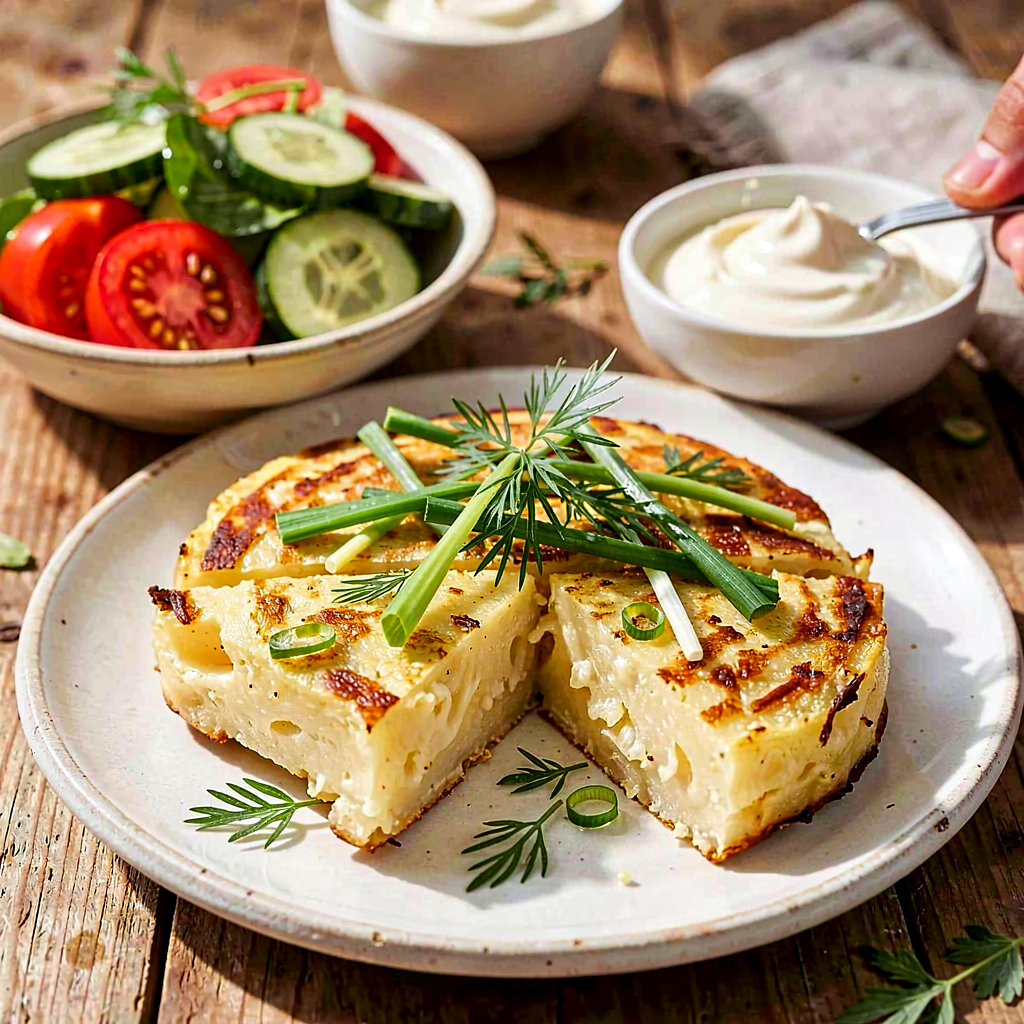
Recipe for: Potato cake with green onions and marjoram

Cakes and Bakes Regional Cuisine of Poland 90 min Medium 0 views ~16.01 PLN - (0)
Rate:
(0)
Start Cooking

Description

Mazurian summer potato cake is an aromatic baked dish made from a combination of cooked and raw potatoes, fresh spring onions, and dried marjoram. It has a crispy golden crust and a creamy interior, pairing wonderfully with cool sour cream or herbed kefir, as well as summer salads with tomatoes and cucumbers. This hearty, unconventional regional dish combines the simplicity of potatoes with the freshness of spring onions and the herbal aroma of marjoram. Perfect as a main dish for a family lunch, for a picnic, or served alongside grilled dishes.

Ingredients Used

Ingredients (11)

Servings:
6
  • Potatoes 6.7 pcs (~1000 g)
  • Wheat flour 150 g
  • Chicken egg 2 pcs (~120 g)
  • Sour cream 150 g
  • Green onion 2 bunch (~60 g)
  • Rapeseed oil 30 g
  • 🌿 Spices
  • Marjoram 2 g
  • Salt 8 g
  • Black pepper 4 pinch (~2 g)
  • ✨ Optional
  • Cheese 100 g
  • Dill 1.5 bunch (~30 g)
💰 Estimated dish cost: ~16.01 PLN (2.67 PLN/serving)

💡 Click an ingredient to mark it as used

Preparation steps

Preparation of potatoes

1

Weigh 1000 g of potatoes. Divide them by weight: set aside 700 g for boiling and 300 g for grating raw. Peel all the potatoes with a peeler, then wash them. This division affects the structure of the dough: boiled potatoes will add creaminess, while raw ones will increase the starch and give a slight crunch after baking.

Use a kitchen scale, a vegetable peeler, and a large tray. A common mistake: using only cooked or only raw potatoes — both types provide the best texture.
2

In a medium pot, place 700 g of peeled potatoes, cover them completely with cold water. Add 4 g of salt (from the total salt in the recipe) and bring to a boil over high heat. Cook over medium heat for 18–22 minutes from the moment it boils — check with a fork: the potato is soft when the fork easily pierces it and offers no resistance.

Ingredients: Salt
Use a pot with a diameter of 20–24 cm with a lid. Do not mash the potatoes while cooking. After cooking, drain in a colander and set aside to cool slightly (5–8 minutes) — they should be warm, not hot.
3

Boil 700 g of potatoes, then pass them through a potato ricer or mash them thoroughly with a masher in a large bowl until smooth. Leave to cool slightly (about 5 minutes).

Use a potato ricer or masher and a large bowl. Do not mix too vigorously — the goal is a smooth puree without lumps, but not a frothy consistency.
4

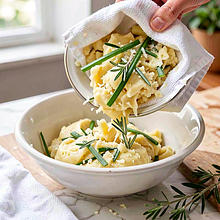
Take 300 g of raw potatoes: grate them on a coarse grater directly over a bowl. After grating, set aside for 2–3 minutes, then transfer to a clean kitchen towel or sieve and squeeze out as much moisture as possible — squeeze hard until the potato shreds feel dry to the touch. You can keep the excess juice and add a spoonful to the sauce or soup, but not to the mixture.

Use a grater with large holes and a clean cotton cloth (dish towel). A common mistake: not squeezing out enough water — the mixture will be too watery and won't bind well.

Dough

5

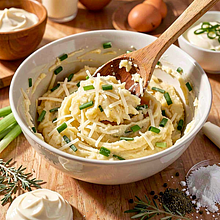
In a large bowl, combine the mashed warm puree (700 g) with well-drained grated raw potatoes (300 g). Add 150 g of wheat flour, 120 g of eggs (2 pieces), 150 g of sour cream, 60 g of chopped green onions (use most of it, save 10–15 g for garnish), 2 g of marjoram, the remaining salt, and pepper to taste (the total amount of salt in the recipe is 8 g — part has already been added when cooking the potatoes: season to taste here). Mix with a wooden spoon or silicone spatula until the ingredients come together into a thick, slightly sticky mass — it should hold its shape but not be dry.

Ingredients: Wheat flour, Sour cream, Green onion, Marjoram, Salt, Black pepper
Use a large bowl (at least 3 l) and a wooden spoon or a mixer with a dough hook on the lowest setting. If the mixture is too loose, add a maximum of 1–2 tablespoons (15–30 g) of flour; if it's too heavy, add 1–2 tablespoons of cream. The correct consistency: the mixture is firm, does not drip from the spoon.

Assembly and baking

6

Preheat the oven to 200°C (top-bottom). Prepare a springform pan or a mold with a diameter of 24–26 cm: grease the bottom and sides with 15 g of rapeseed oil (about 1 tablespoon) or use spray, line the bottom with parchment paper, and lightly grease the sides. Transfer the potato mixture to the mold, smoothing the top with a wet spoon. If using cheese (optional), evenly sprinkle 100 g of grated cheese and distribute the remaining green onion on top. Drizzle the remaining oil (about 1 tablespoon) over the top for better browning.

Ingredients: Rapeseed oil, Green onion, Cheese
Use a springform pan 24–26 cm or a heatproof dish of similar size. A common mistake: filling the pan to the very edge — leave 1–2 cm of space, the batter rises slightly. Thanks to the parchment paper, you'll find it easier to remove the cake.
7

Place the pan in the preheated oven on the middle rack. Bake for 45–55 minutes at 200°C until the top is golden and the edges are lightly browned. Check with a toothpick: inserted in the center, it should come out dry or with a few moist crumbs, the mixture should be set and springy to the touch. If the top is browning too quickly — loosely cover the pan with aluminum foil and continue baking.

Ingredients: Cheese, Green onion, Rapeseed oil
Use the convection setting only if the oven distributes heat evenly; if using convection, lower the temperature to 190°C. Remember that ovens vary in power — check from the 40th minute the first time. Use a wooden stick for testing.

Serving

8

After removing from the oven, let the cake sit for 10–15 minutes to allow the filling to set slightly — this will make slicing easier. Gently run a knife along the sides of the pan, open the springform or remove the cake from the pan using parchment paper. Cut into wedges and serve warm with a spoonful of sour cream, a spoonful of kefir, or with a warm salad of tomatoes and cucumbers. Sprinkle with fresh dill (optional).

Ingredients: Sour cream, Dill
Use a wide, sharp knife for cutting and a spatula for removing the pieces. Additionally, you can add cheese and dill to enhance the flavor/texture (if used).

Fun Fact

💡

Potatoes have been a staple of Masurian cuisine since the 19th century — in this region, this easy-to-grow ingredient is served in many ways, including baked with herbs and onions, which combines the simplicity of peasant cooking with the aroma of local herbs.

Best for

Tips

🍽️ Serving

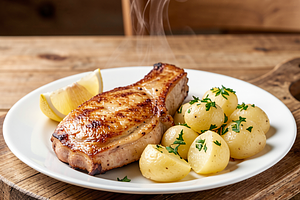
Serve warm with a spoonful of thick sour cream or cool garlic kefir. It pairs wonderfully with a summer salad of tomatoes and cucumbers, as well as grilled fish or pork neck. For decoration, use fresh dill and additional finely chopped green onions.

🥡 Storage

Store in the refrigerator in an airtight container for up to 48 hours. For reheating: it's best to place it in the oven preheated to 160°C for 10–15 minutes to regain its crispiness; you can also use a pan with a small amount of fat. Freezing: you can freeze individual portions for up to 1 month, thaw slowly and reheat in the oven.

📸 Cooked by the community

Log in to add a photo
Add a photo of the finished dish

After moderator approval, you will receive 10 experience points.

🍲

No one has added a photo yet. Be the first!

Comments (0)

Be the first to comment on this recipe!

Add a comment

You might also like

Recipe Categories

Homemade cakes and pastries are the heart of Polish culinary tradition - sweet memories from childhood. In our collection, you will find recipes for classic yeast cakes, shortcrust, sponge, and cheesecake. Apple pie, poppy seed cake, gingerbread, Easter babka, chocolate cake, and New York cheesec...

See all recipes in this category

Traditional recipes from various regions of Poland that showcase the richness of local flavors and ingredients.

See all recipes in this category
Advertisement