Take the duck out of the fridge 30–60 minutes before preparation to reach room temperature for even roasting. Remove the giblets from the inside (they are in a separate package). If present, trim excess fat from the neck and tail. Rinse the inside under cold water, then dry very thoroughly with a paper towel: moisture on the skin makes browning difficult.
Description
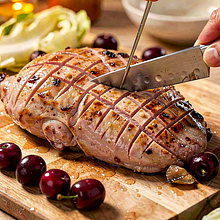
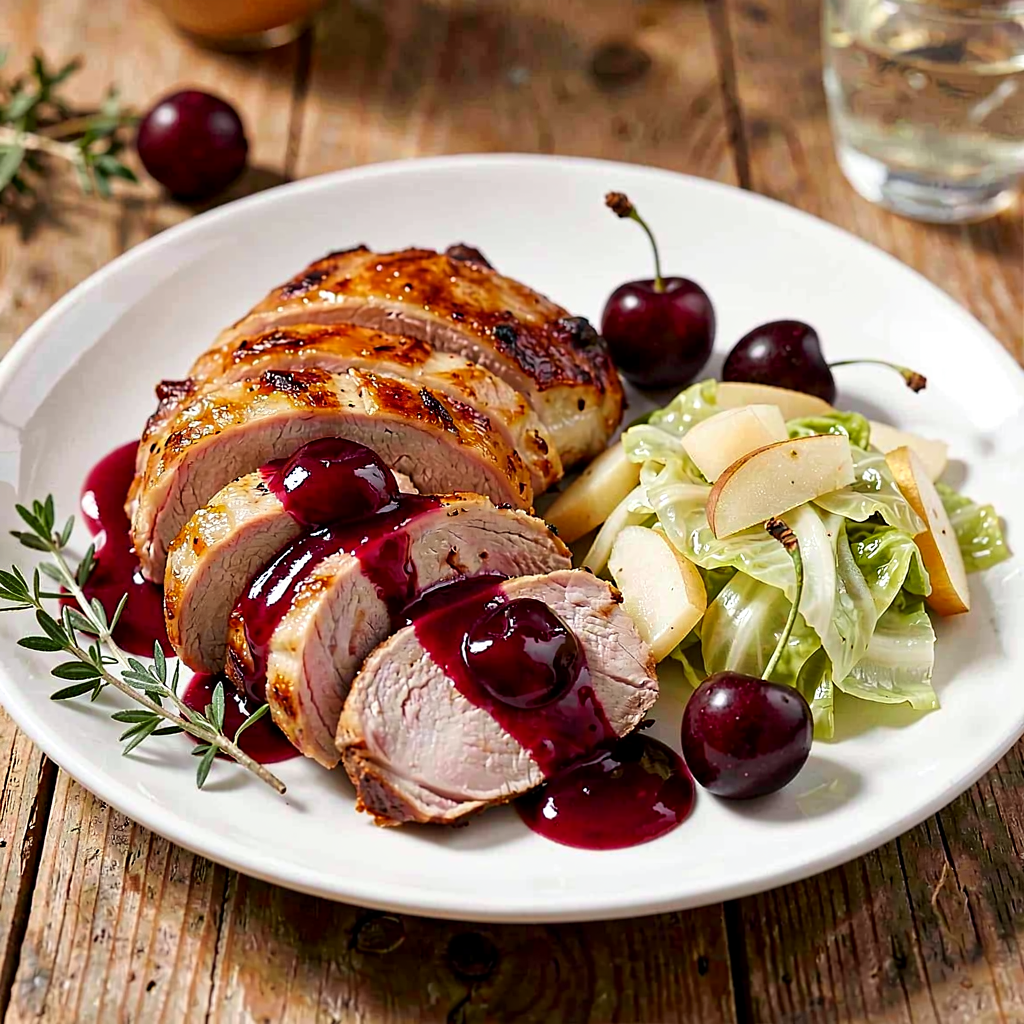
Traditional Polish roasted duck with a summer touch of fresh cherries, served with gently braised young cabbage. This dish combines the rich, slightly sweet and sour flavor of the fruit glaze with the crispy, golden skin of the duck and the freshness of seasonal cabbage. Perfect for a family dinner on a summer afternoon or for a festive dinner — it looks impressive on the table, has distinct aromas of herbs and cherries, and a contrast of textures: juicy meat, browned skin, and soft cabbage with a delicate sweetness of apple (optional). Serve with roasted potatoes from the duck's juices or with toasted buckwheat for a regional flair.
Ingredients Used
Ingredients (13)
- Duck 2200 g
- Cherry 300 g
- Young cabbage 0.7 pcs (~800 g)
- Onion 1 pcs (~150 g)
- Garlic 3 clove (~15 g)
- Butter 50 g
- Rapeseed oil 30 g
- 🌿 Spices
- Marjoram 4 g
- Thyme 30 g
- Salt 0.2 pinch (~5 g)
- Black pepper 4 pinch (~2 g)
- ✨ Optional
- Honey 60 ml
- Apple 0.8 pcs (~150 g)
💡 Click an ingredient to mark it as used
Preparation steps
Preparing the duck
Prepare the skin: using a sharp knife or skewer, make horizontal incisions in the skin (not in the meat) in a grid pattern, every 1–1.5 cm. Then, pierce the skin with a thin needle or skewer in the spaces between the incisions several times, so that the fat can render out during roasting. Do not pierce the meat — focus only on the skin and the fat beneath it.
Rub the inside of the duck with salt and pepper (about 1/3 of the salt). Place the halved onion, crushed garlic cloves, and a whole bunch of thyme inside. If you are using an apple (optional), cut it into quarters and also place it inside. Gently slide a piece of butter under the skin of the breast (divide 50 g of butter into two parts) — this will help achieve a golden skin and juiciness.
Baking
Preheat the oven to 220°C (conventional or with reduced fan to 200°C). Place the duck breast side up on a rack set over a baking tray — the fat will drip into the tray. Put the duck in for 15 minutes to quickly brown the skin and start rendering the fat. After 15 minutes, reduce the temperature to 160°C and continue roasting: count about 20–25 minutes for every 500 g of duck. For a 2200 g duck, roast for ~90–110 minutes after lowering the temperature.
Glaze and baking
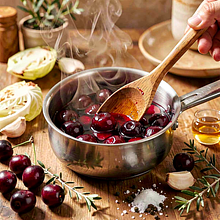
After about 60 minutes of baking (after lowering the temperature), prepare the cherry glaze: place pitted cherries (remove the pits using a pitter or by cutting them in half) in a small pot, add a crushed garlic clove, a few thyme leaves, and if you want a sweeter effect — honey (optional). Cook over medium heat for 6–8 minutes until the fruit releases its juice, then reduce the heat and cook for another 3–4 minutes, stirring, until the mixture thickens slightly. Taste and season with a pinch of salt and pepper. If the glaze is too watery, cook a little longer or add a teaspoon of cornstarch dissolved in cold water.
15–20 minutes before the end of baking, brush the duck with the prepared glaze using a brush — first a layer, then return it to the oven. After 8–10 minutes, take it out and apply a second thin layer, optionally increasing the temperature to 200–210°C for 5–8 minutes to caramelize the glaze and give it a shine. During baking, collect excess fat from the tray and baste the duck 1–2 times with the sauce from the bottom of the roasting pan, which will help achieve even browning.
Young cabbage
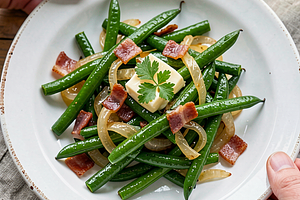
While the duck is resting, prepare the young cabbage. Remove the outer leaves, cut the head in half, remove the core, and finely shred it (with a knife or a shredder). In a wide skillet, heat canola oil (30 g) over medium heat. Add half of the chopped onion and sauté for 3–4 minutes until the onion becomes translucent. Add the shredded cabbage, season with salt (about 1 teaspoon of salt), and sprinkle with half of the marjoram (2 teaspoons). Cover the skillet and simmer over medium heat for 10–12 minutes, stirring every 3–4 minutes, until the cabbage softens but retains a slight crunch.
After 10–12 minutes, remove the lid, add the remaining butter (if you want, ~10–20 g) and gently sauté for another 2 minutes to give the cabbage a slight shine. Taste and season with pepper and possibly additional salt and marjoram. The cabbage should be soft but not mushy.
Resting and Slicing
Remove the duck from the oven when its skin is deeply golden and the glaze is caramelized. Loosely cover with aluminum foil and let it rest for 10–15 minutes — resting allows the juices to redistribute evenly. Check the temperature with a thermometer: the safe internal temperature for poultry is 74°C placed in the thickest part of the thigh, but for duck, you can aim for 70–74°C depending on your preferred juiciness.
Assembly and serving
On a large plate, arrange a portion of young cabbage. Cut the duck with a sharp knife — first separate the thighs, then slice the breast against the grain. Lightly drizzle each portion with the juices from the pan and 1–2 tablespoons of cherry glaze. Serve immediately, optionally adding roasted potatoes or buckwheat.
Fun Fact
In Polish tradition, roasted meats are often paired with fruits — sweet fruits (apple, plum) neutralize the fattiness of poultry. Cherries add a summer touch that was popular in seasonal rural dishes.
Best for
Tips
Serve the duck hot, plated with a portion of cabbage. Drizzle each serving with a few tablespoons of cherry glaze. Roasted potatoes, toasted buckwheat, or delicate Silesian dumplings pair well. Decoration: fresh thyme leaves and a few whole cherries.
Store meat and cabbage separately in the refrigerator for up to 2 days in airtight containers. Keep the glaze in a separate jar. Reheating: gently in the oven at 150–160°C for 10–15 minutes; to maintain the crispiness of the skin, use 180°C for 5–8 minutes or briefly crisp the skin in a pan just before serving.
📸 Cooked by the community
Log in to add a photoAdd a photo of the finished dish
After moderator approval, you will receive 10 experience points.
No one has added a photo yet. Be the first!
Comments (0)
Be the first to comment on this recipe!
Add a comment