Take the pork tenderloin out of the fridge 20–30 minutes before cooking to reach room temperature — this will ensure even frying. Pat the meat dry with a paper towel. If the tenderloin has thin membranes, gently trim them off with a sharp knife. Cut the meat into 8 equal medallions about 1.5–2 cm thick (each ~75 g).
Description
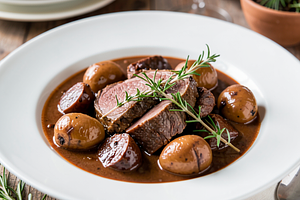
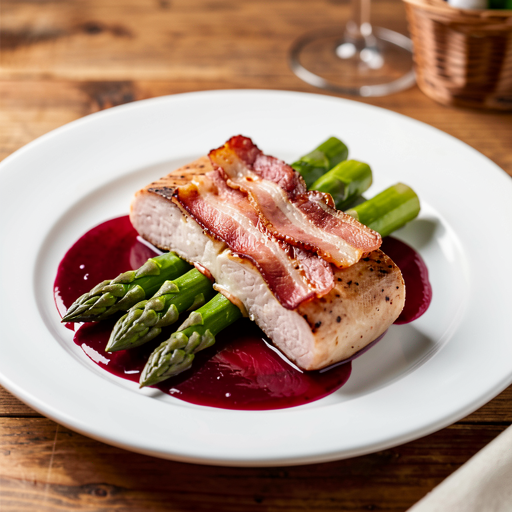
Saltimbocca is a classic Italian dish made with tender meat wrapped in ham and flavored with sage. In this version, we use pork tenderloin and Polish bacon, adding seasonal green asparagus and a reduction of red wine, creating a warm, winter dish with a spring accent. The combination of salty bacon, fresh sage leaves, and a slightly tangy wine sauce provides a contrast of textures: a crispy roasted outer layer, juicy meat inside, and firm asparagus. The dish pairs wonderfully with buckwheat or spelt, celery puree, or roasted potatoes. Aesthetically presented: slices of meat arranged next to a bundle of green asparagus, drizzled with a glossy sauce, garnished with fresh sage or sorrel for a refreshing taste.
Ingredients Used
Ingredients (15)
- Pork tenderloin 600 g
- Bacon 160 g
- Asparagus 400 g
- Wheat flour 30 g
- Rapeseed oil 30 g
- Butter 50 g
- Red wine 200 ml
- Chicken broth 300 ml
- Sage 6 g
- Garlic 2 ząbki (~10 g)
- Lemon 0.6 szt. (~50 g)
- 🌿 Przyprawy
- Salt 0.2 szczypt (~5 g)
- Black pepper 4 szczypty (~2 g)
- ✨ Opcjonalne
- Sorrel 30 g
- 18% cream 50 ml
💡 Kliknij na składnik aby oznaczyć jako użyty
Preparation steps
Preparation of ingredients
Lightly salt each medallion on both sides (remember that the bacon is salty — add salt sparingly). Dust both sides with flour, shaking off the excess. Place one sage leaf on each medallion, then a slice of bacon on top, covering the meat and the leaf. You can secure the bacon with a toothpick through the edge to keep everything together.
Asparagus
Prepare the asparagus: snap off the woody ends (just break them with your fingers — they will break at the natural point). If the stems are thick, peel the bottom 2–3 cm with a peeler. Rinse under cold water and dry. Lightly drizzle with a tablespoon of rapeseed oil and salt the asparagus very sparingly (the bacon will add salt).
Frying the meat (key step)
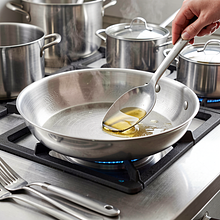
Heat a large skillet (preferably 26–28 cm) over medium-high heat. Add 1 tablespoon of canola oil. When the oil is slightly shimmering, place the medallions with the bacon side down. Fry for 2.5–3 minutes, until the bacon is noticeably browned and releases fat. Flip the medallions to the other side (meat) and fry for another 2–3 minutes, until the meat is nicely browned but the center remains juicy. Adjust the temperature to avoid burning the bacon — the skillet should be hot but not smoking.
Frying asparagus
In another medium skillet, heat 1 tablespoon of canola oil over medium heat. Arrange the asparagus in a single layer. Sauté for 3–4 minutes, turning occasionally, until they are tender-crisp, lightly browned, but still firm. If the tips are very thin, the time may be shorter (2–3 minutes). Once cooked, transfer the asparagus to a plate and cover with foil to keep warm.
Assembly and sauce
After frying the medallions, remove them from the pan to a plate and loosely cover with foil. In the same pan used for the meat, there will be fat from the bacon — leave about 1 tablespoon of fat and pour off the excess if there is too much. Reduce the heat to medium, add finely chopped garlic (2 cloves) and sauté for 30–40 seconds until fragrant, but not browned.
Pour 200 ml of red wine into the pan, increase the heat to medium-high, and cook for 2–3 minutes to allow the alcohol to evaporate and the wine to start reducing. Scrape the browned bits from the bottom of the pan with a wooden spoon — this will add flavor to the sauce. Then add 300 ml of chicken broth. Cook over medium heat for 6–8 minutes, until the volume is reduced by about one third and the sauce thickens slightly.
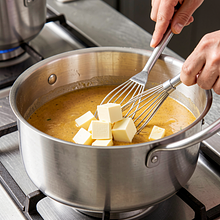
Reduce the heat to low. Add 50 g of butter cut into cubes to the sauce and whisk vigorously with a whisk or wooden spoon until the butter melts and the sauce becomes smooth and glossy. Add the juice of half a lemon (about 25 g) — taste and season with salt and pepper very sparingly if needed. If you want a creamier sauce, add 50 g of 18% cream towards the end (optional) and heat for 1–2 minutes.
Put the medallions back in the pan with the sauce for 1–2 minutes over low heat to warm the meat and coat it with the sauce. Do not cook for long — just warm it up. After removing, place the medallions on a board or plate and let them rest for 1 minute to allow the juices to settle.
Serving
On a warmed plate, place 2 medallions per person, next to them place a portion of asparagus (about 100 g). Drizzle everything with the red wine reduction, decorating with a few fresh sage leaves or a bunch of sorrel (optional) for a tangy contrast. If desired, sprinkle with freshly ground pepper. Serve immediately when the sauce is glossy and warm.
Cleaning and final tips
After the meal, set the dishes aside to soak — the pan with leftover sauce is easier to clean when it's warm. Gather the used toothpicks and leftover bacon. If there's any sauce left, you can strain it through a fine sieve and transfer it to a jar in the fridge for 2 days.
Fun Fact
Saltimbocca comes from the Lazio region of Italy and is traditionally made with veal tenderloin, prosciutto, and sage; the name literally means "jump into the mouth" — the dish is meant to be so tender that it almost jumps into your mouth.
Best for
Tips
Serve with pearl barley, celery puree, or roasted young potatoes. For a glossy finish, add an extra teaspoon of chilled butter to the sauce just before serving. For a more savory character, serve with a sprinkle of grated Parmesan on the asparagus.
Store the meat and sauce separately in the refrigerator for up to 48 hours. The sauce can be frozen for up to 3 months. For reheating, it's best to briefly warm the meat in a pan over low heat to avoid drying it out.
📸 Ugotowane przez społeczność
Zaloguj się, aby dodać zdjęcieDodaj zdjęcie gotowej potrawy
Po zatwierdzeniu przez moderatora otrzymasz 10 punktów doświadczenia.
Nikt jeszcze nie dodał zdjęcia. Bądź pierwszy!
Comments (0)
Be the first to comment on this recipe!
Add a comment