Recipe for: Veal in gravy sauce with spelt and green asparagus

Pikantne Main dishes Regional Cuisine of Poland 60 min Hard 22 wyświetleń ~10.56 PLN * - (0)
Rate:
(0)
Start Cooking

Description

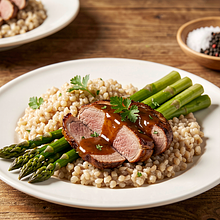
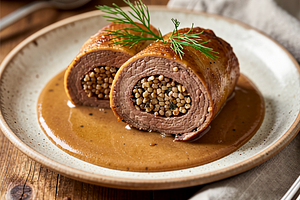
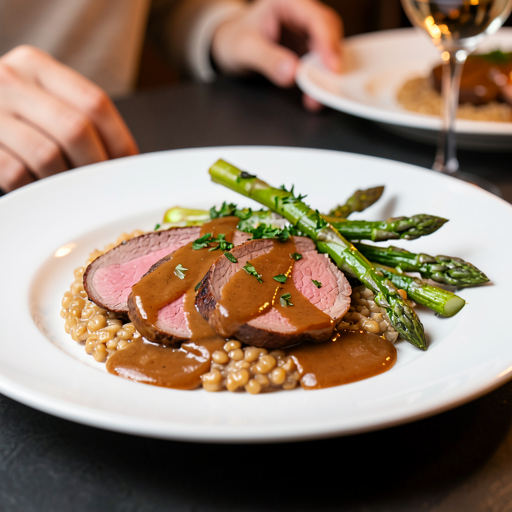
Veal in gravy is a classic, elegant dish of Polish cuisine reimagined in a modern form: a tender roasted piece of veal enveloped in a thick, aromatic gravy served on creamy pearl barley and accompanied by spring green asparagus. The dish combines the sweetness of sautéed vegetables with the spiciness of herbs, while a light note is highlighted by dry wine (optional). Exceptional for Sunday lunch, family celebrations, and dinners when we want to showcase the artistry of Polish cuisine with a modern twist. Visually: a slice of juicy veal, dark glossy gravy, green asparagus, and grainy, shiny pearl barley — a composition of contrasts and harmony.

Ingredients Used

Ingredients (19)

Servings:
4
  • Veal 800 g
  • Butter 50 g
  • Rapeseed oil 30 g
  • Onion 1 szt. (~150 g)
  • Carrot 1.3 szt. (~100 g)
  • Celery 100 g
  • Garlic 2 ząbki (~10 g)
  • Wheat flour 20 g
  • Beef broth 500 ml
  • Barley groats 200 g
  • Green asparagus 200 g
  • 🌿 Przyprawy
  • Bay leaf 10 szt. (~3 g)
  • Allspice (berries) 3 szt. (~3 g)
  • Salt 0.1 szczypt (~4 g)
  • Black pepper 4 szczypty (~2 g)
  • Thyme 2 g
  • Parsley 0.5 pęczek (~15 g)
  • ✨ Opcjonalne
  • Dry white wine 100 ml
  • 18% cream 100 ml
💰 Szacowany koszt dania: ~10.56 PLN (2.64 PLN/porcję)
* Brak cen dla niektórych składników

💡 Kliknij na składnik aby oznaczyć jako użyty

Preparation steps

Meat preparation

1

Take the veal out of the fridge 30 minutes before starting to bring it to room temperature — this will ensure even cooking. Pat the meat dry with paper towels. If the piece is uneven, tie it with kitchen twine every 3–4 cm to give it a uniform shape (this makes cooking easier). Rub the meat evenly with 2 g of salt and freshly ground pepper (about 1–2 pinches).

Ingredients: veal, Salt, Black pepper
Use kitchen twine and a sharp knife. The twine prevents the meat from falling apart; if you don't have it, you can bake smaller cutlets separately, but the baking time will change.
2

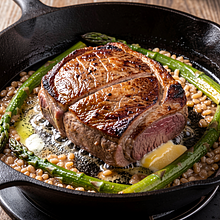
Heat a large cast-iron skillet or a heavy-bottomed pan over medium-high heat. Pour in the rapeseed oil and add 20 g of butter. When the fat starts to shimmer slightly (after about 1–2 minutes), place the veal in the pan and sear without moving it for 3–4 minutes, until a golden, caramelized crust forms. Flip to the other side and repeat until all sides are well browned — this seals in the juices of the meat.

Ingredients: Rapeseed oil, Butter, veal
Use a pan with a diameter of at least 26 cm; cast iron or heavy steel is best for frying. Do not overcrowd the pan — if needed, brown the meat in batches. This is a key step; a golden, strong color indicates good caramelization.
3

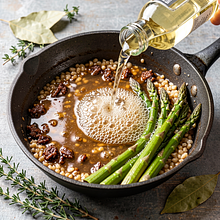
Remove the browned veal and set it aside on a plate. In the same pan, reduce the heat to medium and add the remaining 30 g of butter (if any) or 10 g of butter, then add the chopped onion, carrot, and celery (first cut them into cubes about 1 cm). Sauté, stirring with a wooden spoon for 6–8 minutes, until the vegetables soften and begin to caramelize slightly (they will become golden and fragrant).

Ingredients: Onion, Carrot, Celery, Butter
Use a wooden spoon or spatula; monitor the temperature to prevent the vegetables from burning. If the pan is dry and the vegetables are sticking, add 1–2 tablespoons of broth.

Gravy

4

If you are using dry white wine (optional), pour 100 ml into the pan, increase the heat and cook for 1–2 minutes, scraping the browned bits with a wooden spoon (deglazing). If you are not using wine, pour 100–150 ml of warm broth and do the same. Add the bay leaf, allspice, and thyme. Return the veal to the pan and pour in the remaining broth so that it reaches halfway up the meat (about 300–400 ml). Bring to a gentle boil.

Ingredients: Beef broth, Bay leaf, Thyme, veal
Deglazing is important — the liquid dissolves the browned flavors from the bottom of the pan, adding depth to the sauce. Use a wooden spoon to scrape up all the "bits."
5

Cover the pan with a lid or foil and place it in the oven preheated to 160°C for 25–30 minutes. The veal will be ready when the meat reaches an internal temperature of 65–68°C (use a kitchen thermometer). After baking, remove the meat and set it on a cutting board, loosely cover it with foil for 10 minutes to allow the juices to stabilize.

Ingredients: veal, Beef broth, Bay leaf
If you don't have a thermometer, make a small incision: the meat should be slightly pink in the center, not raw. Don't bake too long — veal easily becomes dry.
6

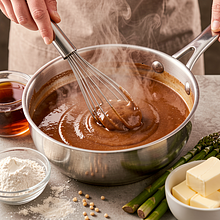
Remove the vegetables and spices from the pan, straining the liquid (pour through a sieve into a saucepan); set aside. Separate the fat from the surface (you can use a spoon or a cool glass), leaving 1–2 tablespoons of fat in the saucepan. Over medium heat, add the flour and stir evenly for 1–2 minutes to lightly brown it (a light roux will form). Gradually, in a thin stream, pour in the strained broth from the pan while continuously whisking to avoid lumps. Cook for 6–8 minutes over medium heat until the sauce thickens and becomes glossy.

Ingredients: Wheat flour, Beef broth, Butter
Use a metal or silicone whisk; first mix the flour with the fat, then add the liquid one spoonful at a time to achieve a smooth consistency. The sauce should have a consistency that slows down the dripping from the bottom of the spoon.
7

Season the sauce with salt and pepper to taste. If you want a creamy finish, reduce the heat and add 100 g of 18% cream (optional), stirring and cooking for 1–2 minutes — do not boil vigorously to prevent the cream from curdling. Finally, add 10 g of cold butter and stir until combined for a glossy finish.

Ingredients: 18% cream, Butter, Salt, Black pepper
If the sauce is too thin, cook longer over higher heat; if too thick, add a bit of hot broth. Additionally, you can add wine to deepen the flavor — remember that wine intensifies acidity.

Buckwheat and asparagus

8

Rinse the buckwheat in a sieve under cold water. Transfer to a pot, pour in 500 ml of cold water, and add 1 g of salt. Bring to a boil over high heat, then reduce to low and cook covered for 25–30 minutes, until the grains are soft but still have a slight "buckwheat" bite. After cooking, drain any excess water and let it sit covered for 5 minutes, then add 10 g of butter and fluff with a fork to keep the groats loose.

Ingredients: Barley groats, Salt, Butter
Use a pot with a lid; a ratio of pearl barley to water of 1:2.5 ensures good softness. If you don't have butter, you can add a tablespoon of rapeseed oil.
9

Prepare the asparagus: snap off the woody ends (hold the bottom part and bend — they will break at the right spot). Bring water to a boil in a pot with 5 g of salt. Depending on the thickness, blanch the asparagus for 2–4 minutes (thin 2 min, thick 4 min). Immediately transfer to a bowl of ice-cold water (shocking) to stop the cooking process and preserve the color. Before serving, sauté them for 1–2 minutes in butter with a bit of oil to lightly caramelize.

Ingredients: green asparagus, Salt, Butter
Use a wide pot and a large amount of water so that the asparagus can cook freely. Shocking in cold water stops the cooking process and preserves crunchiness.

Assembly and serving

10

Slice the rested veal into pieces 1–1.5 cm thick. On each plate, place a portion of barley (about 120–130 g), arrange 2–3 slices of veal, generously drizzle with gravy, and add 4–5 pieces of asparagus on the side. Sprinkle with finely chopped parsley and serve immediately. Also serve the sauce in a gravy boat so everyone can add to their taste.

Ingredients: Barley groats, veal, green asparagus, Parsley, Salt, Black pepper
Use a sharp meat knife for slicing. Slices cut against the grain will be tender and delicate. Serve the dish hot — the sauce has the best consistency right after preparation.

Fun Fact

💡

In traditional Polish cuisine, veal was considered festive and hospitable meat. Gravy owes its deep flavor to the caramelization of vegetables and deglazing — a technique known and valued for centuries.

Best for

Tips

🍽️ Serving

Serve hot, with extra spoons of sauce on the side. A light salad with a simple vinaigrette or creamy celery puree makes a great alternative to barley. A good pairing is a dry white wine or a light red with low tannins.

🥡 Storage

Store meat and sauce separately in airtight containers in the refrigerator for up to 2 days. Keep the groats and asparagus separate. Heat the sauce slowly over low heat, stirring to prevent burning; add a little broth or water if it thickens. Reheat the meat in the oven at 120–130°C for 10–15 minutes to avoid drying it out.

📸 Ugotowane przez społeczność

Zaloguj się, aby dodać zdjęcie
Dodaj zdjęcie gotowej potrawy

Po zatwierdzeniu przez moderatora otrzymasz 10 punktów doświadczenia.

🍲

Nikt jeszcze nie dodał zdjęcia. Bądź pierwszy!

Comments (0)

Be the first to comment on this recipe!

Add a comment

You might also like

Recipe Categories

Main courses are the heart of every meal - hearty, nutritious, and full of flavor. In this category, we present a rich selection of recipes for lunches and dinners that will satisfy even the most discerning palates. From classic Polish pork chops to aromatic chicken dishes, to exquisite steaks an...

See all recipes in this category

Traditional recipes from various regions of Poland that showcase the richness of local flavors and ingredients.

See all recipes in this category
Reklama