Cabbage and Mushroom Pastries (Traditional)

Snacks Regional Cuisine of Poland Desserts 60 min Medium 28 wyświetleń ~33.31 PLN - (0)
Rate:
(0)
Start Cooking

Description

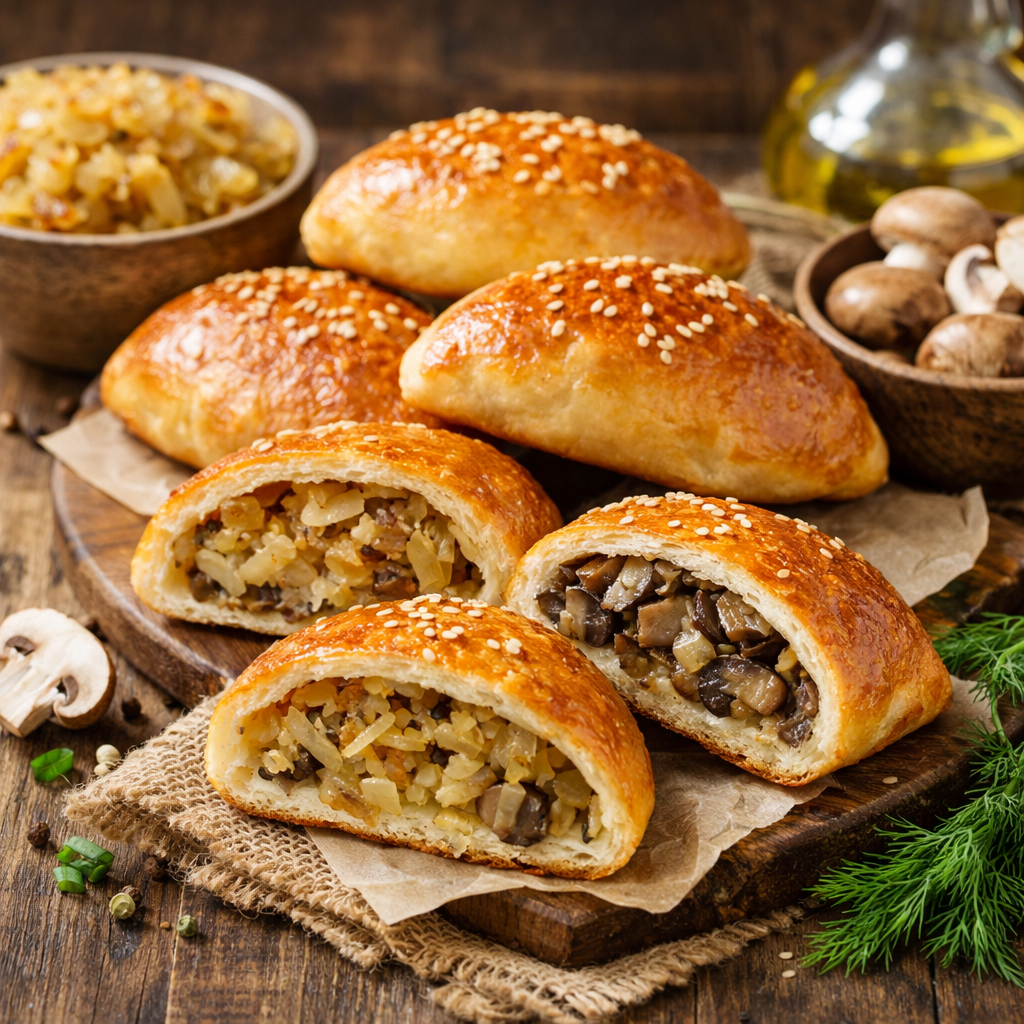
Traditional Polish pastries with sauerkraut and mushrooms are small, golden breads filled with an aromatic filling of sour cabbage and intensely mushroom-flavored interior. The dish has roots in home and Christmas cooking, where the filling of cabbage and mushrooms is common; here it is served as handy snacks, perfect for parties, festive tables, or as a warm snack with borscht. The flavor combines the acidity of the cabbage, the deep umami of dried mushrooms, and a delicate, buttery bun. Appearance: golden, shiny pastries brushed with egg arranged on a baking sheet, which reveal a moist, fibrous interior when cut open. The pastries can be served with horseradish sauce, soup (e.g., red borscht), or on their own as a snack. The recipe includes instructions for preparing yeast dough, rehydrating mushrooms, sautéing cabbage, and the technique for shaping the pastries — all described step by step for the beginner cook.

Ingredients Used

Ingredients (16)

Servings:
6
  • Wheat flour 500 g
  • Milk 250 ml
  • Fresh yeast 25 g
  • Butter 80 g
  • Chicken egg 2 szt. (~120 g)
  • Sugar 10 g
  • Rapeseed oil 15 g
  • Sauerkraut 600 g
  • Dried mushrooms 20 g
  • Onion 1.3 szt. (~200 g)
  • Breadcrumbs 50 g
  • 🌿 Przyprawy
  • Salt 8 g
  • Black pepper 4 szczypty (~2 g)
  • Marjoram 2 g
  • ✨ Opcjonalne
  • Mushrooms 200 g
  • Cheese 100 g
💰 Szacowany koszt dania: ~33.31 PLN (5.55 PLN/porcję)

💡 Kliknij na składnik aby oznaczyć jako użyty

Preparation steps

Cake

1

Prepare the ingredients and utensils. Weigh the flour and sift it into a large bowl (the bowl should have a minimum capacity of 3 liters). In a small saucepan, heat the milk to a temperature of about 35-38°C — it should be pleasantly warm, not hot (check with the inner part of your wrist).

Ingredients: Wheat flour, Milk
Use a large metal or glass bowl and a kitchen thermometer if you have one. If you don't have a thermometer, the milk should be warmer than body temperature, but not scalding.
2

Activate the yeast: crumble fresh yeast into a small bowl, add a teaspoon of sugar (from the portion) and 3 tablespoons of warm milk (about 45 ml). Gently mix with a fork until dissolved and set aside in a warm place for 8-10 minutes. After 8-10 minutes, a foam or bubbles should appear on the surface — this is a sign that the yeast is active.

Ingredients: Milk, Fresh yeast, Sugar
Use a small bowl and a fork. If there is no foam after 10 minutes, the yeast may be dead — discard and use fresh ones. Do not add yeast to very hot milk (above 45°C) — it will kill them.
3

In a large bowl, make a well in the sifted flour. Pour in the lightly beaten egg, the rest of the warm milk, the activated yeast, as well as the canola oil and melted, cooled butter (about 40-45°C). Sprinkle salt around the edge of the flour (not directly on the yeast). Start mixing with a wooden spoon from the center, gradually incorporating the flour until the ingredients come together and a sticky dough forms.

Ingredients: Wheat flour, Milk, Fresh yeast, Butter, Salt, Rapeseed oil
Use a wooden spoon or a mixer with a dough hook. Do not add salt directly to the yeast — it can weaken them. If you don't have a mixer, knead by hand.
4

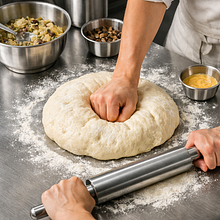
Kneading the dough: transfer the dough to a lightly floured countertop and knead by hand for 8-10 minutes (or mix with a hook attachment for 5-7 minutes) until it becomes smooth, elastic, and stops sticking to your hands. If it is very sticky at the beginning, add 1 tablespoon of flour at a time, but avoid drying it out.

Ingredients: Wheat flour
Use a silicone or wooden pastry board. The dough is ready when it springs back after being pressed with a finger and does not stick too much to your hands. Do not knead longer than necessary — over-kneading can make it tough.
5

First rising: shape the dough into a ball, lightly grease with oil or butter, place in a bowl, cover with a clean cloth or plastic wrap, and set aside in a warm place for 40-45 minutes, until it doubles in volume.

Ingredients: Wheat flour, Butter, Rapeseed oil
It's best to use a bowl covered with a linen cloth. If it's cold in the kitchen, place the bowl in the turned-off oven with the light on or next to a warm dish. Proper rising means roughly doubling in volume.

Filling

6

Prepare the mushrooms: soak the dried mushrooms in about 250 ml of warm (not hot) water and set aside for 20-30 minutes to rehydrate. After soaking, drain, reserving the broth (strain through a sieve and set aside). Chop the rehydrated mushrooms into small cubes.

Ingredients: Dried mushrooms
Use a bowl for soaking. The mushroom broth is aromatic — later use 1-2 tablespoons to season the filling for a deeper flavor.
7

Sauté the onion: in a medium skillet, heat 30 g of butter (about half of the butter from the list) with 1 tablespoon of rapeseed oil, add finely chopped onion and sauté over medium heat for 6-8 minutes until it becomes translucent and slightly golden. Add the chopped mushrooms (and optionally chopped champignons if using) and sauté for another 5-7 minutes until the excess water evaporates.

Ingredients: Butter, Rapeseed oil, Dried mushrooms, Onion
Use a pan with a diameter of 24-28 cm. Stir every minute to prevent the onion from burning. If you are adding mushrooms, sauté them separately for a short time first to evaporate the water, and then add them to the onions and mushrooms.
8

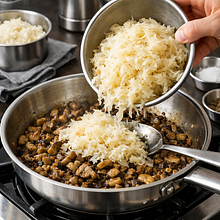
Add the cabbage: to the pan with mushrooms, add the drained and chopped sauerkraut. Sauté and simmer over medium heat for 15-20 minutes; if the filling is very dry, add 2-3 tablespoons of the mushroom soaking broth. Season to taste with salt (carefully, as the cabbage may be salty), black pepper, and marjoram. Finally, add breadcrumbs one tablespoon at a time and mix — the breadcrumbs will absorb the excess moisture. Taste the filling and adjust the seasoning.

Ingredients: Butter, Sauerkraut, Dried mushrooms, Breadcrumbs, Black pepper, Marjoram
Use a lid for simmering, but uncover at the end to allow excess moisture to evaporate. The filling should be moist but not liquid — when you press it with a spoon, it should hold its shape.
9

Cool the filling: transfer the filling to a bowl and set aside to cool for at least 10-15 minutes. The filling for the pastries should be warm or cool, but not hot — hot filling will soften the dough during shaping.

Ingredients: Sauerkraut, Dried mushrooms
If the filling is too wet after cooling, add more breadcrumbs by the tablespoon until it reaches the right consistency.

Shaping and baking

10

Shaping: after the dough has risen, punch it down, place it on a lightly floured surface, and roll it out into a rectangle about 3-4 mm thick. Using a spoon or spatula, place portions of filling about 1-1.5 tablespoons thick at equal intervals, forming a long strip of filling along the shorter side of the rectangle. Fold the dough in half — cover the filling and gently press the edges. Use a sharp knife or pastry cutter to cut into pastries about 4-5 cm wide.

Ingredients: Wheat flour, Sauerkraut, Dried mushrooms, Breadcrumbs
Use a rolling pin and a pastry cutter or knife. Do not overwork the dough while rolling it out. If the dough springs back, let it rest for 5 minutes covered with a cloth, and then finish rolling it out.
11

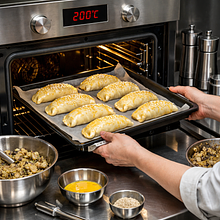
Preparation for baking: place the pastries on a baking sheet lined with parchment paper, leaving about 2 cm between them. Beat the remaining egg and brush the tops of the pastries with it using a pastry brush, so they are shiny and golden after baking. If you like, sprinkle grated yellow cheese on top (optional).

Ingredients: Cheese
Use a silicone or kitchen brush. Do not apply too thick a layer of egg — one thin layer is enough. If you are adding cheese, do not overdo it so it doesn't burn in the oven.
12

Baking: preheat the oven to 200°C (top-bottom). Place the tray with the pastries in the middle of the oven and bake for 18-22 minutes, until the top turns golden and puffs up nicely. After 10-12 minutes, watch the color; if they are browning too quickly, reduce the temperature by 10-15°C.

Use the convection function only if the oven bakes evenly (then reduce the temperature by 10-15°C). The pastries are ready when their bottom is lightly brown and the top has an even golden color.
13

Cooling and serving: after baking, remove the tray from the oven and let the pastries sit on the tray for 5-8 minutes, then transfer them to a rack to cool completely for another 5 minutes. Serve slightly warm with borscht, horseradish sauce, or as a snack.

A cooling rack will prevent the bottoms from steaming. The pastries can also be served cold, but they will taste best slightly warm.

Fun Fact

💡

Cabbage and mushroom pastries are a variation of the filling often used in Polish Christmas Eve dinner — the traditional filling filled carp, dumplings, and pastries, serving as a way to utilize sauerkraut and dried mushrooms after autumn.

Best for

Tips

🍽️ Serving

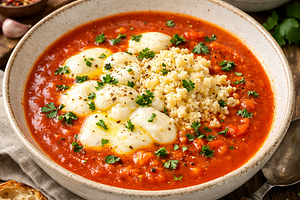
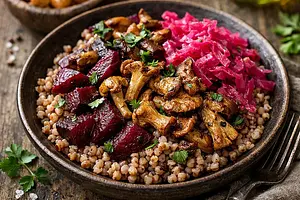
Serve the pastries slightly warm with hot red borscht (as a classic combination) or with horseradish sauce. You can add tangy pickled cucumbers or a dollop of sour cream for contrast. If cheese was used, serve quickly after baking when the cheese is slightly melty.

🥡 Storage

Store in a cool place in an airtight container for up to 2 days. To reheat, place in an oven preheated to 170°C for 6-8 minutes to regain crispiness; avoid the microwave, as the bottom will become rubbery. The filling can be stored separately in the refrigerator for up to 3 days or frozen for up to 2 months.

📸 Ugotowane przez społeczność

Zaloguj się, aby dodać zdjęcie
Dodaj zdjęcie gotowej potrawy

Po zatwierdzeniu przez moderatora otrzymasz 10 punktów doświadczenia.

🍲

Nikt jeszcze nie dodał zdjęcia. Bądź pierwszy!

Comments (0)

Be the first to comment on this recipe!

Add a comment

You might also like

Recipe Categories

Snacks
Snacks in: Valentine's Day

Perfect for small cravings during a romantic evening, light snacks that will delight with their flavor.

See all recipes in this category

Traditional recipes from various regions of Poland that showcase the richness of local flavors and ingredients.

See all recipes in this category
Desserts
Desserts in: Valentine's Day

A sweet ending to a romantic dinner that will delight the taste buds and leave unforgettable memories.

See all recipes in this category
Reklama